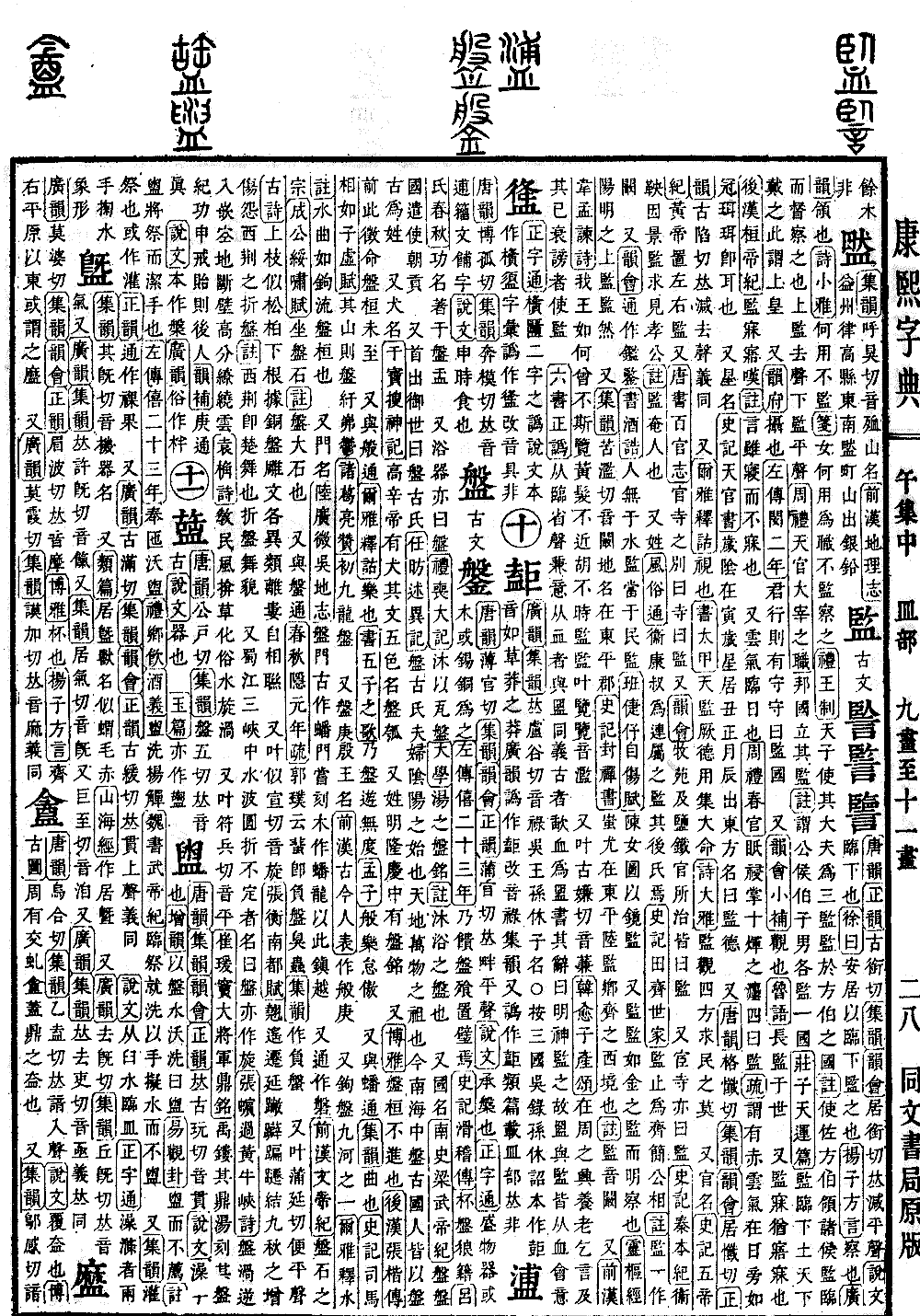
Wu Collection, Middle Volume
Radical: Vessel (mǐn)
Kangxi strokes: 16
Page 796, Entry 12
Pronounced guan.
According to the Explaining Graphs and Analyzing Characters (Shuowen Jiezi), it means to wash the hands.
The Supplemental Dictionary (Zengyun) states that pouring water from a dish to wash is called guan.
In the Book of Changes (Yijing), regarding the Contemplation hexagram, it says to perform the ritual washing but not yet offer the sacrifice. The commentary notes that this refers to cleaning the hands in preparation for a ritual.
In the Zuo Commentary (Zuozhuan), during the twenty-third year of Duke Xi, it describes holding a ewer to pour water for hand washing.
In the Book of Rites (Liji), within the section on the meaning of drinking ceremonies, it describes washing the hands and the cup before lifting the wine vessel.
In the Book of Wei (Weishu), in the annals of Emperor Wu, it describes approaching a water basin near the time of a ritual, gesturing with the hands over the water but not actually washing them.
Additionally, according to the Collected Rhymes (Jiyun), it refers to a libation ritual. It is sometimes written in a variant form (guan).
The Standard Rhymes (Zhengyun) notes it is interchangeable with the ritual of offering wine (guan).
Additionally, according to the Expanded Rhymes (Guangyun) and other rhyming dictionaries, it is also pronounced guan (rising tone). The meaning is the same.
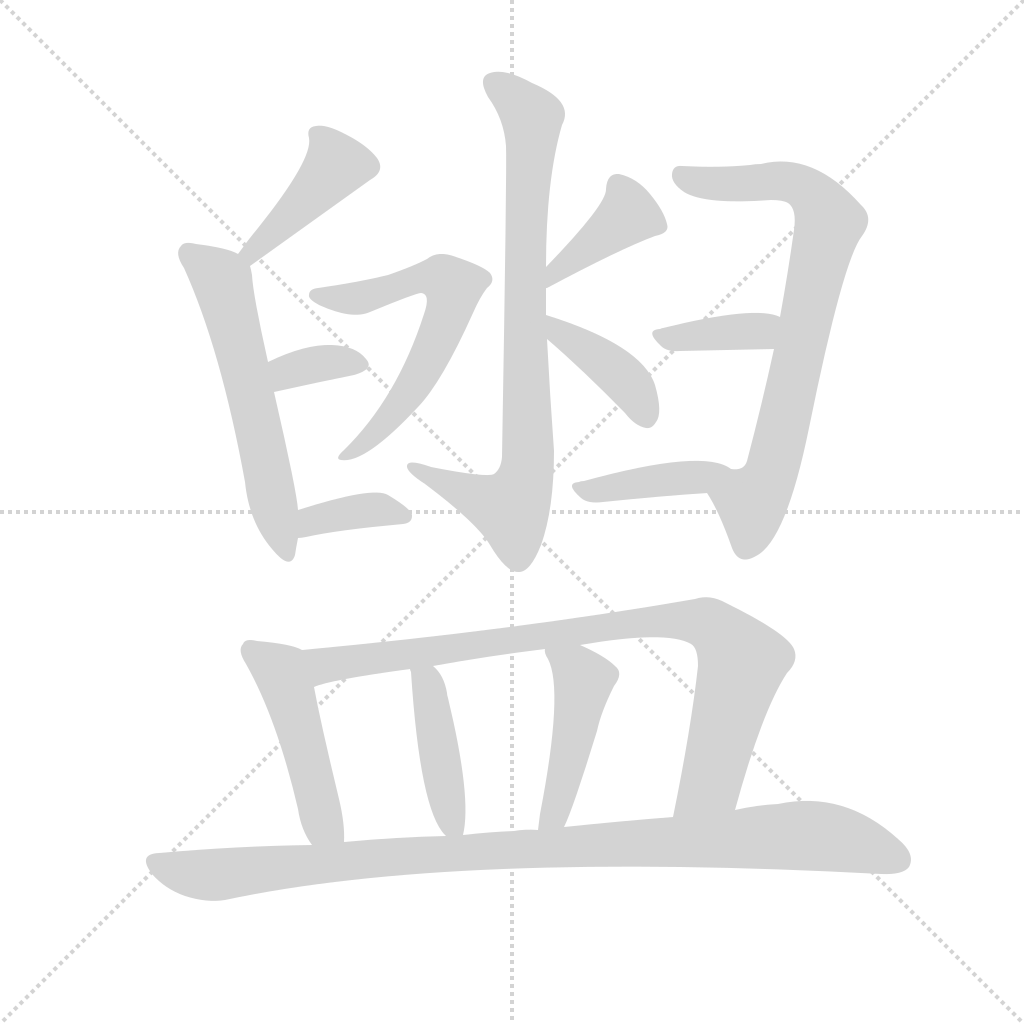
According to the Explaining Graphs and Analyzing Characters (Shuowen Jiezi), the shape of the character is formed by a mortar (jiu) and water, placed above a vessel (min).
The Proper Character Guide (Zhengzitong) notes that it depicts two hands holding water while washing; it is a pictographic character.