You Collection, Upper Volume
Radical: Speech (yán)
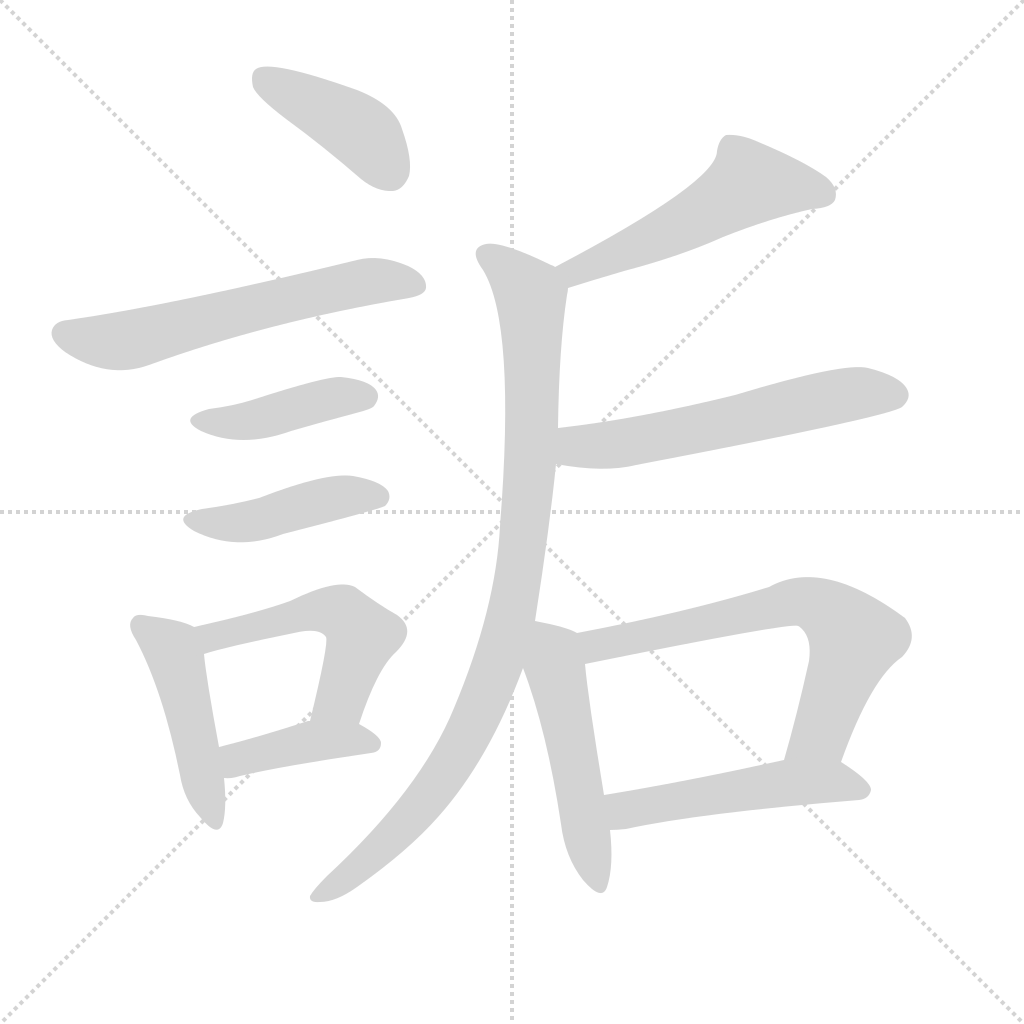
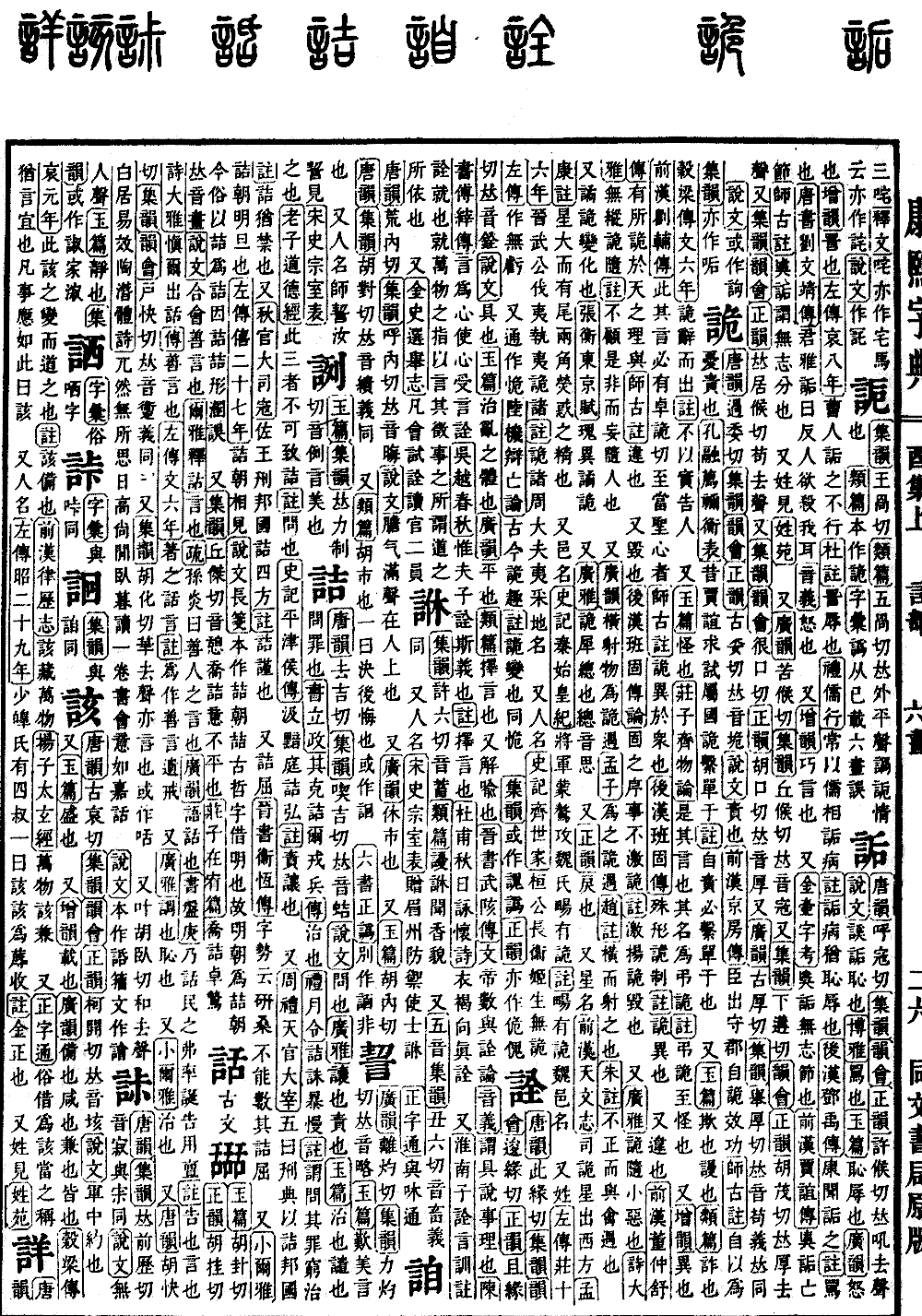
Gou
Kangxi Strokes: 13
Page 1158, Entry 02
Pronounced hou (falling tone).
Shuowen Jiezi (Shuowen): Xiegou, meaning disgrace or shame.
Guangya: Meaning to scold.
Yupian: Meaning disgrace or shame.
Guangyun: Meaning anger.
Zengyun: Meaning to reproach or scold.
Zuo Zhuan (Zuo Zhuan), 8th year of Duke Ai: The people of the state of Cao scolded him and would not let him pass.
Du's Commentary: Meaning to insult or scold.
Book of Rites (Liji), Ruxing: Constantly using the status of a scholar to shame and reproach one another.
Commentary: Goubing, meaning similar to disgrace.
History of the Later Han (Hou Hanshu), Biography of Deng Yu: Deng Yu heard this and scolded him.
Commentary: Meaning to scold.
Book of Tang (Tangshu), Biography of Liu Wenjing: Junya angrily scolded him, saying: Rebels merely wish to kill me.
Sound and Meaning: Meaning anger.
Also: Meaning flowery or deceitful speech.
Also: Jin Hu Zi Kao: Xiegou, meaning lacking ambition or integrity.
Book of Han (Hanshu), Biography of Jia Yi: Xiegou, lacking integrity.
Shigu's Commentary: Xiegou refers to being without ambition or duty.
Also: As a surname, found in Surname Garden (Xingyuan).
Also: Pronounced kou.
Also: Pronounced hou (falling tone).
Also: Pronounced gou (falling tone).
Also: Pronounced hou.
Also: Pronounced gou (rising tone).
The meanings are the same.
Shuowen Jiezi (Shuowen): Sometimes written in a variant form (zhou).
Jiyun: Also written in a variant form.