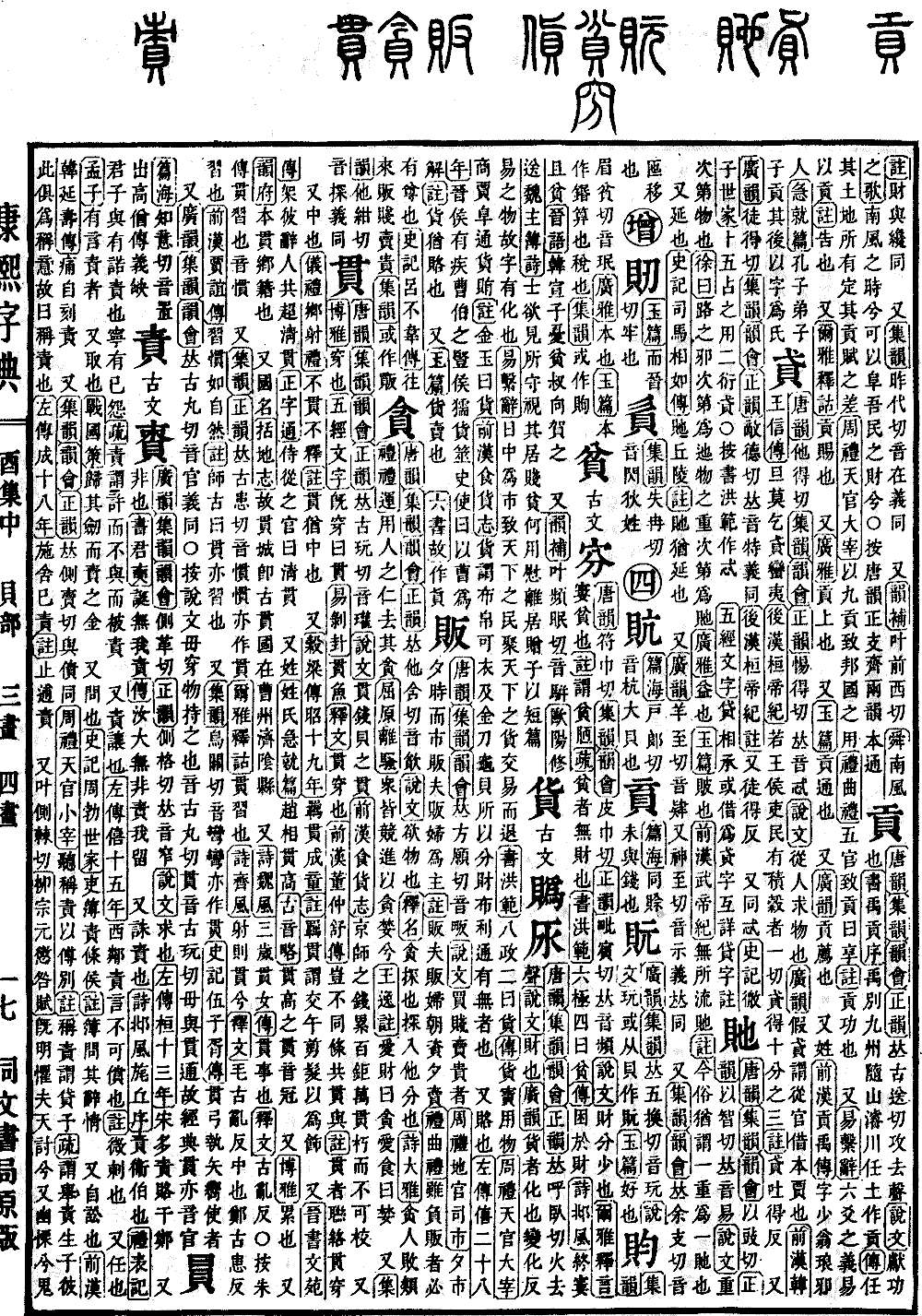
You Collection, Middle Volume
Radical: Shell (bèi)
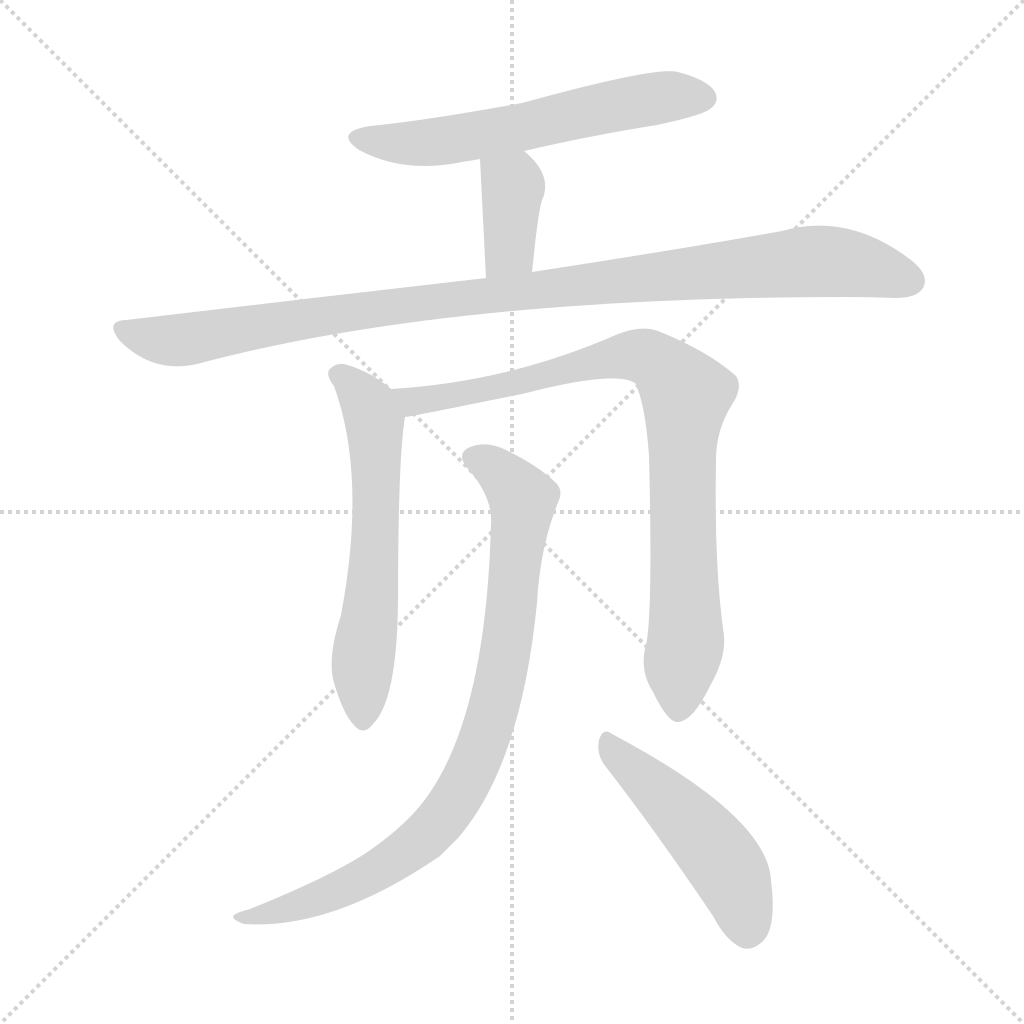
貢
Kangxi stroke count: 10
Page 1205, Entry 01
Tang Rhymes (Tangyun), Collected Rhymes (Jiyun), Rhyme Meetings (Yunhui), Correct Rhymes (Zhengyun): Pronounced gong (falling tone).
Explanatory Lexicon (Shuowen): To present one's work as a tribute.
Book of Documents (Shujing), Preface to the Tribute of Yu: Yu divided the nine provinces, dredged the rivers according to the mountains, and assigned contributions based on the land.
Commentary: To determine the grades of tribute and tax based on what the land produces.
Rites of Zhou (Zhouli), Offices of Heaven, Grand Administrator: Using the nine types of tribute to provide for the needs of the state.
Book of Rites (Liji), Summary of Rites: When the five officials present tribute, it is called xiang.
Annotation: Tribute means work.
Book of Changes (Yijing), Appended Statements: The meaning of the six lines is represented by gong.
Annotation: To announce or report.
Literary Expositor (Erya), Explanation of Words: Gong means to bestow.
Broad Expositor (Guangya): Gong means to offer up.
Jade Chapters (Yupian): Gong means to communicate.
Broad Rhymes (Guangyun): Gong means to recommend.
Also a surname.
Biography of Gong Yu in the History of the Former Han (Qianhan Shu): His courtesy name was Shaoweng, and he was a man from Langye.
Rapid Literacy (Jijiupian): The disciple of Confucius known as Zigong; his descendants later adopted his courtesy name as their surname.