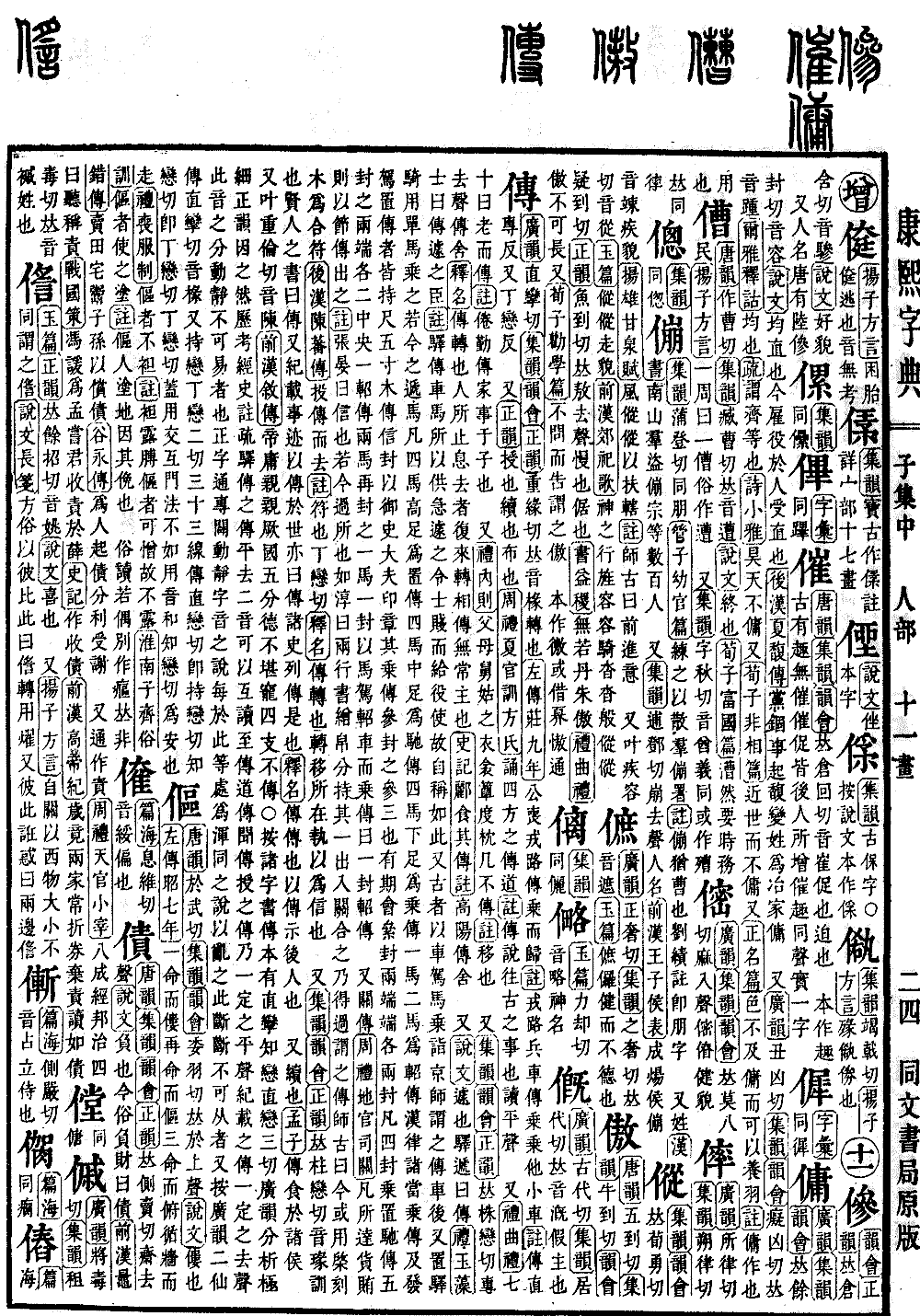
Zi Collection, Middle Volume. Radical: Person (rén). Zhài. Kangxi stroke count: 13. Page 114. According to the Tang Dynasty Rhymes (Tangyun), Collected Rhymes (Jiyun), Collected Rhymes (Yunhui), and Correct Rhymes (Zhengyun), the pronunciation is derived from the combination of cè and mài, spoken in the departing tone of zhāi. Explaining Graphs and Analyzing Characters (Shuowen Jiezi) defines the character as meaning to owe or be in debt. In common usage, owing money or property to others is called a debt. The Biography of Chao Cuo in the Book of Han (Hanshu) describes selling off fields and houses, and selling children and grandchildren, in order to repay debts. The Biography of Gu Yong mentions lending money for others to collect interest and receiving rewards. The term is also interchangeable with the character zé. The Rites of Zhou (Zhouli), in the Heavenly Offices and Minor Administrator section, states that eight types of precedents are used to govern the state, the fourth of which is the adjudication of lending disputes. The Strategies of the Warring States (Zhan Guo Ce) records that Feng Xuan went to the region of Xue for Lord Mengchang to collect debt payments. In the Records of the Grand Historian (Shiji), this is written as shōuzhài. The Annals of Emperor Gaozu in the Book of Han notes that at the end of the year, the two parties would often break their contract tallies and forgive the debts; the pronunciation is given as zhài.