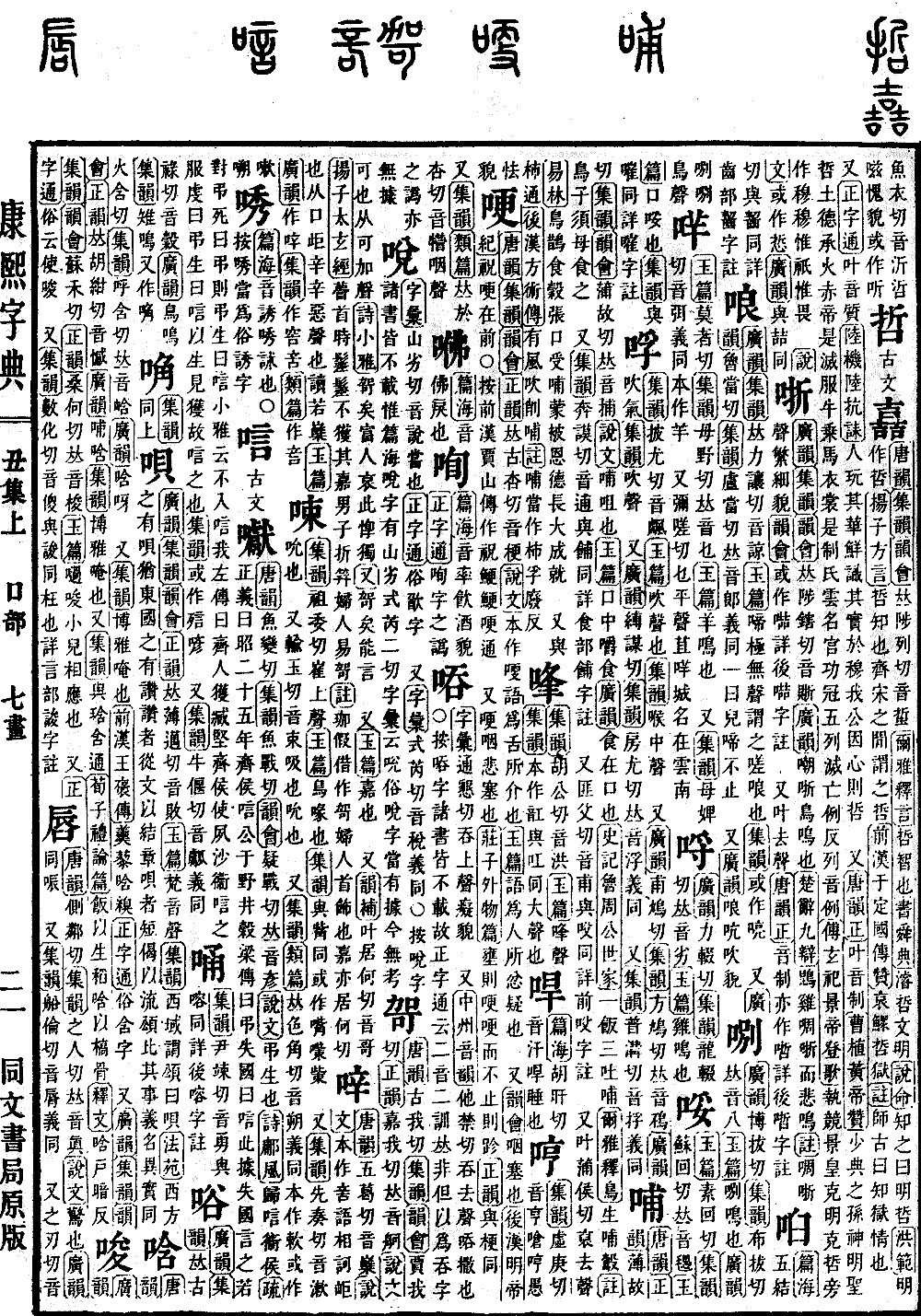
Chou Collection, Upper Volume
Radical: Mouth (kǒu)
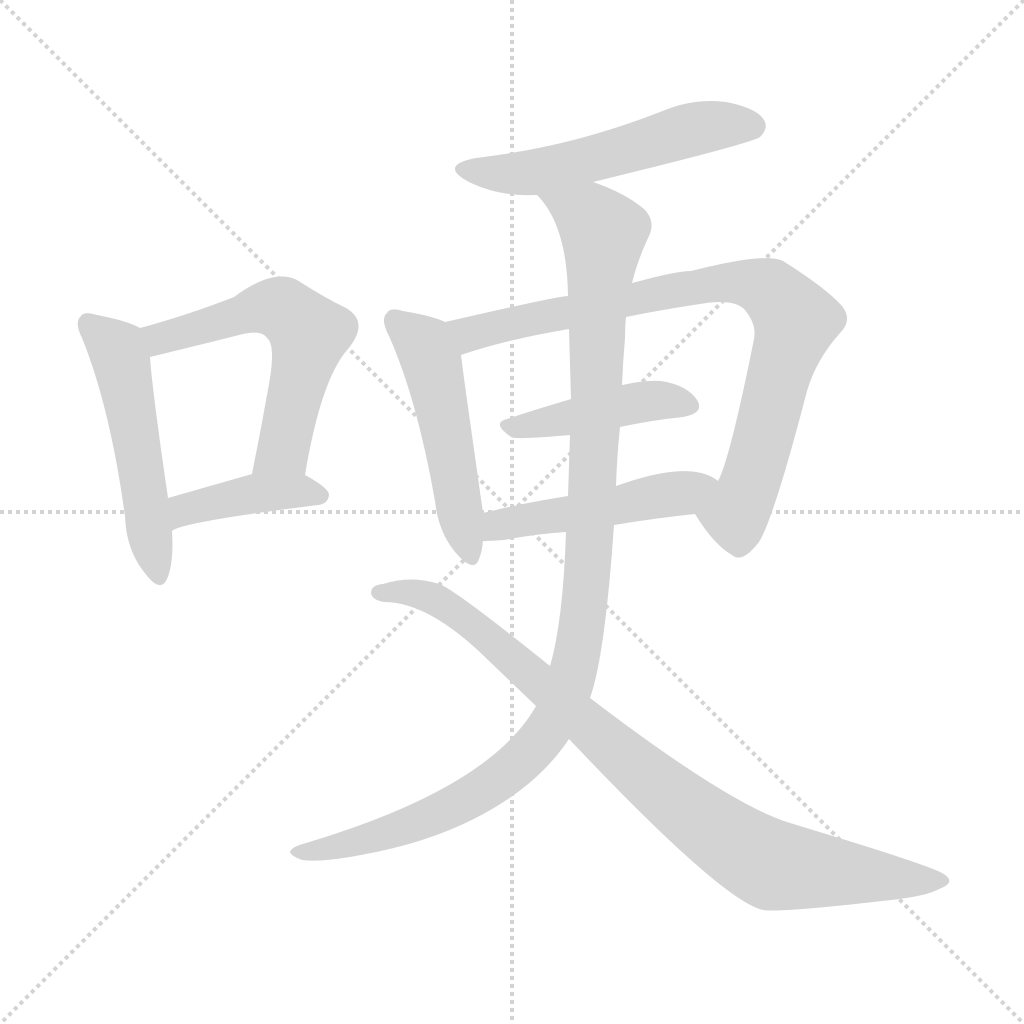
哽
Kangxi strokes: 10
Page 191, Entry 15
Pronounced gěng.
In the Shuowen Jiezi (Shuowen), it is written as a variant. It refers to being obstructed by the tongue while speaking. According to the Yupian, it refers to speaking in a way that causes others to be suspicious or dissatisfied.
Also, according to the Yunhui, it refers to an obstruction in the throat. According to the Biography of Emperor Ming in the Book of the Later Han (Hou Hanshu), it is written as a ceremonial term for obstruction in the past. Note that in the Biography of Jia Shan in the Book of the Former Han (Qian Hanshu), it is written with a different character, but both are interchangeable.
Also, it refers to sobbing, where the voice is obstructed due to grief. According to the Outer Objects chapter of the Zhuangzi, if it is obstructed then it will become choked; if it is choked and does not cease, it will become disordered.
According to the Zhengyun, it is identical to the character for stalk (gěng).
Also, according to the Jiyun and the Leipian, it is pronounced wù. It refers to a sound made in the throat.