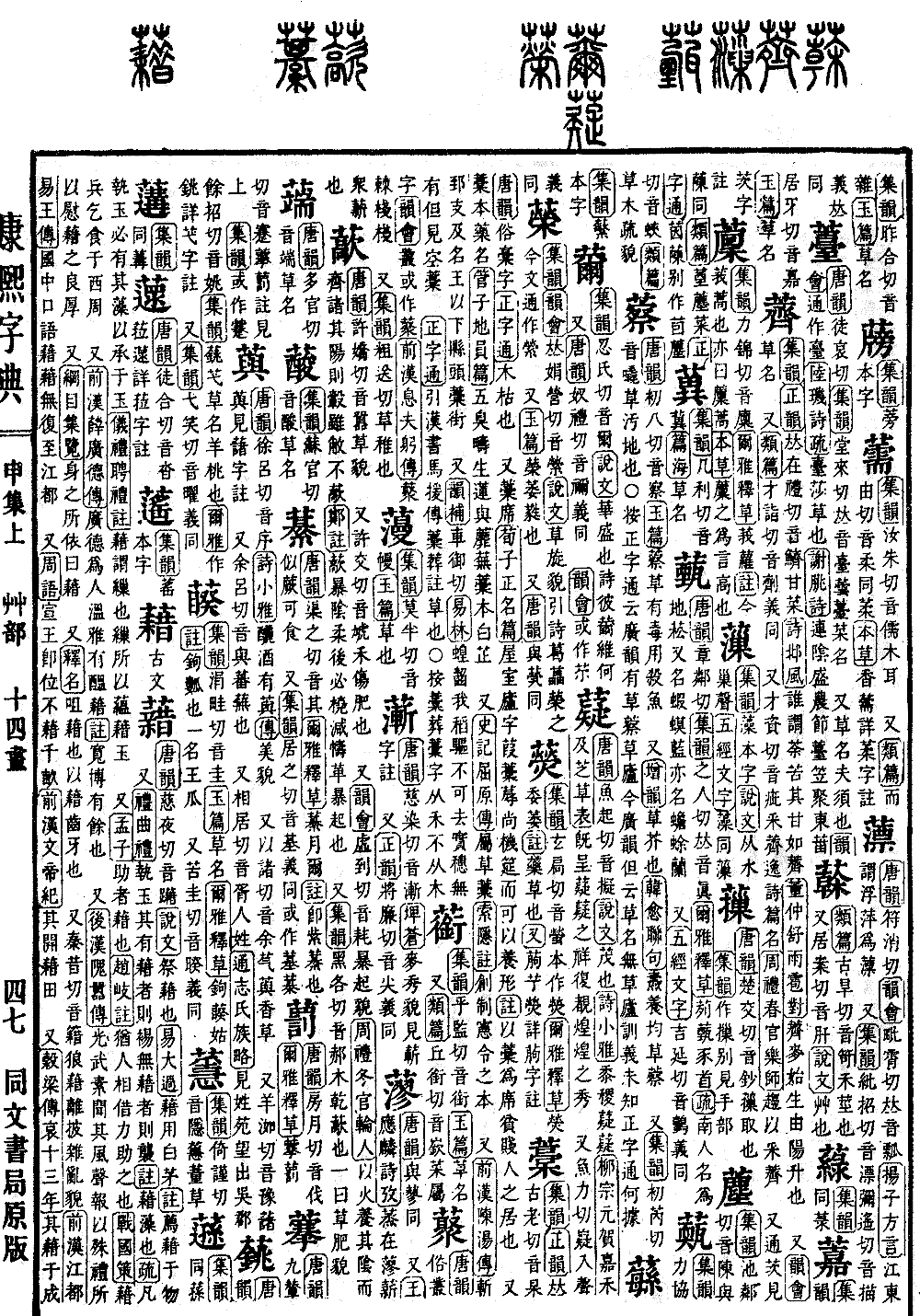
Shen Collection, Upper Volume
Radical: Grass (cǎo)
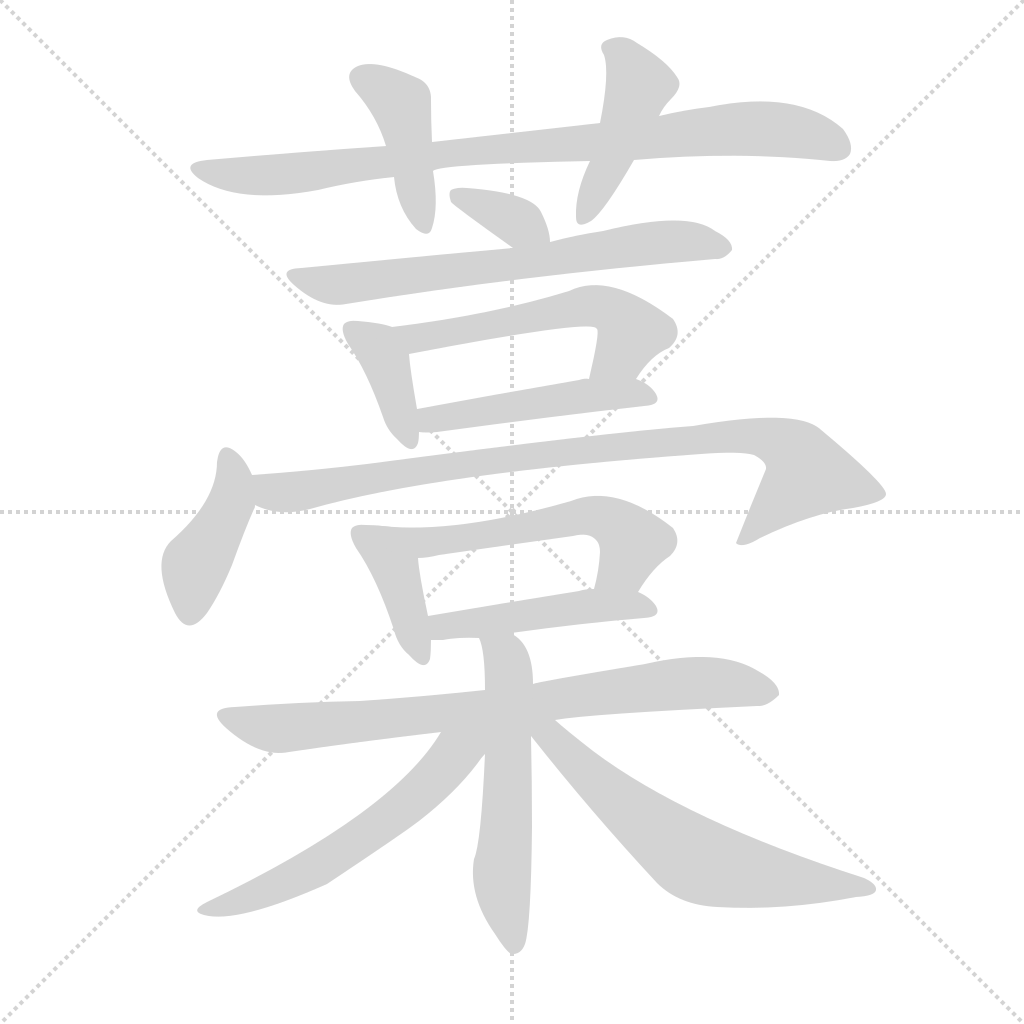
Gao
Kangxi stroke count: 14
Page 1063, Entry 22
According to Rhyme Compilation (Jiyun) and Orthography Rhymes (Zhengyun), it is pronounced gao. According to Tang Rhymes (Tangyun), it is a common form of the character for dry wood.
According to Comprehensive Standard of Characters (Zhengzitong), it refers to withered wood. It also refers to a straw mat. In the Chapter on Rectification of Names from the Xunzi (Xunzi), it states: For houses, rooms, huts, and halls, [people use] reeds, straw, and mats, [and even] furniture and screens, to nourish the body. The commentary explains: Using straw for mats is the dwelling of poor and lowly people.
It also refers to ligusticum, a medicinal herb. In the Chapter on Earth's Resources from the Guanzi (Guanzi), it states: The five smells [of the earth] bring forth lotus, lovage, ligusticum, and angelica.
Also in the Biography of Qu Yuan from the Records of the Grand Historian (Shiji), it mentions: To prepare a first draft. The commentary in the Search for Hidden Matters (Suoyin) explains: This refers to the original draft of newly created laws and decrees.
Also in the Biography of Chen Tang from the History of the Former Han (Qianhanshu), it states: Beheading Zhizhi and the named kings and below, and hanging their heads in Gao Street.
According to Rhyme Supplement (Yunbu), it is also pronounced yu. In the Forest of Changes (Yilin), it states: Locusts gnaw my rice, and though I drive them away, they do not leave. The ears of grain are gone, and only empty stalks are seen.
Comprehensive Standard of Characters (Zhengzitong) cites the commentary on the Biography of Ma Yuan in the History of the Han (Hanshu) regarding burial in straw, noting that it means grass. It is noted that for the character meaning straw for burial, the radical is grain, not wood.