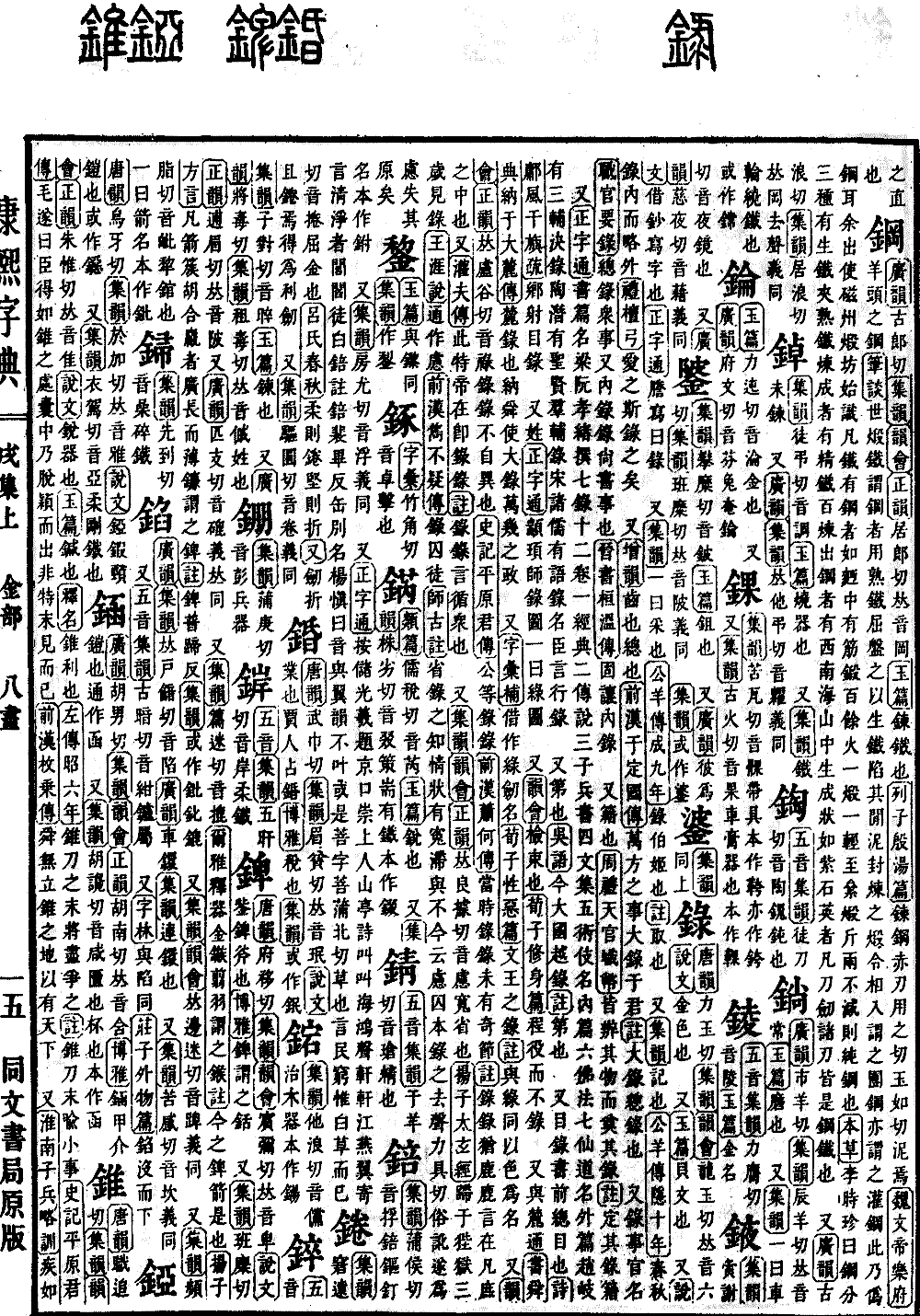
Xu Collection, Upper Volume
Radical: Metal (jīn)
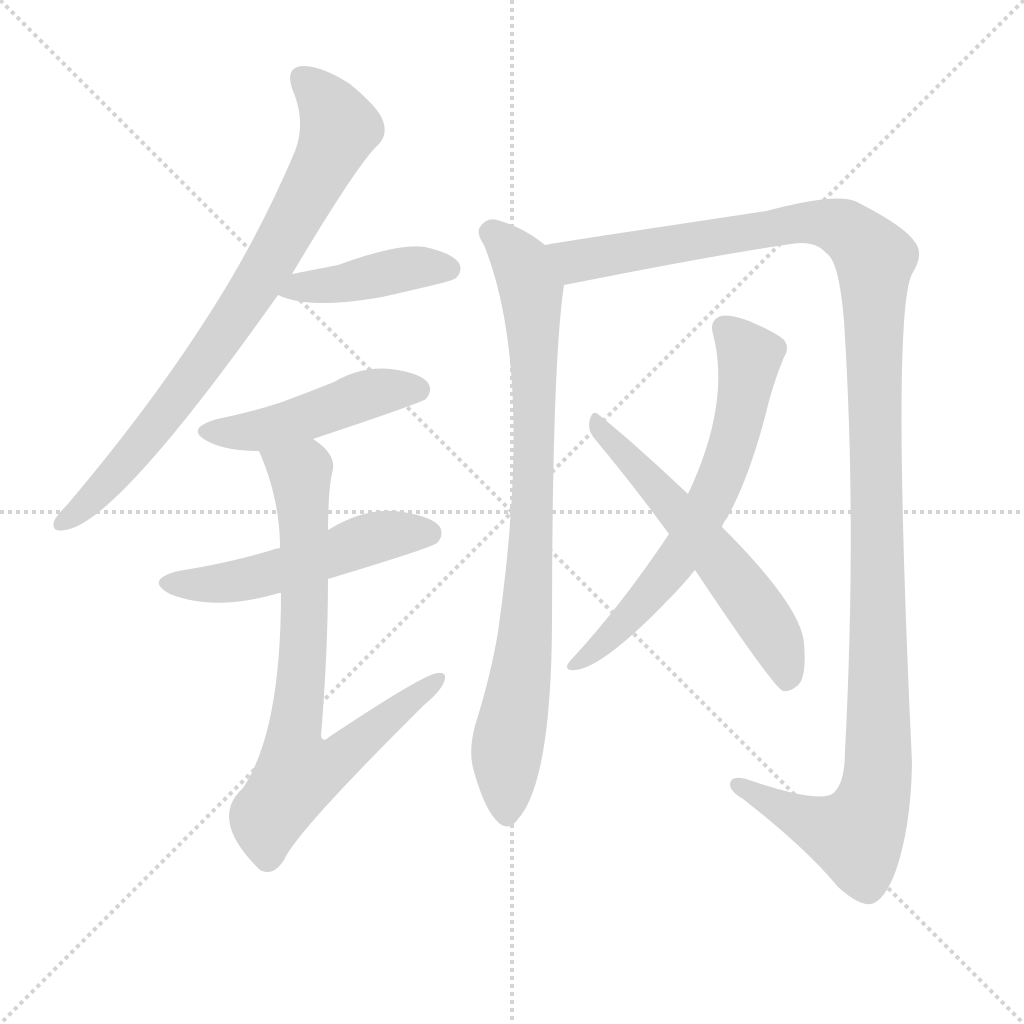
Steel
Kangxi strokes: 16
Page 1309, Entry 01
Pronounced gang.
Refined iron.
Liezi, Chapter on Tang's Questions (Tangwen pian): Refining steel to a red blade, used to cut jade as if cutting mud.
Emperor Wen of Wei, Music Bureau (Yuefu): The steel of Yangtou.
Brush Talks (Bitan): The world calls forged iron steel by taking wrought iron, coiling it, placing cast iron within the spaces, sealing it with clay, and heating it so they fuse together. This is called cluster steel or poured steel; it is merely imitation steel. When I was sent as an envoy to the Cizhou forging workshops, I first realized that in ordinary iron containing steel, it is like veins in dough. If one forges it over a hundred fires, each forging makes it lighter, but when it reaches the point where repeated forging does not reduce its weight, it is pure steel.
Compendium of Materia Medica (Bencao): Li Shizhen states that steel is divided into three types: those made by refining cast iron with wrought iron, those made by refining iron a hundred times to produce steel, and those naturally formed in the mountains of the southwestern sea, shaped like purple fluorite. All blades such as swords and knives are made of steel.
Also pronounced gang (falling tone). The meaning is the same.
Textual research: Liezi, Chapter on Yin Tang (Yin Tang pian): Refining steel to a red blade, used to cut jade as if cutting mud. Carefully corrected to Tang's Questions (Tangwen pian) based on the original book.