Zi Collection, Middle Volume
Radical: Person (rén)
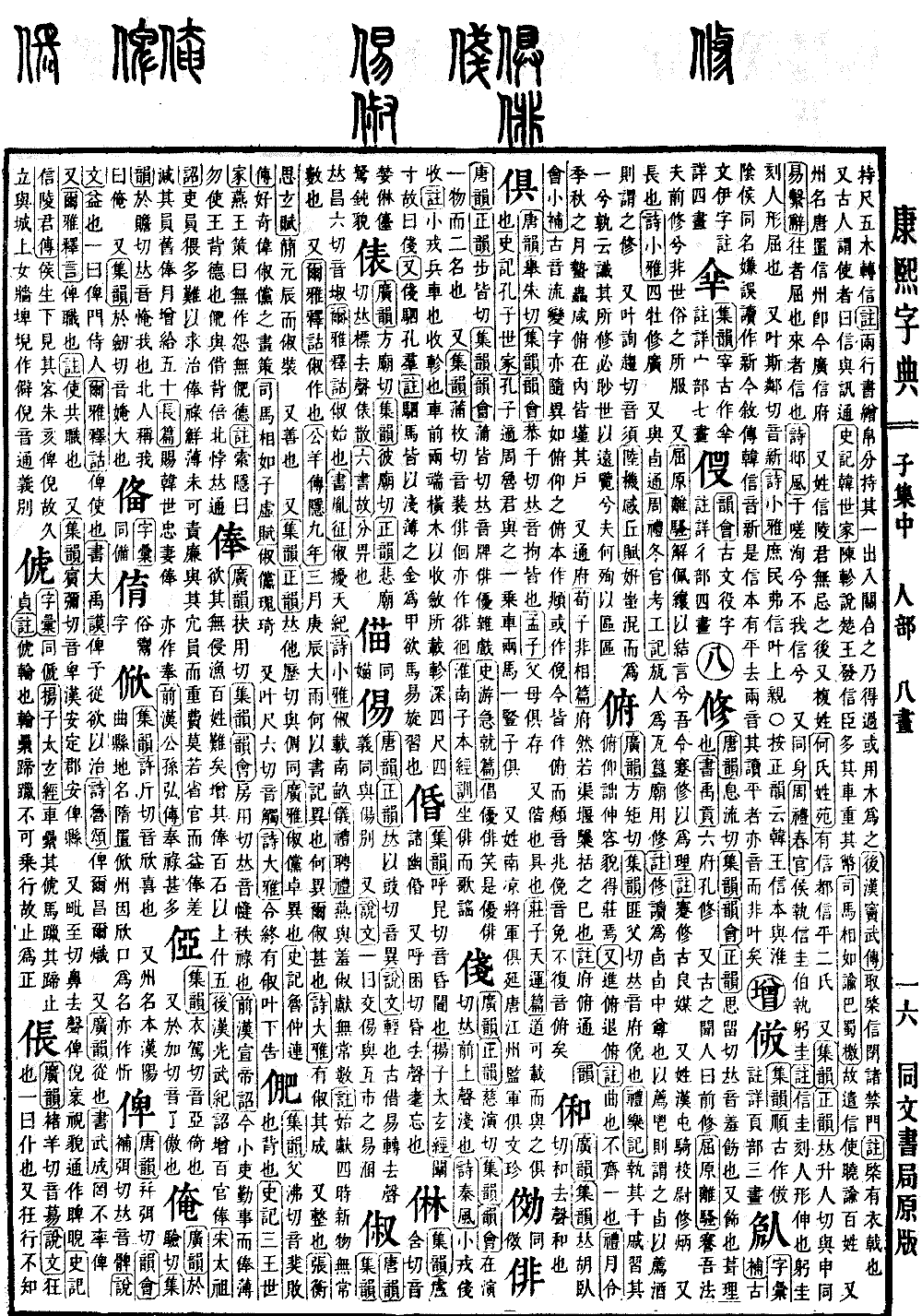
俸
Kangxi stroke count: 10
Page 106, Entry 19
Pronounced fèng. The salary of an official.
Book of Documents (Guangyun): Pronounced fèng.
Collected Rhymes (Jiyun) and Rhyme Collection (Yunhui): Pronounced fèng.
Edict of Emperor Xuan in History of the Former Han (Qianhan shu): Nowadays, low-ranking officials have heavy duties but meager salaries. It is too difficult to expect them not to extort or exploit the people. For those with salaries of one hundred shi of grain or more, increase their stipends by five tenths.
Annals of Emperor Guangwu in History of the Later Han (Houhan shu): Issued an edict to increase the salaries of all officials.
Edict of Emperor Taizu of Song: The number of officials is too high, making it difficult to achieve good governance. If their salaries are too low, one cannot demand integrity from them. Rather than retaining redundant officials and incurring high costs, it is better to reduce the number of officials and increase their salaries. Accordingly, reduce the number of officials and increase the original monthly salary by fifty.
Long Chronicle (Changpian): Bestowed a salary upon the wife of Han Shizhong.
Sometimes also written in a variant form (fèng).
Biography of Gongsun Hong in History of the Former Han (Qianhan shu): The salary was extremely generous.