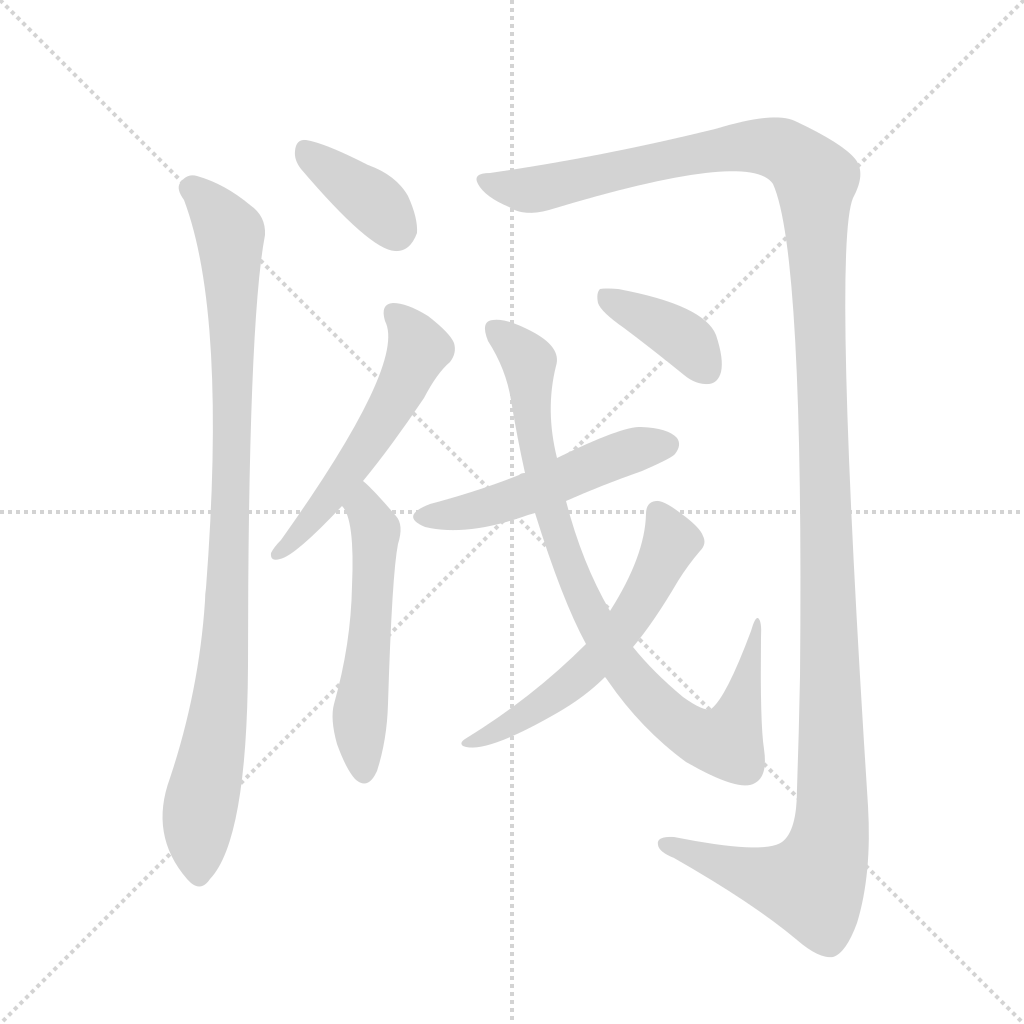
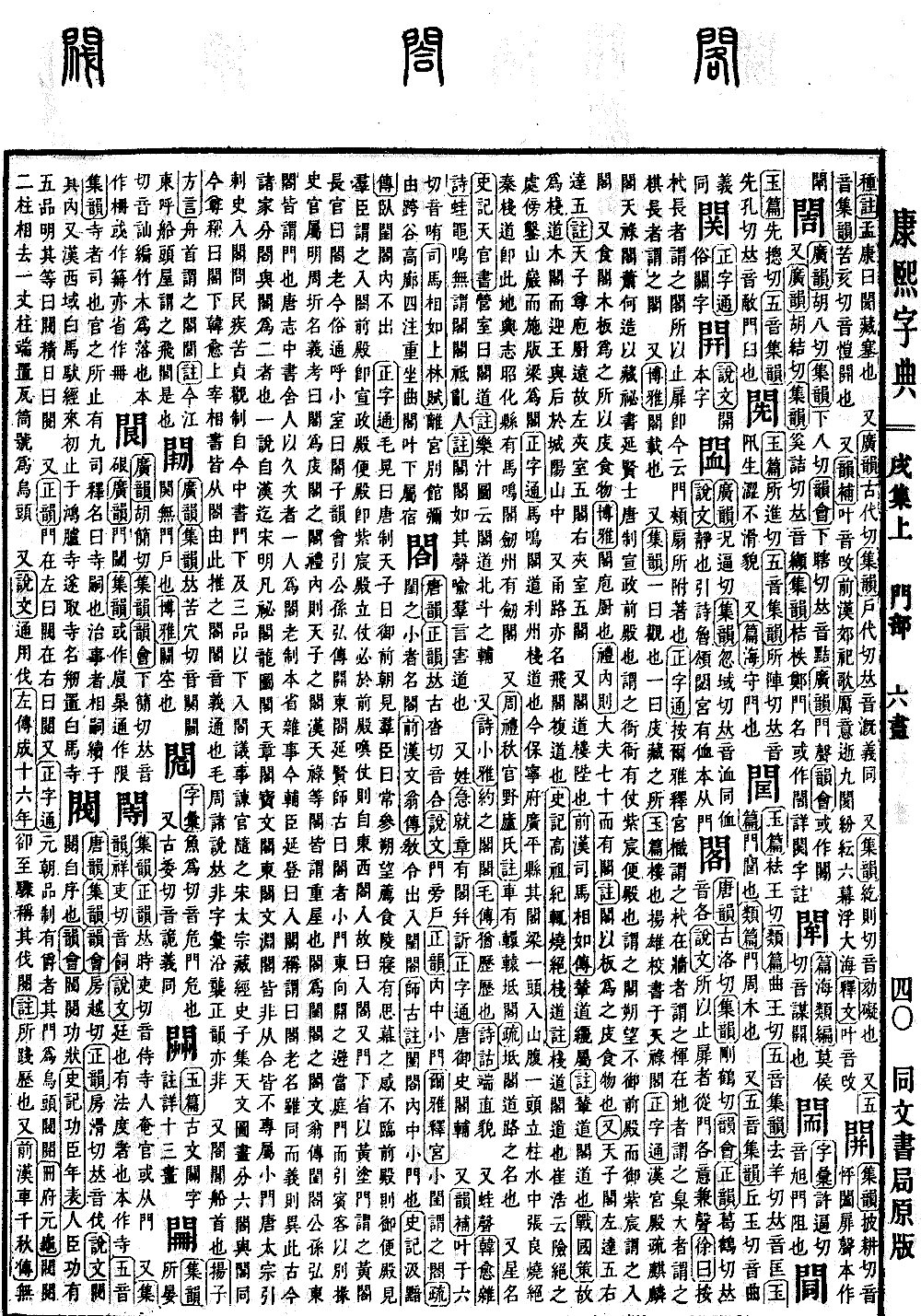
Xu Collection, Upper Volume
Radical: Gate (mén)
14 strokes
Page 1334, Entry 01
Pronounced fa.
Shuowen Jiezi: The term fa yue refers to an autobiographical account.
Yunhui: The term fa yue refers to a record of meritorious services.
Records of the Grand Historian (Shiji): There are five grades of merit for officials; clarifying these ranks is called fa, and accumulating days of service is called yue.
Zheng Yun: The side of the gate on the left is called fa, and the side on the right is called yue.
Zhengzitong: During the Yuan Dynasty, the regulations for those with noble titles specified that their gate should be an utou fa yue (a type of ornate gate structure).
Cefu Yuangui: The fa yue consisted of two pillars separated by a distance of ten feet, with clay tiles placed on top of the pillars, known as utou.
Shuowen Jiezi: Commonly used interchangeably with the character for merit (fa).
Zuo Commentary (Zuozhuan): In the sixteenth year of Duke Cheng, Que Zhi frequently boasted of his merits (fa).
Du Yu Commentary: Fa means merit.
Book of Han (Qianhan Shu): Without the merit (fa yue) of service.
Commentary: Yan Shigu says: Fa means the accumulation of merit.
Textual verification:
Shuowen Jiezi: Commonly used interchangeably with the character for merit (fa).
Zuo Commentary (Zuozhuan): In the sixteenth year of Duke Cheng, Que Zhi frequently boasted of his merits (fa yue).
Commentary: Refers to what one has experienced and traversed. Based on the original text, the character yue is omitted, and the original commentary is corrected to state that fa refers to merit.