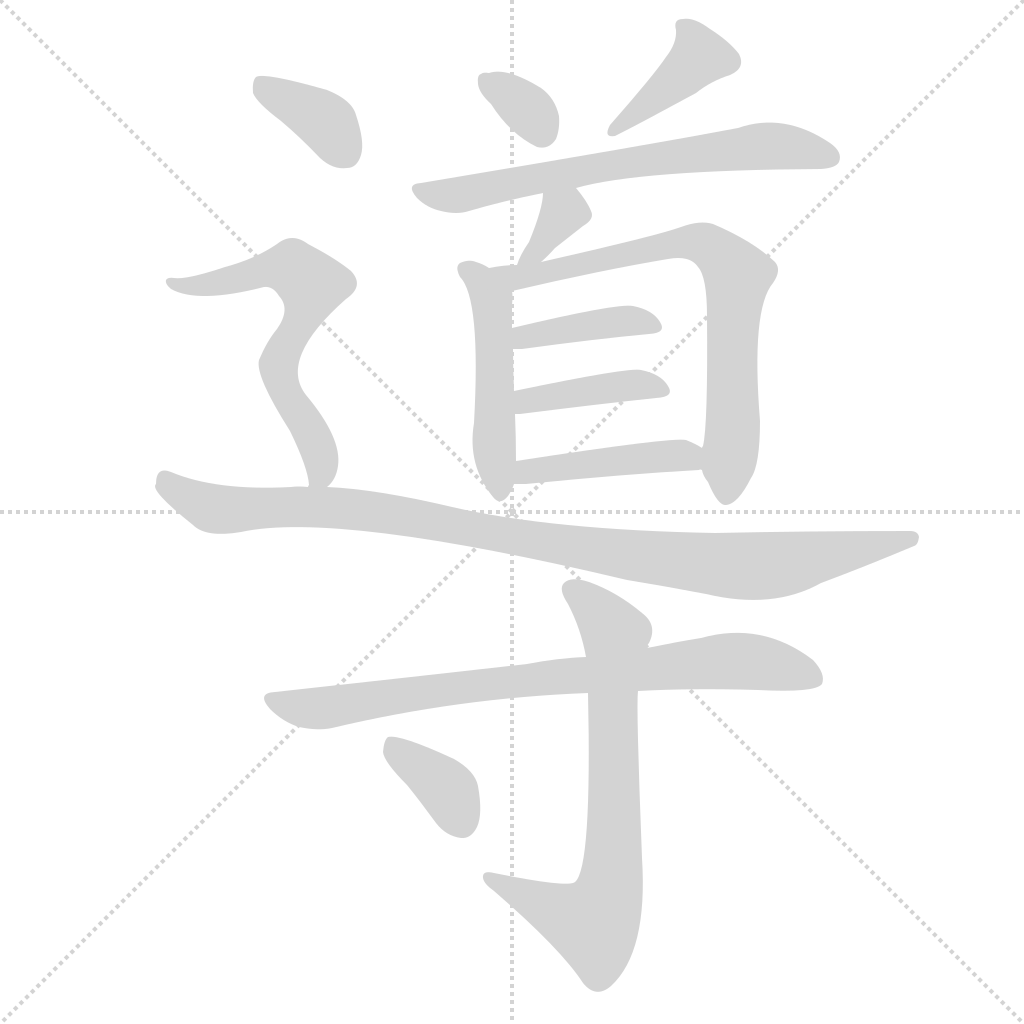
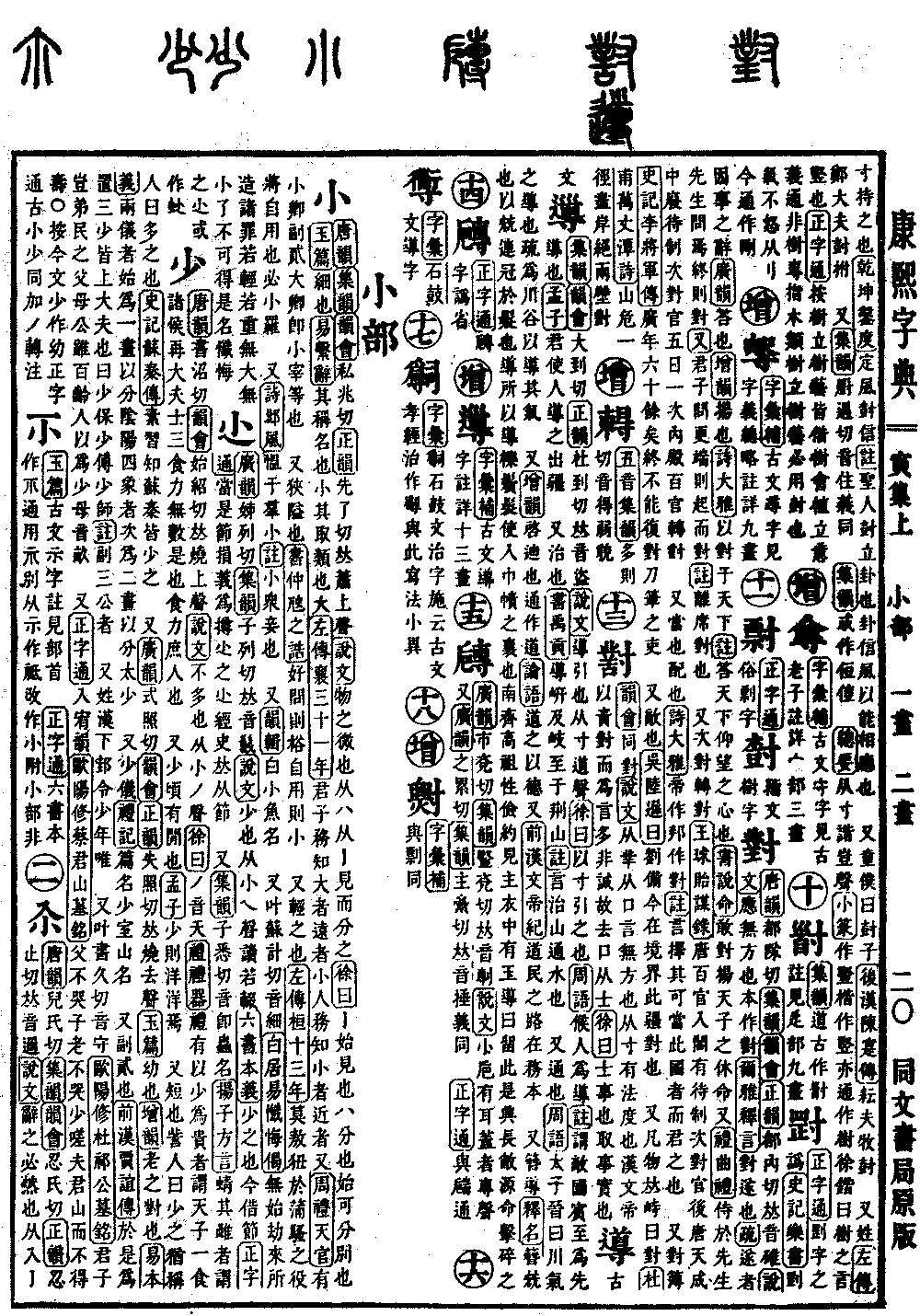
Yin Collection, Upper Volume
Radical: Inch (cùn)
Kangxi Strokes: 16
Page 296, Entry 10
In classical texts: Compendium of Rhymes (Jiyun) and Collection of Rhymes (Yunhui) both state it is pronounced dao (falling tone). Correct Rhymes (Zhengyun) states it is pronounced dao (falling tone). The pronunciation is the same as dao (falling tone).
Explanation in Explaining Graphs and Analyzing Characters (Shuowen Jiezi): The character means to guide. The character structure is derived from the radical for inch, with dao as the phonetic component.
Annotations by Xu Kai state: It implies using an inch to pull or lead.
Records in Discourses of the States (Zhouyu): There are those who serve as guides.
Annotation: This refers to a person who acts as a vanguard when guests from hostile states arrive.
Records in Mencius: The ruler sent someone to guide him out of the border.
It also carries the meaning of to govern.
Records in Book of Documents (Shangshu), Tribute of Yu (Yugong): Dredge and guide the Qian and Qi mountains, reaching as far as the Jing mountain.
Annotation: This refers to cutting through mountains and clearing waterways.
It also means to dredge or clear.
In Discourses of the States (Zhouyu), Crown Prince Jin states: The channeling of water vapor in the rivers, separating it into valleys, is used to clear its flow.
Additionally, Expanded Rhymes (Zengyun) defines it as to inspire. It is also used interchangeably with the character for way (dao).
Records in Analects (Lunyu): Guide them with virtue.
Also, records in History of the Former Han (Qian Hanshu), Annals of Emperor Wen: The way to guide the common people lies in focusing on the fundamentals.
There is also the term zan dao.
Explanation in Explanation of Names (Shiming): Zan refers to jin, used to connect the cap and the hair. Dao is an ornament used to comb the hair at the temples, allowing it to be tucked into the headcloth.
Emperor Gao of the Southern Qi dynasty was naturally frugal; seeing a jade dao among the garments of the chief attendant, he said: Keeping this thing is the root of encouraging corruption. He ordered it to be broken.