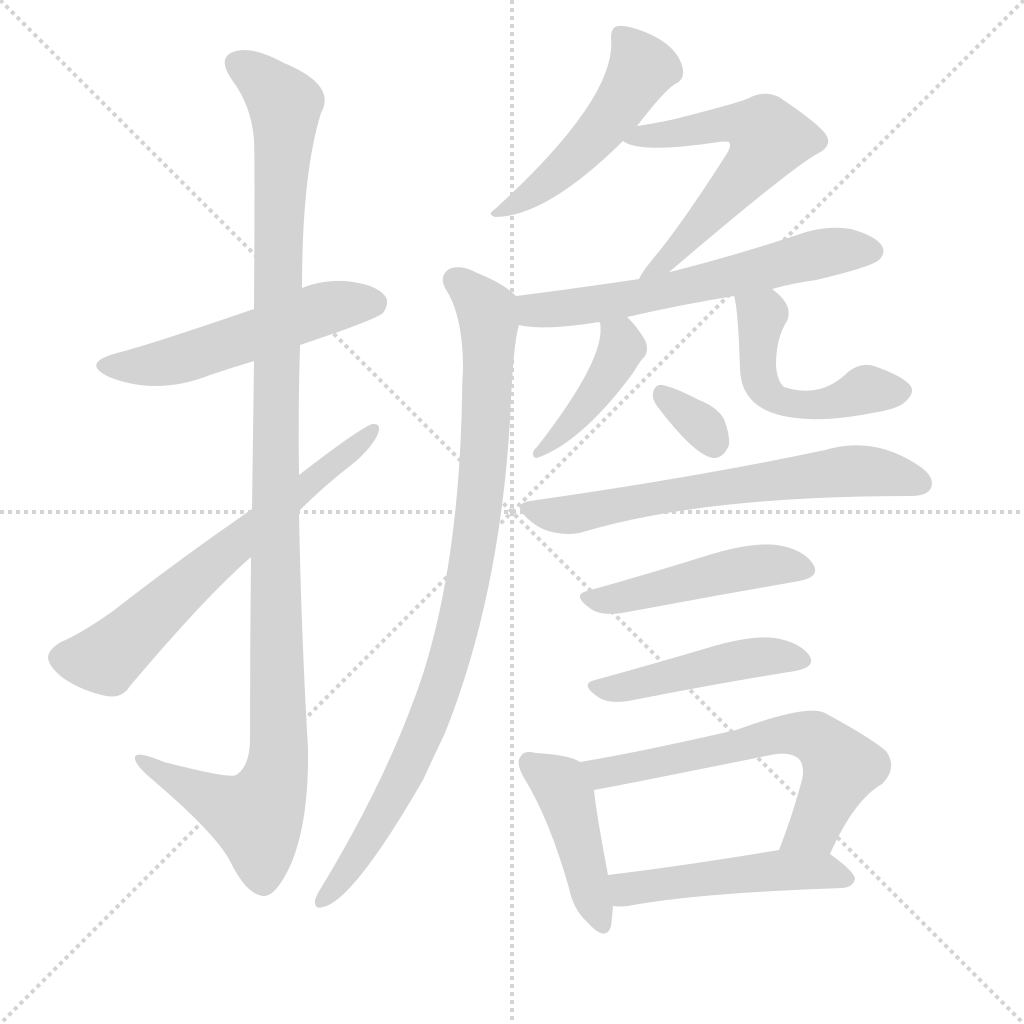
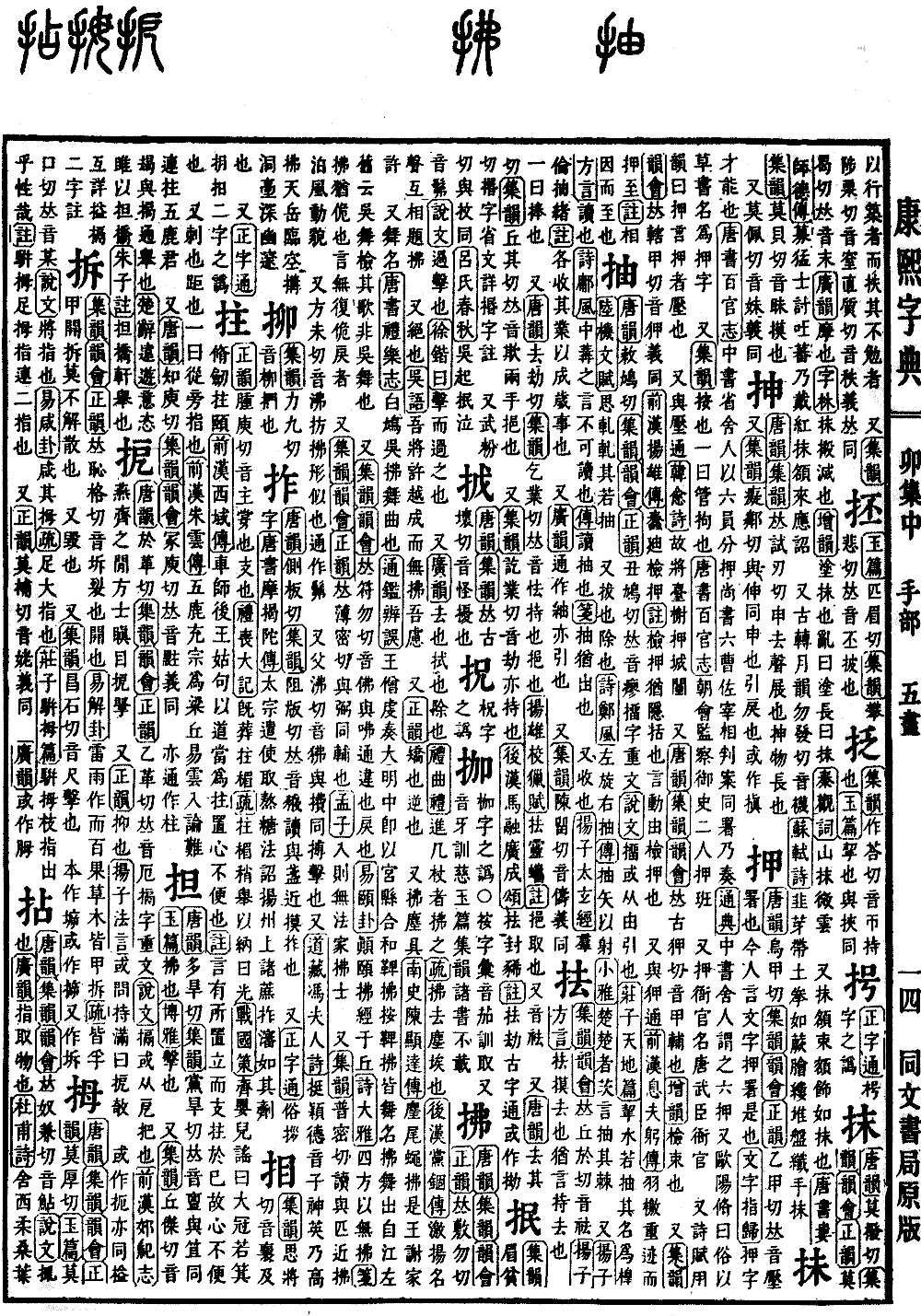
Mao Collection, Middle Volume
Radical: Hand (shǒu)
Kangxi stroke count: 17
Page 424, Entry 06
Pronounced dan (level tone). Identical to the character dan. Carrying things on the back is called fu, while carrying with a shoulder pole is called dan.
Explanations of Names (Shiming): Dan means to take responsibility, referring to bearing a weight within one's capacity.
Commentary on the Book of Changes (Yijing Xici): To carry means to bear an object on the back or shoulder.
Strategies of the Warring States (Zhanguoce): Su Qin wrapped his leggings and wore straw sandals, carrying his book box on his back and his luggage on a shoulder pole.
Also a place name, Zuodan.
Travels in Yizhou (Ren Yu Yizhou Ji): North of Yinping County is the Zuodan Road. For those coming to Chengdu from the north, it is located on the west side; travelers must carry their burdens on their left shoulders and cannot switch to their right.
Also a mountain name, Wudan, located northwest of Chengdu.
Records of the Three Kingdoms (Shuzhi Xianzhuzhuan Zhu): When the wife of the King of Shu died, soldiers were conscripted to carry earth to build a tomb seven zhang high outside the walls of Chengdu, which was called Wudan.
Also pronounced dan (falling tone). Refers to the object being carried.
Zuo Commentary (Zuozhuan Zhuang 22nd year): To unload a burden.
Annotation: Pronounced zhan.
Also, meaning to borrow or lend.
Book of Rites (Liji Sangfu Sichi): Why does one lean on a staff? It is because one holds a noble rank. Some say it is a token lent to the chief mourner.
Book of Etiquette and Ceremonial (Yili Sangfu): Why does one lean on a staff without having a noble rank? It is a token lent to the chief mourner.
Annotation: Lending him the staff is to honor him as the chief mourner.
Also pronounced yan (falling tone). Meaning is the same.