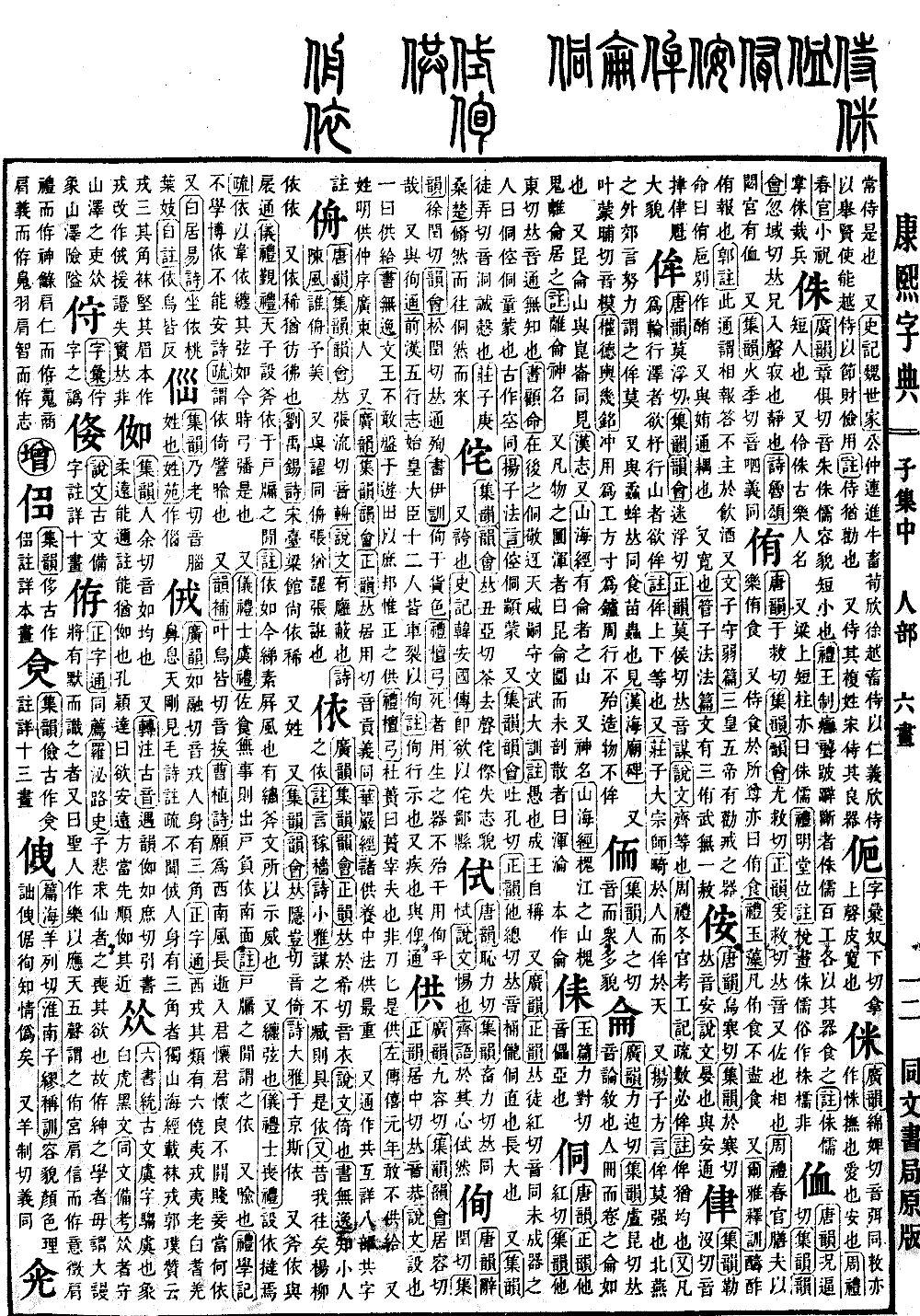
Zi Collection, Middle Volume. Radical: Person (rén). dòng. Kangxi Stroke Count: 8. Page 102, Number 12. According to the Tang Rhymes (Tángyùn) and Correct Rhymes (Zhèngyùn), the fanqie pronunciation is tā and hóng. According to the Collected Rhymes (Jíyùn), the fanqie pronunciation is tā and dōng. Sounded as tōng. Meaning ignorant or without knowledge. Book of Documents (Shujing): I, the ignorant youth who has come after, respectfully receive the majesty of Heaven, to succeed to and maintain the great instructions of King Wen and King Wu. Commentary: It means foolish; a self-appellation used by King Cheng. Also according to the Broad Rhymes (Guǎngyùn) and Correct Rhymes, the fanqie pronunciation is tú and hóng. Sounded as tóng. A person who has not yet become an accomplished vessel is called dòng. The compound kǒngdòng refers to an ignorant child or a simple-minded person. In ancient times, it was written as kōngtóng. Yangzi's Model Sayings (Fayan): Ignorant and simple-minded. Also according to the Collected Rhymes and the Rhyme Assembly (Yùnhuì), the fanqie pronunciation is tǔ and kǒng. According to the Correct Rhymes, the fanqie pronunciation is tā and zǒng. Sounded as tǒng. The compound lǒngdòng means upright or tall and large. Also according to the Collected Rhymes, the fanqie pronunciation is tú and nòng. Sounded as dòng. Meaning sincere and honest. Zhuangzi (Zhuāngzǐ): Going forth with composure, coming back with sincerity.