You Collection, Upper Volume
Radical: Speech (yán)
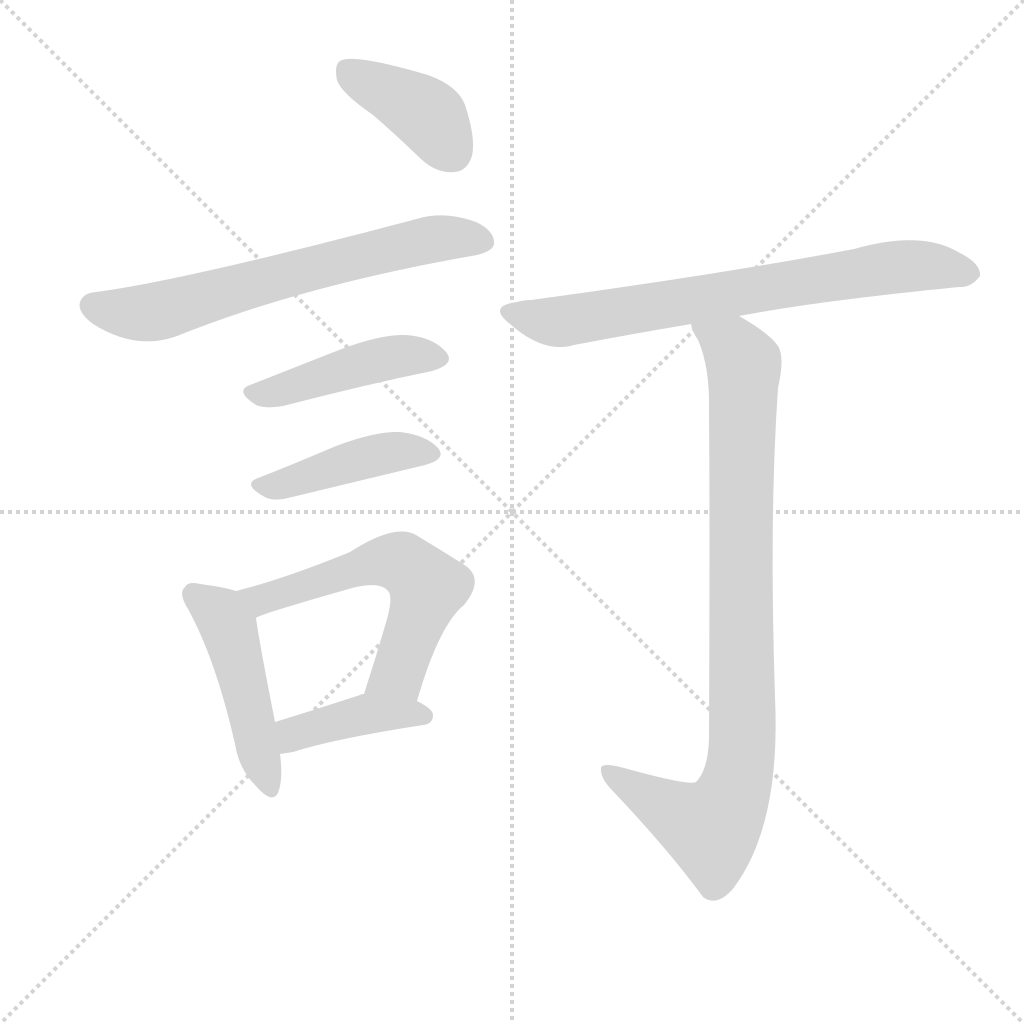
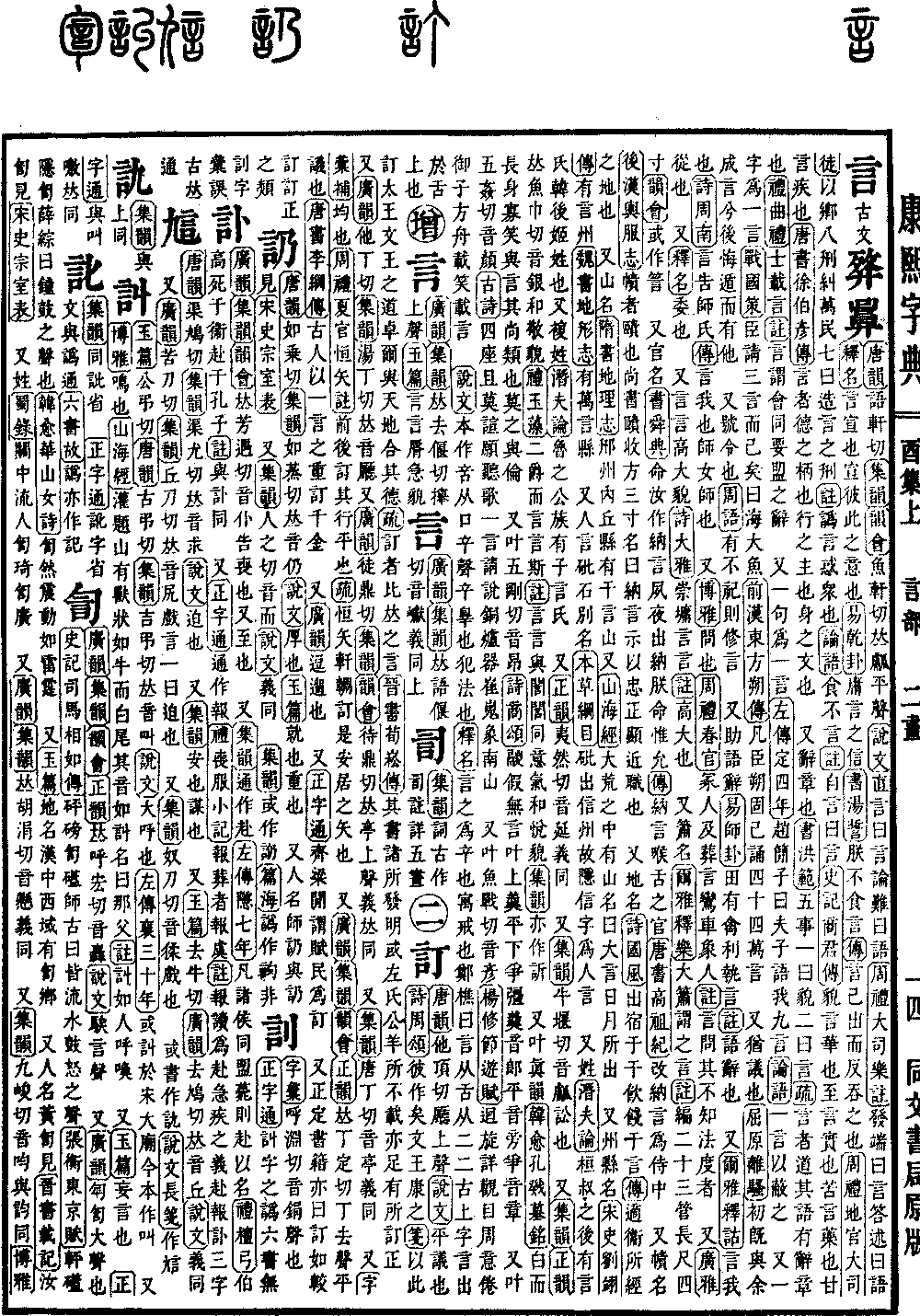
訂; Kangxi strokes: 9; Page 1146, Entry 07
Tang Rhymes (Tangyun): Pronounced ding (rising tone).
Explaining Graphs and Analyzing Characters (Shuowen): To discuss and deliberate.
Book of Odes (Shijing), Zhou Odes (Zhousong): They acted; King Wen brought peace to it.
Commentary (Jian): By this, one deliberates on the path of King Tai and King Wen, standing tall with virtues that harmonize with heaven and earth.
Sub-commentary (Shu): To deliberate means words of comparison.
History of the Jin (Jinshu), Biography of Xun Song: The inventions in his writings, though not recorded in the Zuo Commentary (Zuozhuan) or the Gongyang Commentary (Gongyangzhuan), are sufficient for verification and correction.
Also, Broad Rhymes (Guangyun): Pronounced ding. Collected Rhymes (Jiyun): Pronounced ting. Also, Broad Rhymes (Guangyun): Pronounced ding (rising tone). Collected Rhymes (Jiyun) and Rhyme Collection (Yunhui): Pronounced ding (rising tone). The meaning is the same.
Also, Collected Rhymes (Jiyun): Pronounced ting. The meaning is the same.
Also, Supplement to the Dictionary (Zihuibu): To make level.
Rites of Zhou (Zhouli), Ministry of Summer, Hengshi Commentary: Front and back are leveled (ding), their movement is balanced.
Sub-commentary (Shu): The Hengshi chariot and its leveled (ding) state refer to an arrow that is steady when placed.
Also, Broad Rhymes (Guangyun), Collected Rhymes (Jiyun), Rhyme Collection (Yunhui), and Orthodox Rhymes (Zhengyun): Pronounced ding (departing tone). To discuss and deliberate.
History of the Tang (Tangshu), Biography of Li Gang: The ancients weighed a single word as worth a thousand pieces of gold.
Also, Broad Rhymes (Guangyun): To linger or delay.
Also, Comprehensive Dictionary (Zhengzitong): In the Qi and Liang dynasties, taxing the people was called ding.
Also, the correction and stabilization of books is also called ding, such as in the phrases collation (jiaoding) or verification and correction (dingzheng).