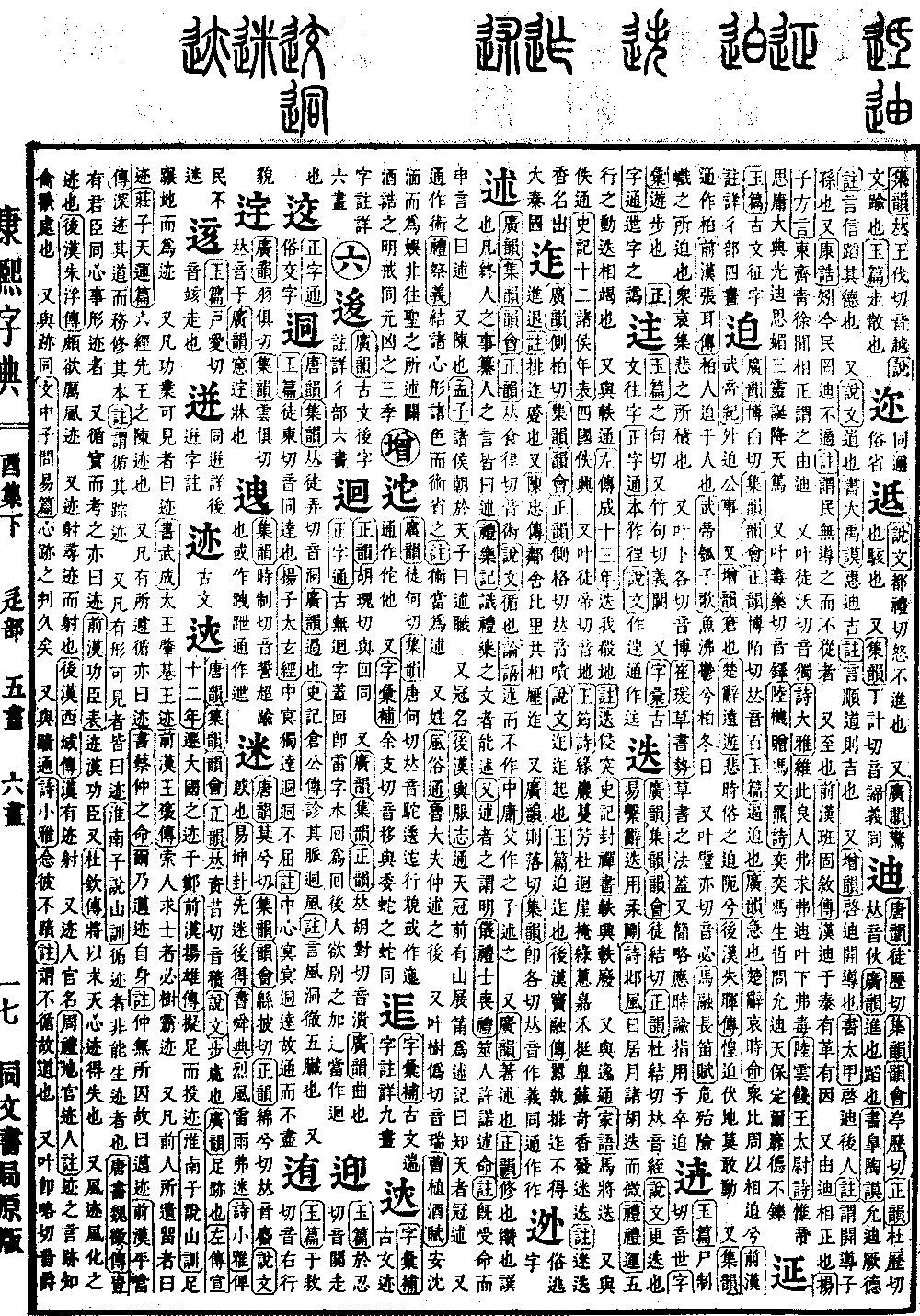
You Collection, Lower Volume
Radical: Walk (chuò)
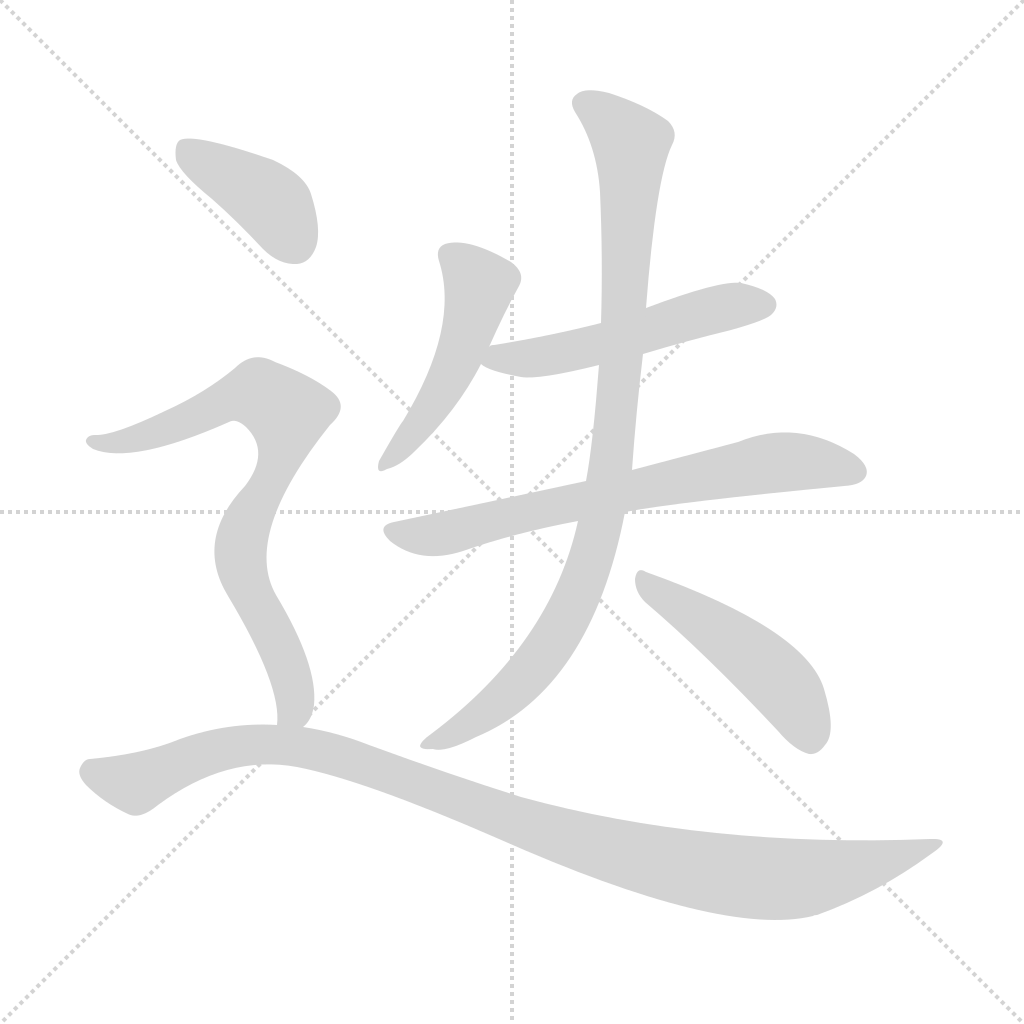
Character: Die
Kangxi Strokes: 12
Page 1255, Entry 08
Broad Rimes (Guangyun), Collected Rimes (Jiyun), and Compilation of Rimes (Yunhui) cite the pronunciation as tie, and Correct Rimes (Zhengyun) cites the pronunciation as die, pronounced die.
In Explaining Simple and Analyzing Compound Characters (Shuowen), it means to alternate.
Book of Changes (Yijing), Appended Remarks: Alternating use of yielding and firm.
Book of Odes (Shijing), Odes of Bei: Days pass and months go, why do they alternate and wane?
Book of Rites (Liji), Evolution of Rites: The movement of the five phases, alternating and exhausting one another.
Also used interchangeably with yi.
Zuo Tradition (Zuo Zhuan), Thirteenth Year of Duke Cheng: Invading our Xiao territory.
Commentary: Die means to encroach or assault.
Records of the Grand Historian (Shiji), Treatise on the Suburban Sacrifices: Alternately rising and alternately falling.
Also used interchangeably with yi.
Family Sayings (Jiayu): The horses are about to bolt.
Also used interchangeably with yi.
Records of the Grand Historian (Shiji), Table of the Twelve Feudal Lords: The four states alternatingly rose.
Also rhyming with di, pronounced di.
Wang Yun's Poem: Vines cover the fragrant mountain, winding cliffs hide the green orchids. The auspicious grain stands in the marsh, a strange scent rises from the rosemary.
Commentary: Rosemary, a type of incense. It comes from the Daqin Kingdom.