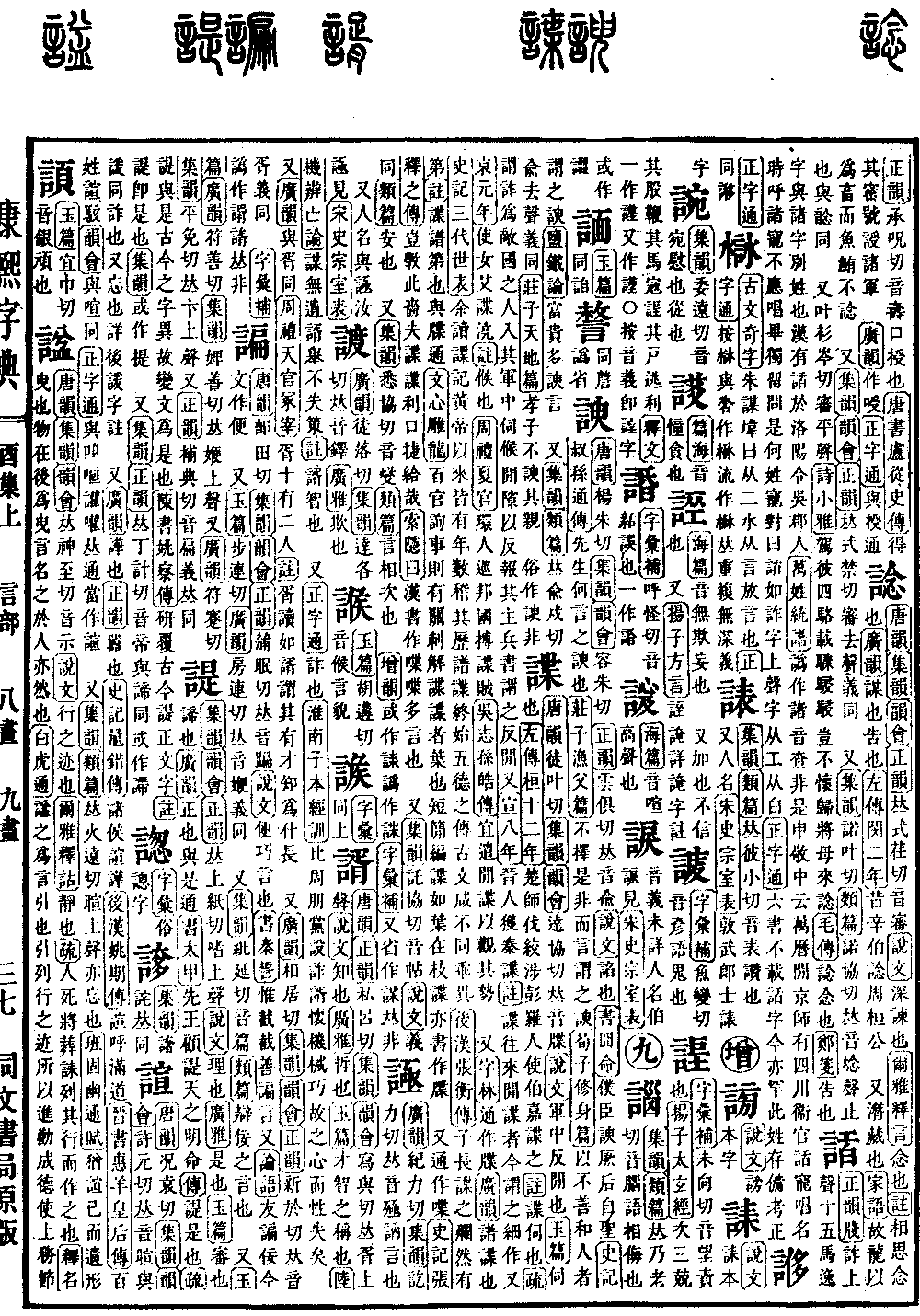
You Collection, Upper Volume
Radical: Speech (yán)
Kangxi Strokes: 16
Page 1169, Entry 20
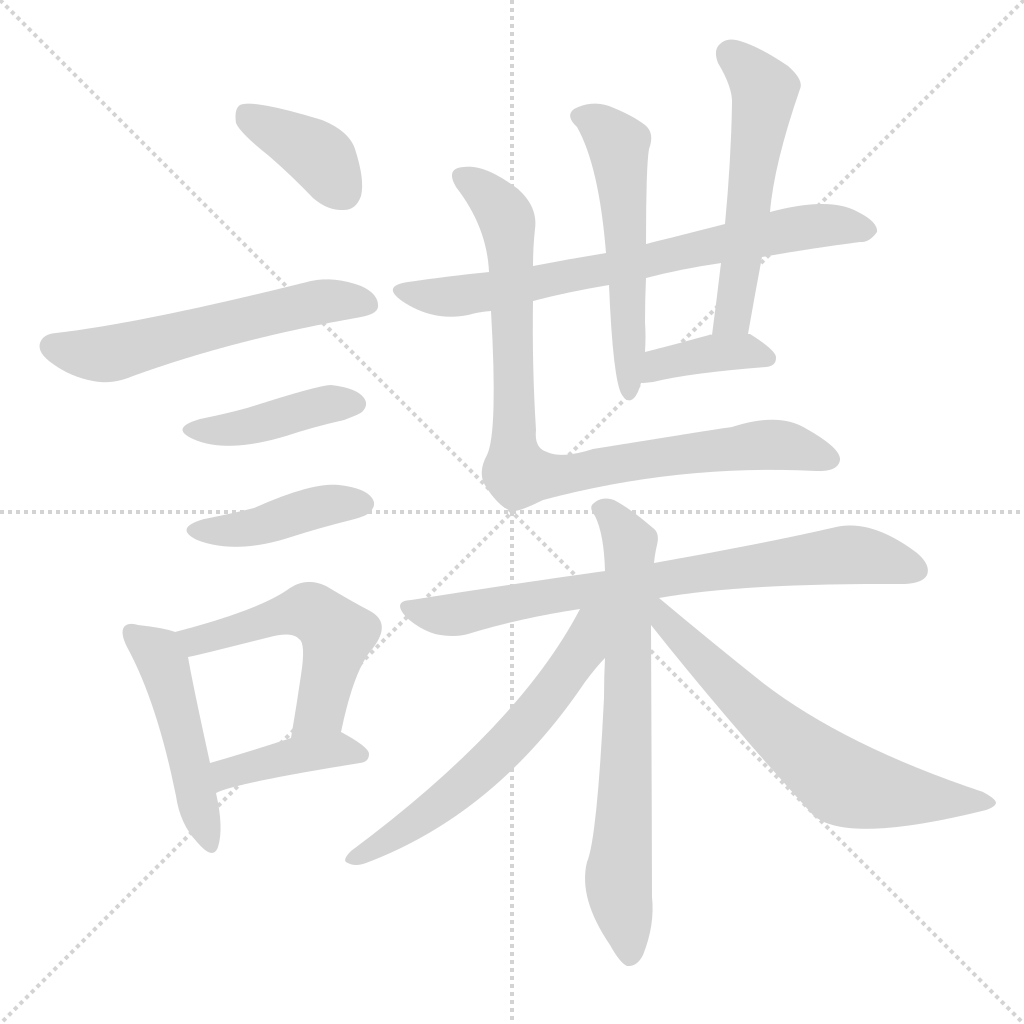
Pronounced die.
According to the Shuo Wen Jie Zi (Explaining Graphs and Analyzing Characters), it refers to counter-espionage within the military. According to the Yu Pian (Jade Chapters), it means to scout or reconnoiter.
In the Zuo Zhuan (Chronicle of Zuo), regarding the twelfth year of Duke Huan: The Chu army divided its forces to cross the Peng River, and the Luo people sent Bo Jia to spy on them. The commentary notes that this means to scout. The sub-commentary explains that this refers to feigning membership in an enemy state to infiltrate their military, spy for weaknesses, and report information back to one's own lord; military texts refer to this as counter-espionage.
In the eighth year of Duke Xuan: The Jin people captured a spy from the State of Qin. The commentary notes that this refers to one who travels back and forth to conduct espionage, now called a secret agent.
In the first year of Duke Ai: Nü Ai was sent to scout out Jiao. The commentary notes that this also means to scout.
In the Rites of Zhou (Zhouli), Summer Offices: The Huan officials patrol the state to apprehend spies and criminals.
In the Records of Wu (Wuzhi), Biography of Sun Hao: One should dispatch spies to observe the enemy's situation.
Additionally, according to the Zi Lin (Forest of Characters), it is used interchangeably with die (document). According to the Guang Yun (Expanded Rhymes), it refers to a genealogy or record.
In the Records of the Grand Historian (Shiji), Table of the Three Eras: I have read the records and genealogies; since the time of the Yellow Emperor, there have been recorded years. Upon examining the traditions concerning the cyclical succession of the Five Virtues in those calendars and genealogies, the ancient records differ and contradict one another.
In the Book of the Later Han (Hou Hanshu), Biography of Zhang Heng: Sima Qian compiled them into genealogies, clear and orderly. The commentary notes that this refers to the order of genealogies, and is interchangeable with die.
In the Literary Mind and the Carving of Dragons (Wenxin Diaolong): When the hundred officials inquire about affairs, they use documents and records. Die has the same meaning as leaf, referring to short, compiled documents, similar to leaves on a branch. Die is also written as die.
It is also used interchangeably with die (chattering).
In the Records of the Grand Historian (Shiji), Biography of Zhang Shizhi: Would you have me learn from this granary official, chattering incessantly with a sharp tongue? The Suo Yin commentary states: The Book of Han (Hanshu) writes this as die-die, referring to talking too much.
Additionally, according to the Ji Yun (Collection of Rhymes), pronounced tie.
According to the Shuo Wen Jie Zi (Explaining Graphs and Analyzing Characters), the meaning is the same.
According to the Lei Pian (Classified Chapters), it means to be settled or secure.
According to the Ji Yun (Collection of Rhymes), pronounced xie.
According to the Lei Pian (Classified Chapters), it refers to words following one after another in sequence.
According to the Zeng Yun (Supplementary Rhymes), it is sometimes written as such, or erroneously written with the speech radical.
According to the Zi Hui Bu (Supplement to the Collection of Characters), it is also simplified as such, but this is incorrect.
Textual Research: In the Zuo Zhuan, regarding the twelfth year of Duke Huan, the entry regarding the Chu army attacking Jiao and crossing the Peng has been corrected according to the original text to state that they divided their forces to cross the Peng.