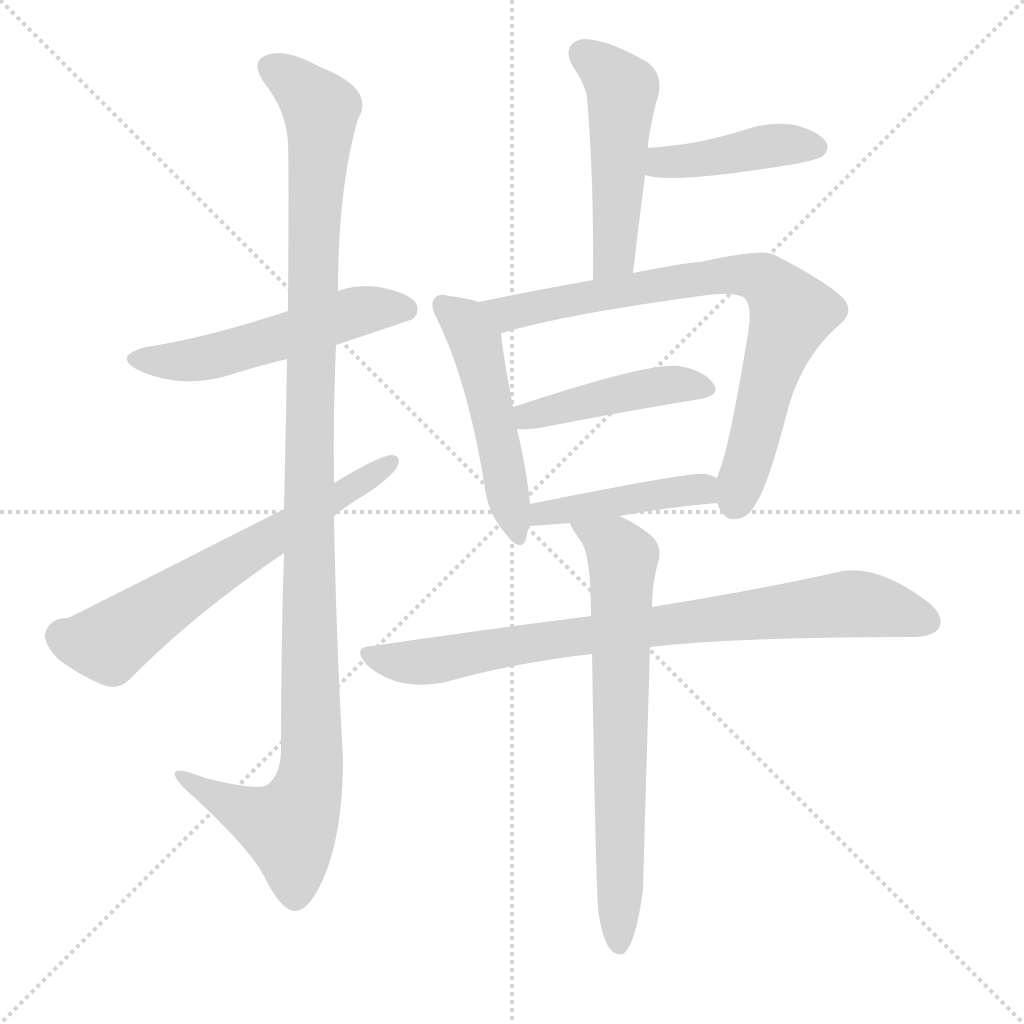
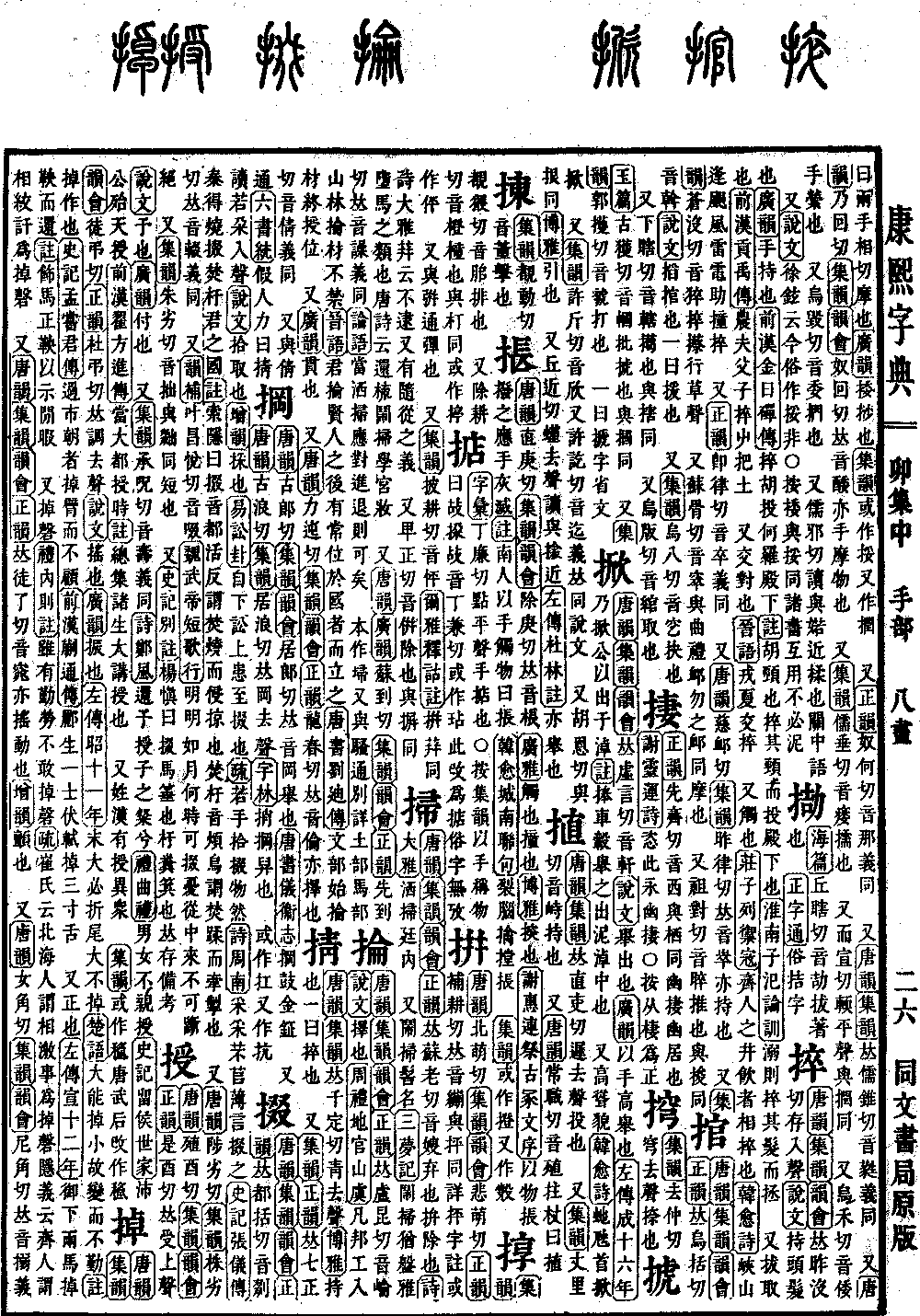
Mao Collection, Middle Volume
Radical: Hand (shǒu)
Kangxi Strokes: 12
Page 436, Entry 20
Pronounced diào (falling-rising tone)
Explanation in Explaining Graphs and Analyzing Characters (Shuowen Jiezi): To shake.
Explanation in Broad Rhymes (Guangyun): To vibrate.
Commentary in Zuo Commentary (Zuo Zhuan), 11th Year of Duke Zhao: If the top of a tree is too heavy, it will surely break; if a tail is too large, it will shake uncontrollably.
Commentary in Discourses of the States (Guoyu), Discourses of Chu: The strong can drive the weak, therefore even if changes occur, they do not suffer fatigue. Commentary: Diao means to drive or to act.
Commentary in Records of the Grand Historian (Shiji), Biography of Lord Mengchang: Those passing through the market and the court swung their arms and did not look back.
Commentary in History of the Former Han (Qian Hanshu), Biography of Kuai Tong: Li Sheng, being a skilled debater, leaned on the carriage rail and moved his three-inch tongue.
It also carries the meaning of adjusting or putting in order.
Commentary in Zuo Commentary (Zuo Zhuan), 12th Year of Duke Xuan: The chariot driver adjusted the side horses and straightened the leather straps on the horses' necks before returning. Commentary: To arrange the horses and straighten the neck straps to show composure.
There is also the term diaoqing.
Commentary in Book of Rites (Liji), Inner Chapters Commentary: Even if there is hardship and exhaustion, one dares not quarrel or complain. Exegesis: Master Cui says: The people of Beihai call intense mutual quarreling diaoqing. The hidden meaning says: The people of Qi call mutual exposure of shortcomings and attacks diaoqing.
Also pronounced tiǎo (falling-rising tone). It also means to shake.
Explanation in Revised Rhymes (Zengyun): To tremble.
Also pronounced nuò (falling-rising tone). The meaning is the same. It also means to hold.
Also pronounced nào (falling-rising tone). Refers to the vibration of sound.
Commentary in Rites of Zhou (Zhouli), Spring Officials, Canon of Music: If the walls of a bell are thin, the sound will vibrate. Commentary: Zhen is like diao. If the texture of the bell is thin, the sound will vibrate.