Chou Collection, Middle Volume
Radical: Earth (tǔ)
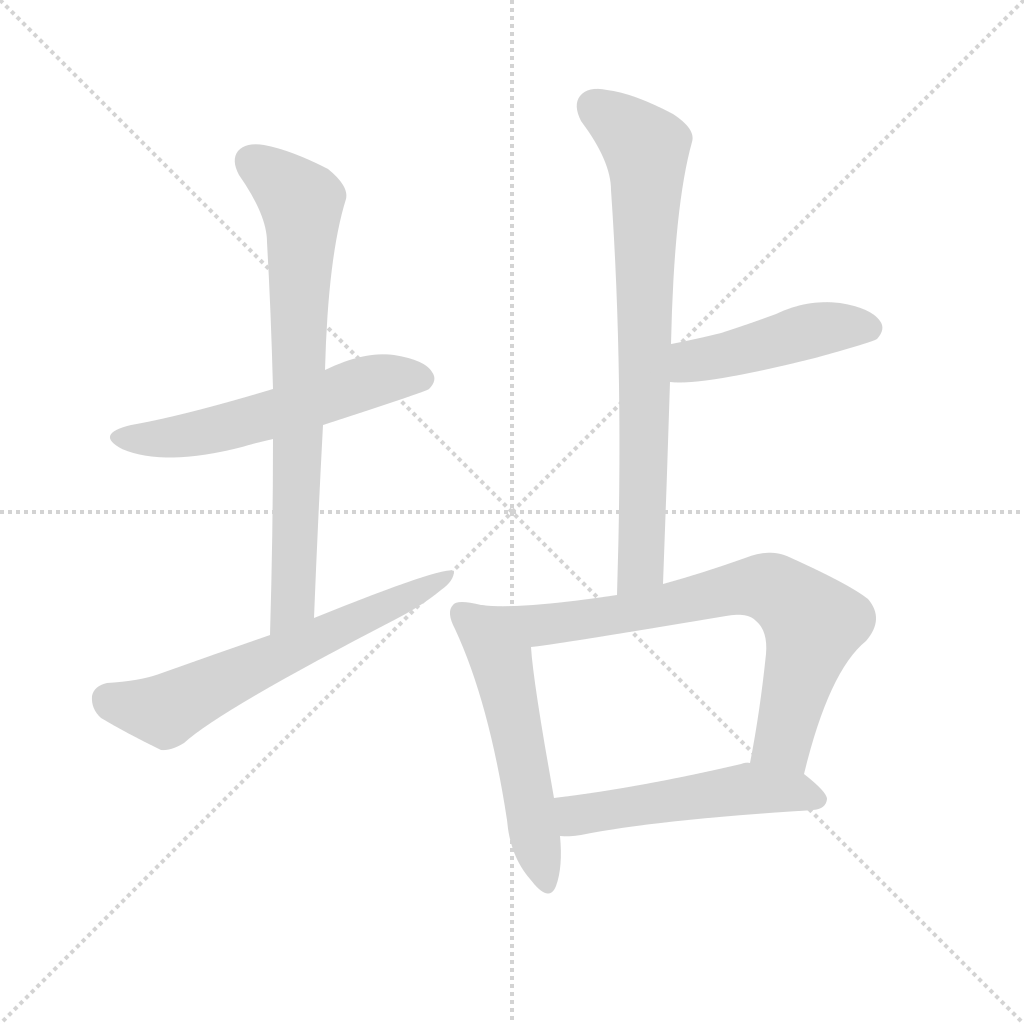
坫
Kangxi stroke count: 8
Page 226, Entry 24
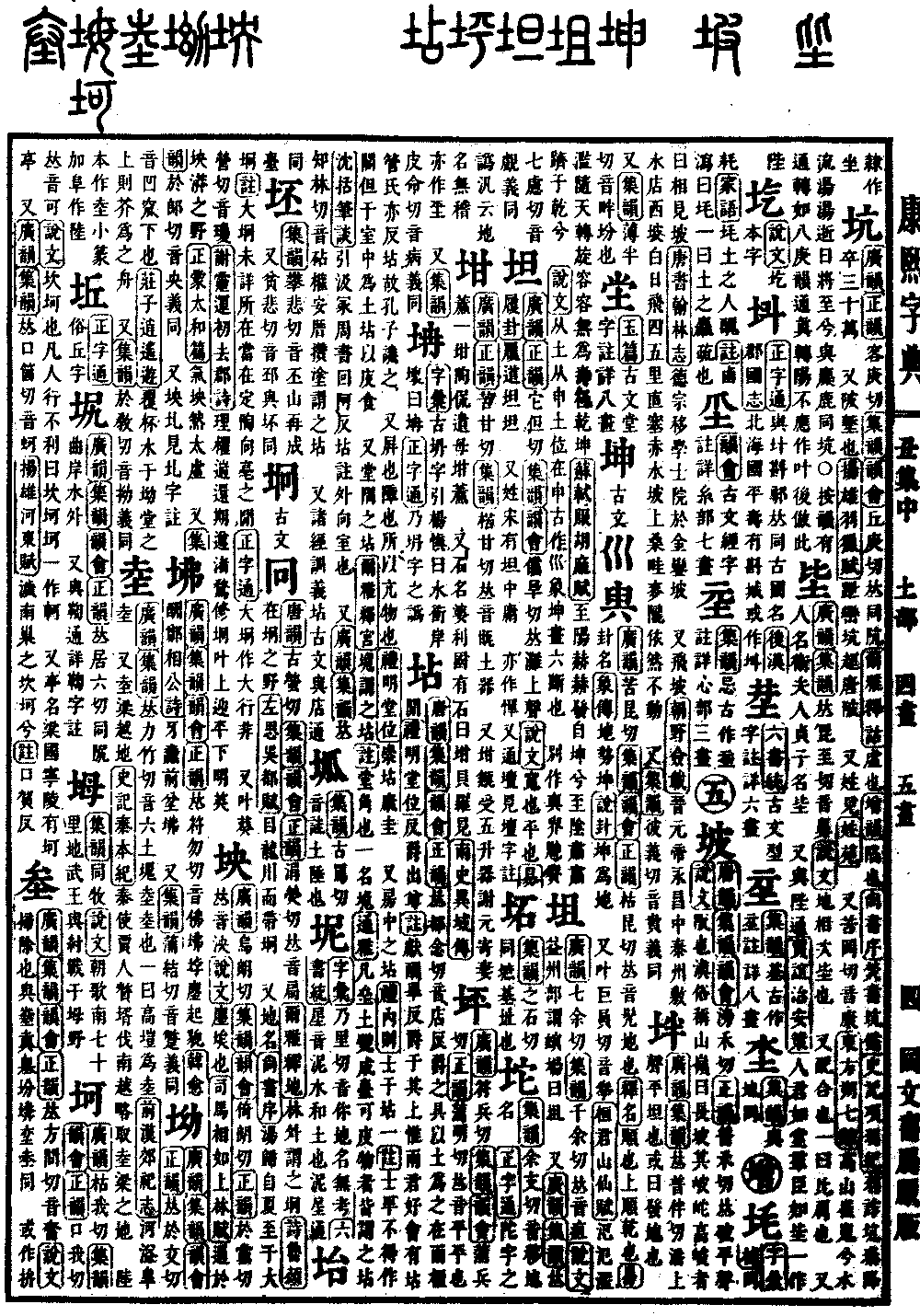
Pronounced dian (falling tone). An ancient utensil made of earth used to hold wine cups during banquets, placed between the two front pillars of a hall. Book of Rites (Liji), section on the Hall of Distinction (Mingtang Wei) records, "Return the cup to the earthen stand," with the commentary stating: when the mutual exchange of wine is finished, the cups are returned to this earthen platform. The earthen stand was only established when the rulers of two states met in friendship; Guan Zhong (as a subject) had an earthen stand in his home, for which Confucius criticized him.
It also refers to a screen or partition used for placing objects. Book of Rites (Liji), section on the Hall of Distinction (Mingtang Wei) mentions, "Honored the earthen stand and the jade tablet (gui)." It also refers to an earthen platform within a room. Book of Rites (Liji), section on the Inner Instructions (Neize) records, "The scholar (shi) uses one earthen stand," with the commentary stating: a scholar of low rank cannot have wooden cabinets and shelves, so they built an earthen platform in the room to store food.
It also refers to the corner of a hall. The Erya (a dictionary of the Zhou dynasty) states that "a collapsed wall is called a dian," with the commentary stating: this is the corner of a hall, also known as gui. The Tongya (a dictionary of the Ming dynasty) states: everything made of piled earth or laid bricks to form a platform where objects can be placed is called a dian. Shen Kuo in his Dream Pool Essays (Mengxi Bitan) quotes from the Book of Zhou (Zhou Shu) unearthed from the Ji Tomb, regarding "pi a fan dian," explaining it as an "outer-facing room."
Also pronounced zhen (level tone). A place where a coffin is temporarily placed and sealed with mud (to prevent air leaks) is called a dian. Furthermore, in various commentaries on the classics, the character dian was used interchangeably with the character for store/inn (dian) in ancient times.
Textual research:
Book of Rites (Liji), section on the Hall of Distinction (Mingtang Wei): original text "return the cup, take out the vessel" is corrected to "return the cup to the earthen stand."
Shen Kuo, Dream Pool Essays (Mengxi Bitan): original text "hui a fan dian" is corrected to "pi a fan dian."