You Collection, Upper Volume
Radical: Speech (yán)
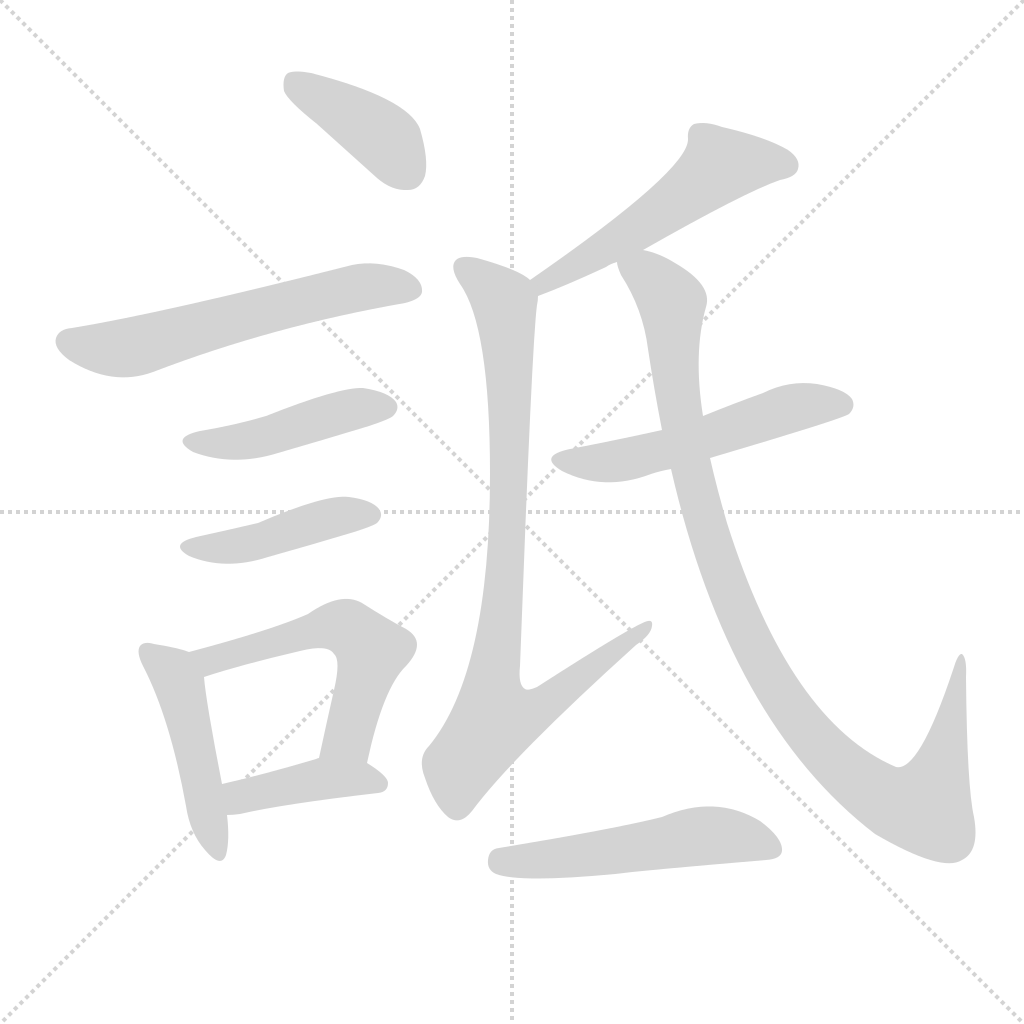
Di
Kangxi strokes: 12
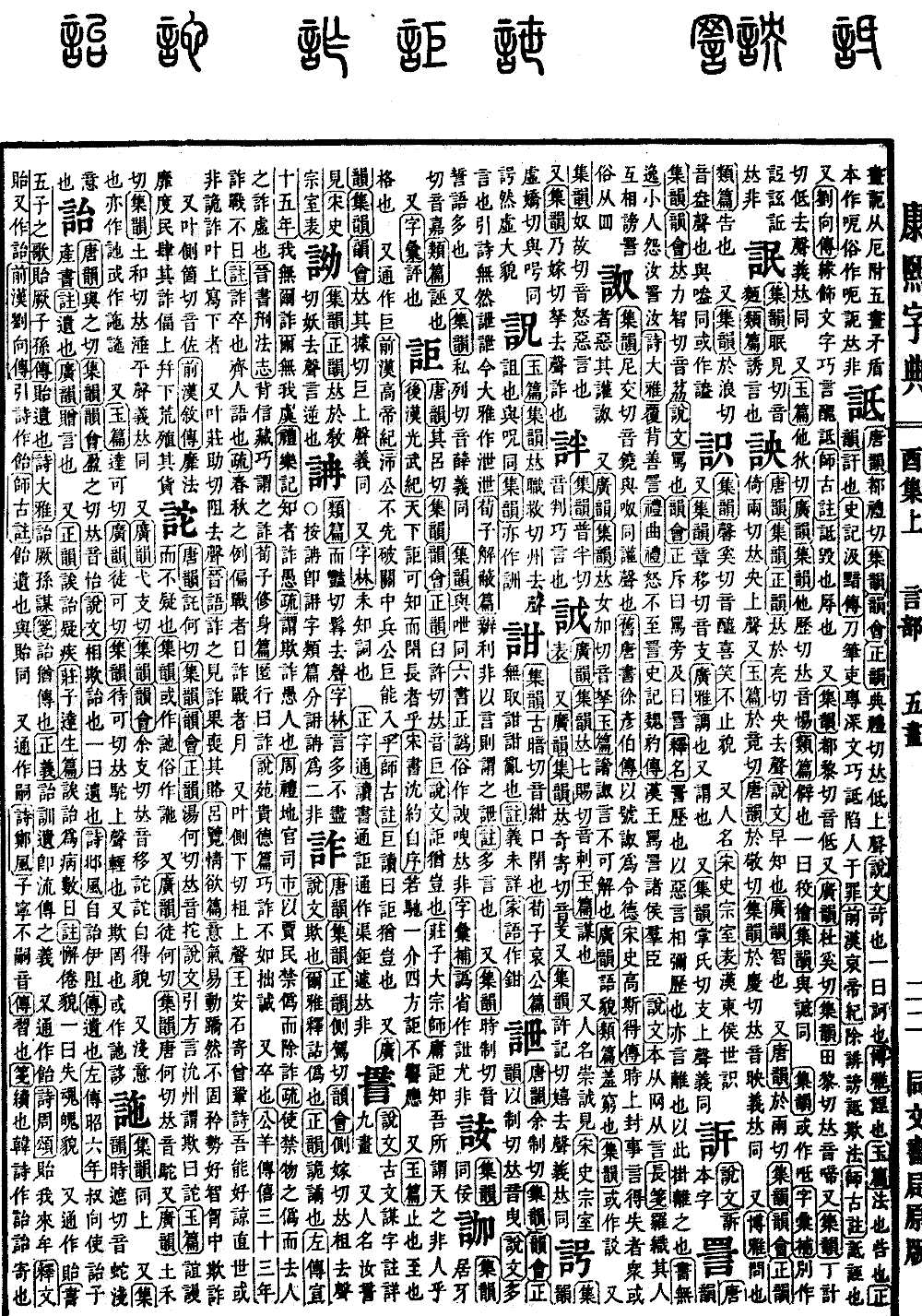
Page 1154, Entry 01
Pronounced di (rising tone).
According to Explaining Graphs and Analysis of Characters (Shuowen Jiezi), it means to blame severely. Another source says it means to denounce or rebuke.
According to the Erya companion text (Boya), it means to slander.
According to the Jade Chapters (Yupian), it means to question according to law; it also means to slander.
According to Correct Rhymes (Zhengyun), it means to expose and attack.
In the Records of the Grand Historian (Shiji), Biography of Ji An: It refers to those officials in charge of documents who specifically used strict legal provisions to cleverly slander and frame others into committing crimes.
In the History of the Former Han (Qianhan), Annals of Emperor Ai: The laws regarding slander, defamation, and deception were abolished.
Shigu Commentary: Di means to slander.
Also in Biography of Liu Xiang: To embellish writing and use clever language to maliciously slander.
Shigu Commentary: Di means to slander or insult.
Also pronounced di.
Also pronounced ti.
Also pronounced di (falling tone). The meanings are the same.
Also pronounced ti.
According to the Categorized Compilation (Leipian), it means perverse or eccentric. Another source says it means crafty or deceitful.
According to the Collected Rhymes (Jiyun), it is the same as the character (di).
According to the Supplement to the Collection of Characters (Zihuibu), it is also written as (di), but this is an incorrect form.