Zi Collection, Middle Volume
Radical: Person (ren)
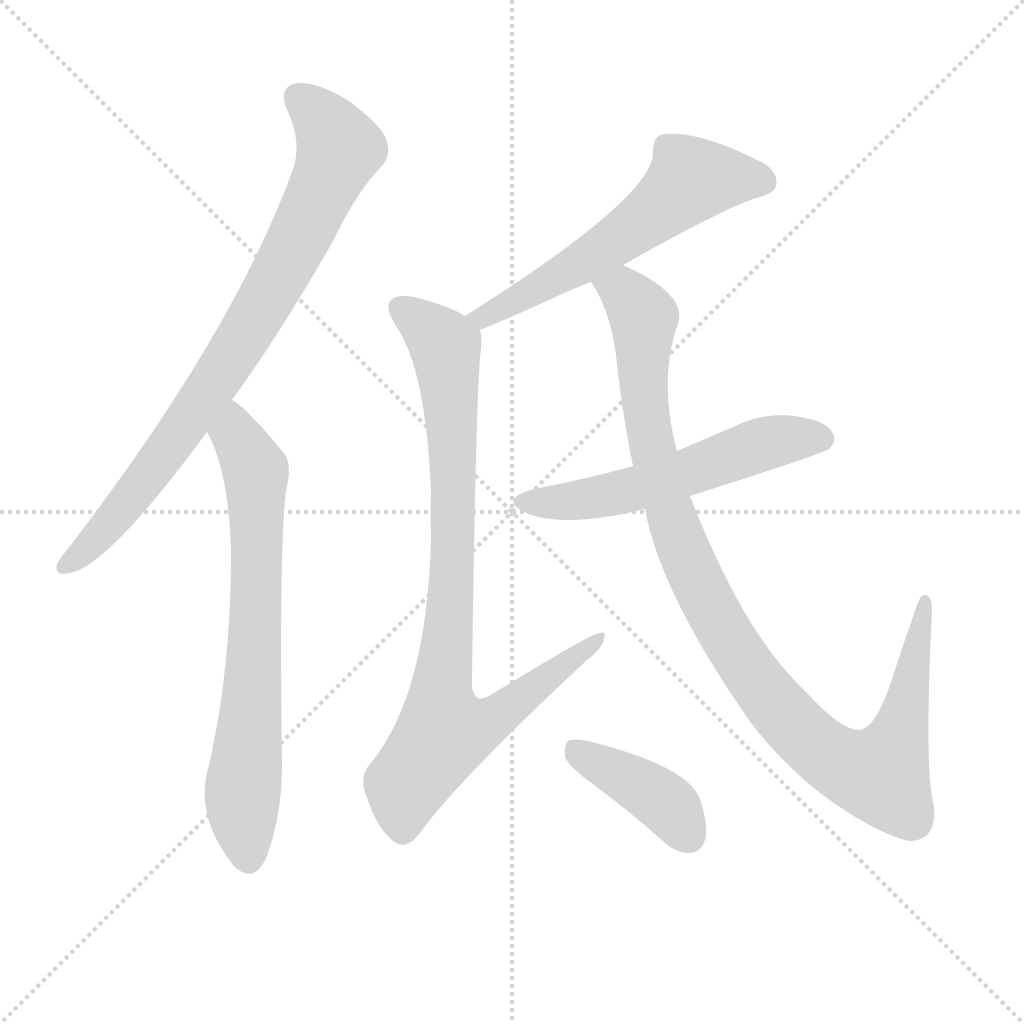
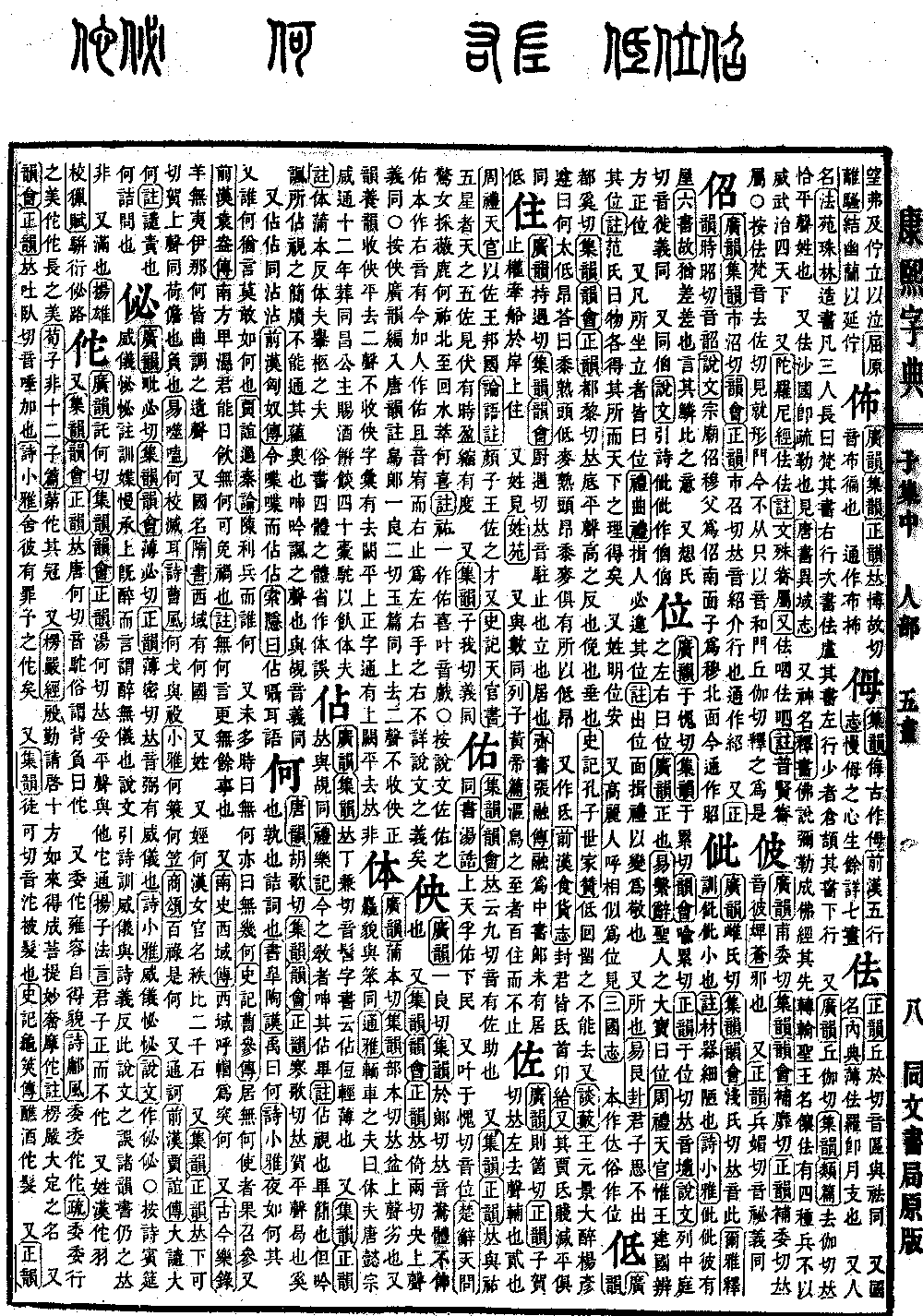
Character: di
Kangxi Stroke Count: 7
Page: Page 98, Number 08
According to the Broad Rhymes (Guangyun), the Collected Rhymes (Jiyun), the Rhyme Assembly (Yunhui), and the Correct Rhymes (Zhengyun), the character follows the fanqie phonetic combination of du and xi or du and li, and is read with the pronunciation of di in the level tone. The meaning is the opposite of high, to bow down, or to hang down. In the Records of the Grand Historian (Shiji) within the Eulogy for the House of Confucius, it describes pacing back and forth, lingering and being unwilling to leave. The Thicket of Conversations (Tansou) relates that when Wang Yuanjing was heavily intoxicated, Yang Yanzun asked why he was sometimes low and sometimes high. He replied that when broomcorn millet matures its head hangs low, and when wheat matures its head points high; because he possessed the qualities of both millet and wheat, he was both low and high. The character is also written in the variant form di. According to the Book of Han (Hanshu) in the Treatise on Food and Money, it is used to describe feudal lords bowing their heads and depending on others for their needs. It is also used to describe a price that is low and cheap, falling below the stabilized price. In these contexts, the variant is the same as di.