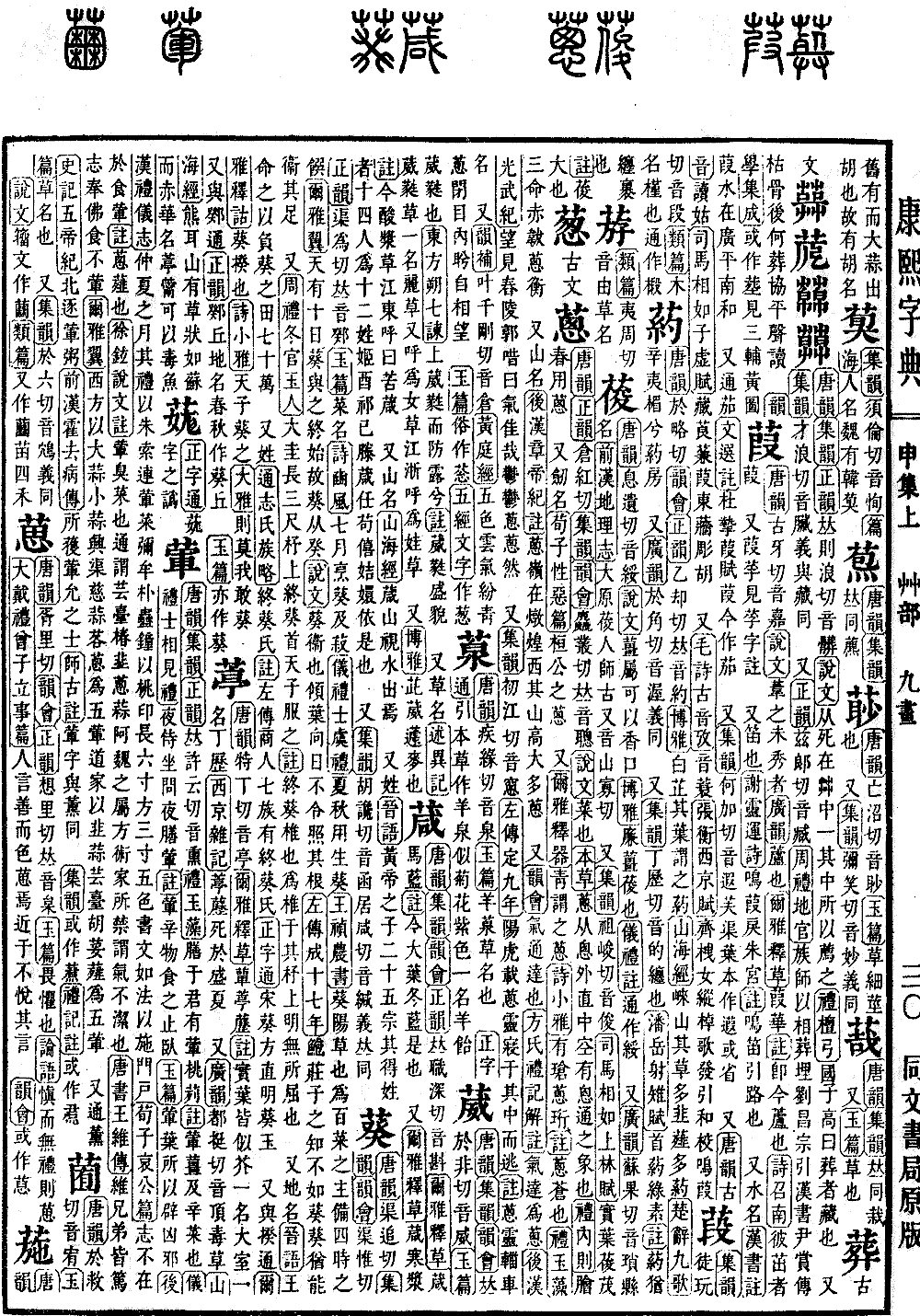
Shen Collection, Upper Volume
Radical: Grass (cǎo)
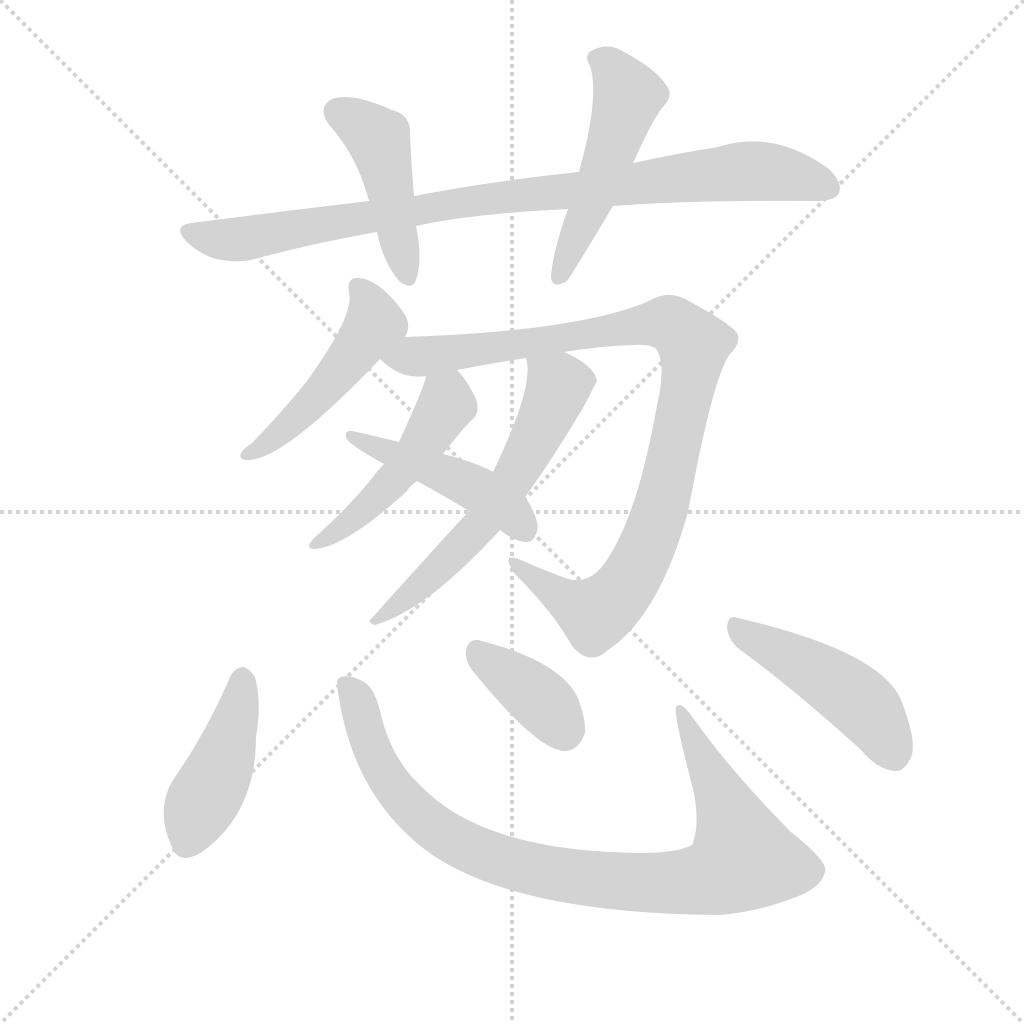
Cong
Kangxi strokes: 17
Page 1046, Entry 15
In ancient texts, it is written as the variant form (cong). According to Tang Rhymes (Tangyun) and Correct Rhymes (Zhengyun), the pronunciation is cong. According to Collected Rhymes (Jiyun) and Rhyme Collection (Yunhui), the pronunciation is cong; it is pronounced the same as cong (intelligent). Explaining Characters and Writing (Shuowen Jiezi) defines it as a type of vegetable. Compendium of Materia Medica (Bencao Gangmu) states: The character for cong is derived from the component cong, suggesting an appearance that is straight and hollow in the middle, symbolizing openness and spiritual clarity. Book of Rites (Liji), Inner Chapters (Neize) records: In spring, minced meat should be prepared with cong.
It also refers to a type of sword name. In Xunzi, Chapter on Human Nature is Evil (Xing'e), it is mentioned: The sword of Duke Huan of Qi was named Cong.
It also refers to a color. Erya, Explanation of Implements (Shiqi) records: A green or blue color is called cong. The Book of Odes (Shijing), Lesser Odes of the Kingdom (Xiaoya) contains the line: There are beautiful blue-green jade ornaments. The commentary explains: Cong refers to a pale blue-green color. Book of Rites (Liji), Jade Pendants (Yuzao) records: Officials of the third rank wear red knee covers and pale blue-green jade crossbars.
It also refers to a mountain name. The Book of the Later Han (Hou Hanshu), Annals of Emperor Zhang (Zhangdi Ji), commentary records: The Cong Range (Pamir Mountains) is located west of Dunhuang; the mountains are high and vast, and much cong grows there.
According to Rhyme Collection (Yunhui), it describes the appearance of breath or energy being unobstructed. Fang’s Commentary on the Book of Rites (Fangshi Liji Jiezhue) states: Energy flowing freely is called cong. The Book of the Later Han (Hou Hanshu), Annals of Emperor Guangwu (Guangwudi Ji) records: Gazing far at Chongling City, one exclaimed: How magnificent the atmosphere is, lush, verdant, and full of vitality.
According to Collected Rhymes (Jiyun), it is pronounced chuang. The Zuo Tradition (Zuozhuan), Ninth Year of Duke Ding, records: Yang Hu hid inside a carriage named Congling and escaped while sleeping within it. The commentary explains: Congling is a name for a type of heavy carriage.
According to Rhyme Supplement (Yunbu), it is pronounced cang. The Yellow Court Scripture (Huangting Jing) contains the line: The five-colored clouds and vapors are abundant and lush; closing the eyes, one looks within. Jade Chapters (Yupian) records: The vulgar script is written as the variant form. Five Classics Textual Research (Wujing Wenzi) writes it as cong.
Cong: Collected Rhymes (Jiyun) records: The ancient form of cong is written as the variant form. For detailed annotations, please refer to the nine-stroke section.