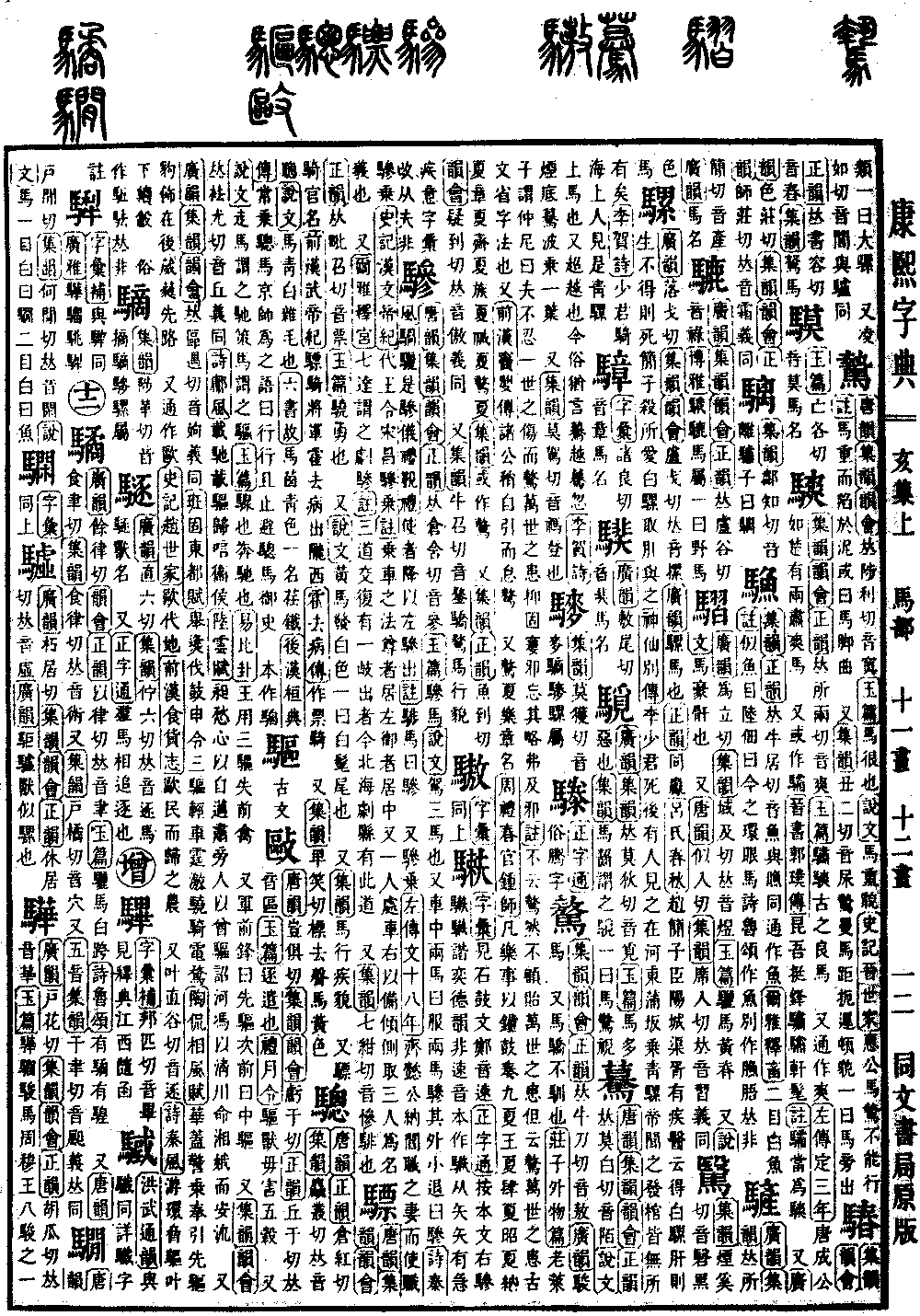
Hai Collection, Upper Volume
Radical: Carriage (chē)
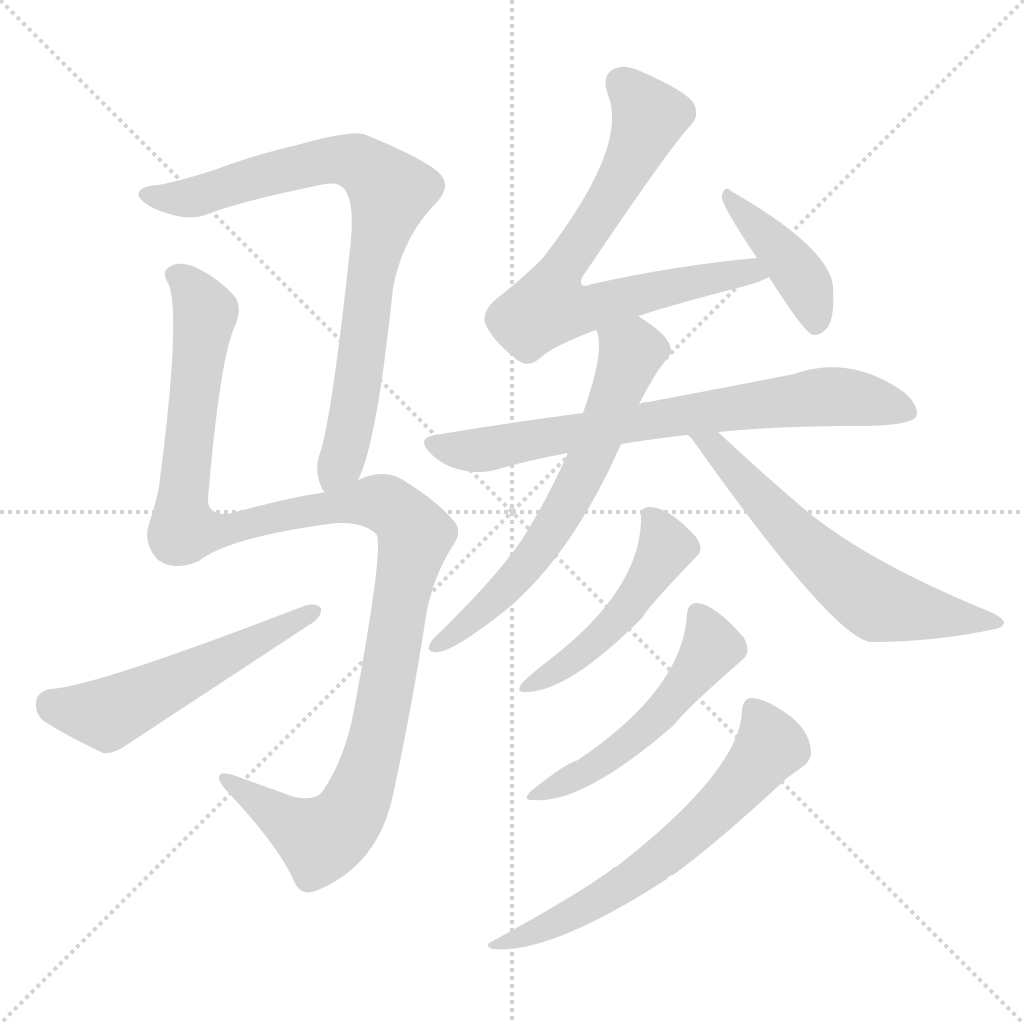
Entry: 驂 (cān)
Kangxi stroke count: 21
Page 1444, Entry 01
Pronounced can.
Yu Pian (Jade Chapters): A side horse.
Shuowen (Explaining Graphs and Analyzing Characters): To harness three horses. Additionally, the two horses in the middle of the carriage are called the fú, and the two horses on the outer sides of the carriage shaft slightly to the rear are called the cān.
Book of Odes (Shijing), Odes of Qin: The black horses are the side horses.
Book of Etiquette and Ceremonial (Yili), Audiences: The envoy descends and exits using the left side horse.
Note: The horses on the side are called cān.
Also, cānchéng (a position in a carriage):
Zuo Commentary (Zuozhuan), Eighteenth Year of Duke Wen: Duke Yi of Qi took the wife of Yan Zhi, and appointed Yan Zhi as the cānchéng.
Records of the Grand Historian (Shiji), Annals of Emperor Wen of Han: The King of Dai ordered Song Chang to be the cānchéng.
Note: The method of riding in a carriage is that the person of high status sits on the left, the driver sits in the middle, and another person is positioned on the right to prevent the carriage from tilting, taking the number of three people as the basis for the name.
Also, Er Ya (Approaching Near), Interpretation of Palaces: A place where seven roads intersect is called jùcān.
Note: Where three roads intersect with an additional branching path; currently, Juxian in Beihai has such a road.
Also, Jiyun (Collected Rhymes): Pronounced cǎn. A side horse.