You Collection, Upper Volume
Radical: Speech (yán)
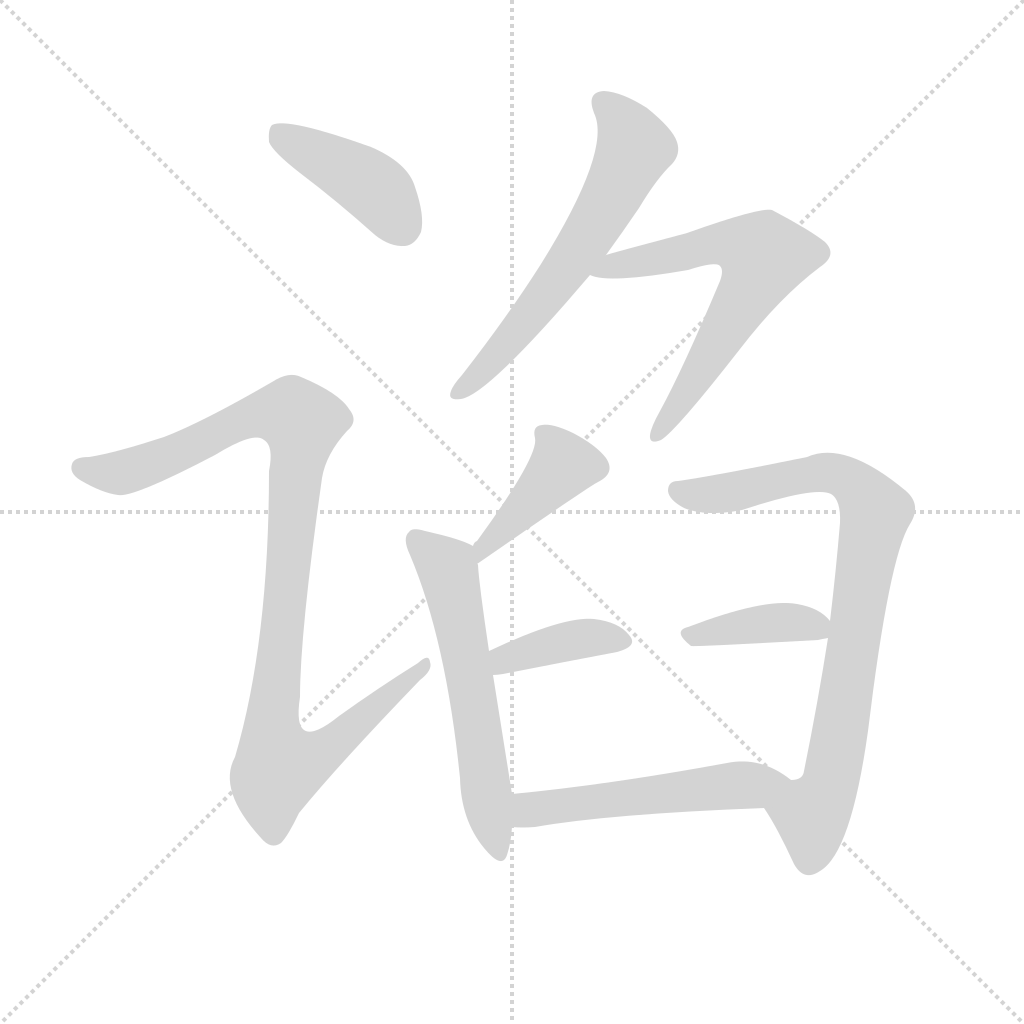
Chan
Kangxi strokes: 15
Page 1166, Entry 01
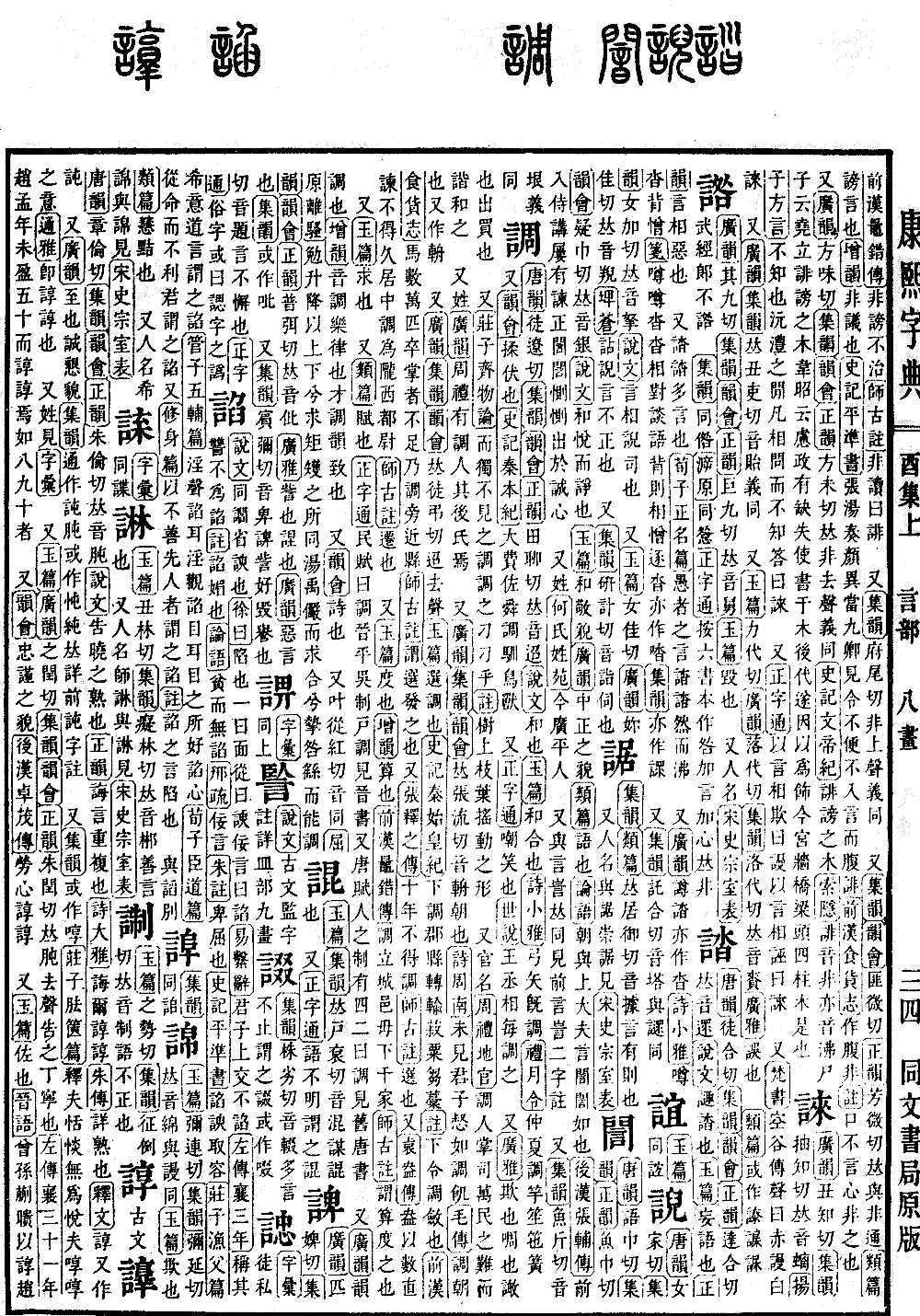
According to the Explaining Graphs and Analyzing Characters (Shuowen jiezi), it is the same as the character for flattery (chǎn) and is its simplified form. It means to adulate or flatter.
Xu states: It means to cause someone to fall into a certain situation. Another source says that to obey someone to their face is called yu, while using flowery, deceptive language to flatter is called chan.
Book of Changes (Yijing), Appended Remarks: A superior person does not flatter when associating with those of high status.
Zuo Tradition (Zuozhuan), Third Year of Duke Xiang: Praising one's enemy is not considered flattery.
Commentary: Chan means to curry favor or suck up to someone.
Analects of Confucius (Lunyu): To be poor but not flattering.
Xing's Commentary: Refers to words of adulation.
Zhu's Commentary: Refers to a servile and submissive attitude.
Records of the Grand Historian (Shiji), Treatise on the Balanced Standard: Using flattery and adulation to please superiors in order to secure one's own position.
Zhuangzi, Fisherman chapter: To speculate on another person's intentions and speak in a way that caters to them is called chan.
Guanzi, Five Helpers chapter: Licentious music pleases the ears, and lewd sights please the eyes; that which the ears and eyes take pleasure in is what flatters the human heart.
Xunzi, The Way of the Minister chapter: Obeying commands but acting in a way that is disadvantageous to the ruler is called chan.
Also in the Self-Cultivation chapter: Leading others using bad words and actions is called chan.
Commentary: The meaning of chan is to cause someone to fall into a bad situation. It is different from the character for sycophancy (tào).