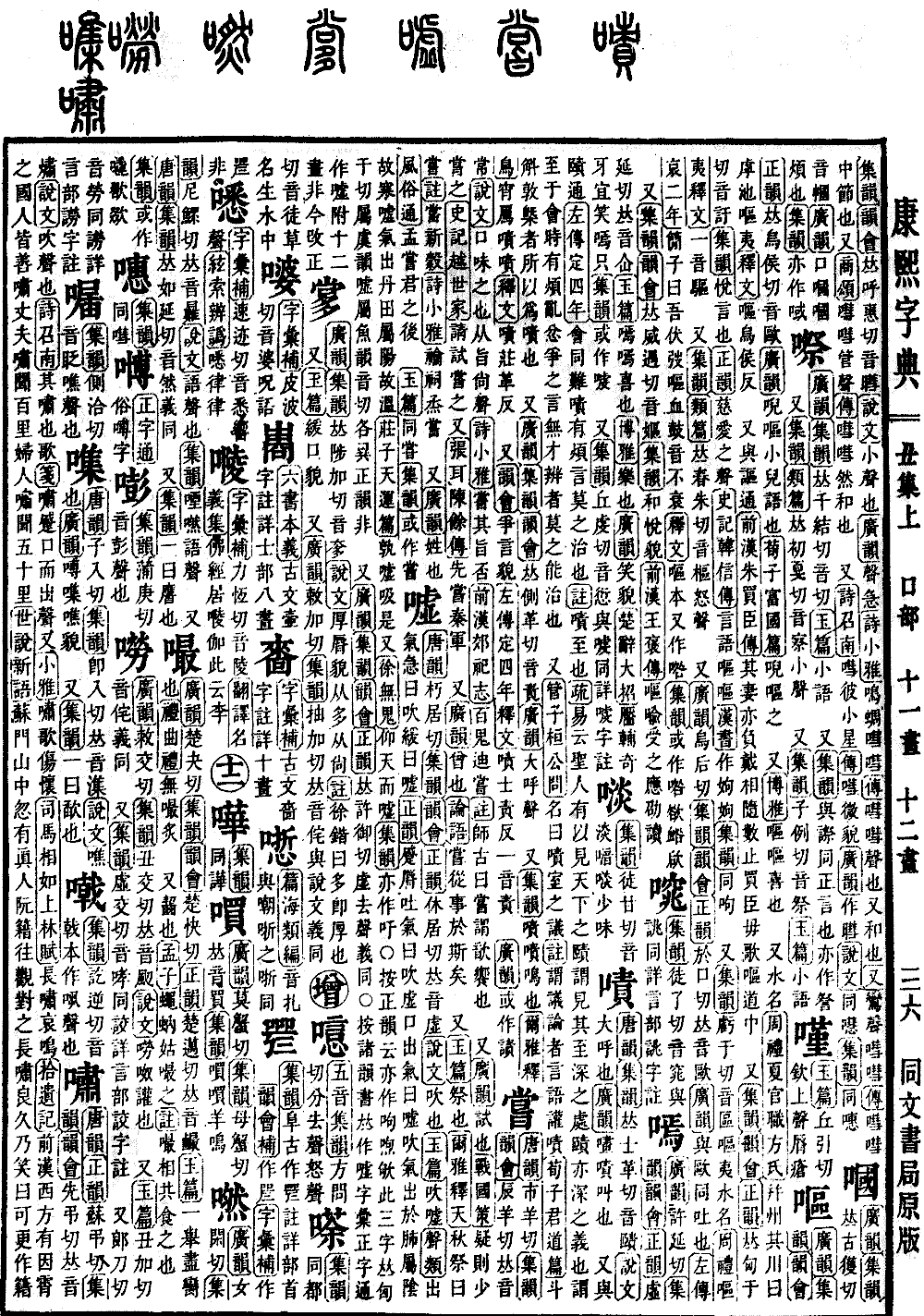
Chou Collection, Upper Volume
Radical: Mouth (kǒu)
Character: Tasting
Kangxi Stroke Count: 14
Page 206, Entry 01
Tang Rhymes (Tangyun): Pronounced chang. Collected Rhymes (Jiyun) and Rhyme Collection (Yunhui): Pronounced chang.
Explanation from the Explaining Graphs and Analyzing Characters (Shuowen): To taste something with the mouth. Derived from the character for delicious, with the sound provided by the character for esteem.
Book of Odes (Shijing), Minor Odes: Taste to see if the flavor is good.
History of the Former Han (Qianhan shu), Treatise on Suburban Sacrifices: The multitude of ghosts and spirits come forward to enjoy the sacrificial offerings. Annotation by Shigu says: The term refers to enjoying the sacrifices.
Also, Broad Rhymes (Guangyun): To attempt or test.
Strategies of the Warring States (Zhanguo ce): If there is a doubt, one should attempt to try it out slightly.
Records of the Grand Historian (Shiji), Biography of the House of Yue: Please try to taste it and see.
Also, Biography of Zhang Er and Chen Yu: To first probe the Qin army.
Also, Broad Rhymes (Guangyun): Formerly; once.
Analects (Lunyu): Once engaged in this.
Also, Jade Chapter (Yupian): Sacrifice.
Approaching Elegance (Erya), Interpretation of Heaven: The autumn sacrifice is called the autumn taste. Annotation: Tasting the new grains.
Book of Odes (Shijing), Minor Odes: The four seasonal sacrifices (Yue, Ci, Zheng, Chang).
Also, Broad Rhymes (Guangyun): A surname.
Customs and Traditions (Fengsu tong): Descendants of Lord Mengchang.
Jade Chapter (Yupian): Identical to the character for tasting.
Collected Rhymes (Jiyun): Sometimes written in a variant form.