Chen Collection, Middle Volume
Radical: Tree (mù)
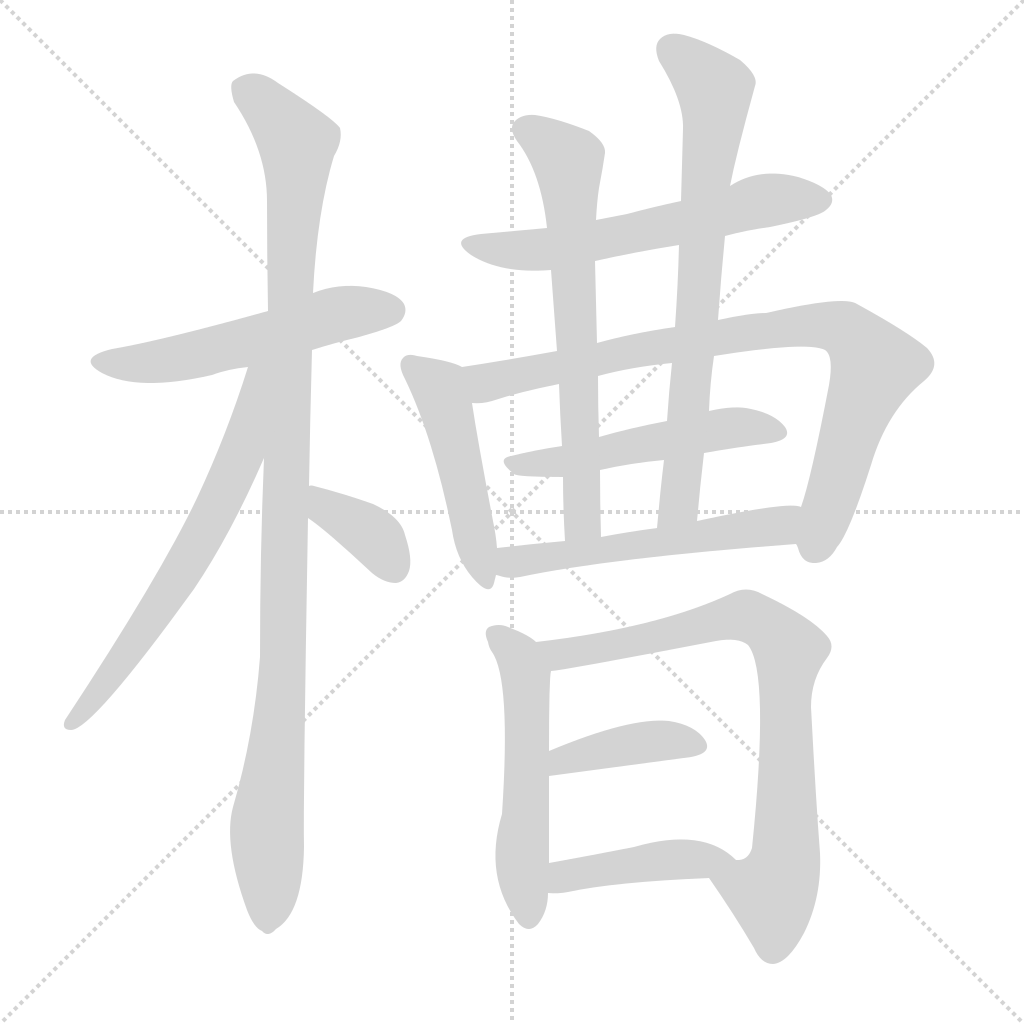
槽
Kangxi strokes: 15
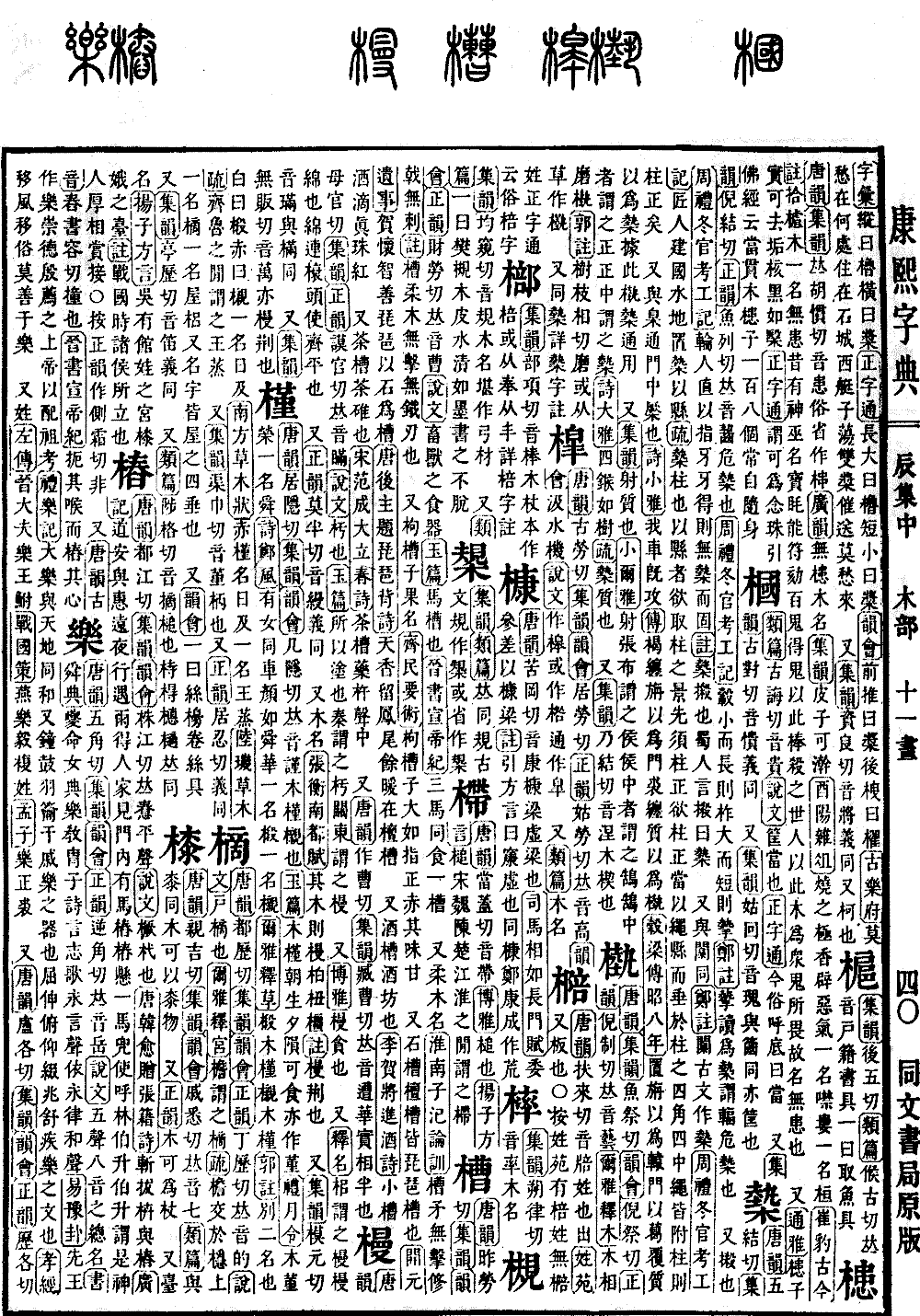
Page 548, Entry 14
Pronounced cao.
According to the Analytical Dictionary of Characters (Shuowen Jiezi), it refers to a feeding vessel for livestock. In the Dictionary of Jade (Yupian), it is defined as a horse trough. In the Book of Jin (Jinshu), Biography of Emperor Xuan, it is written: Three horses eating from the same trough.
Also, the name of a soft wood. In the Huainanzi (Huainanzi), it is noted that a trough spear cannot be used to strike, and a long halberd cannot be used to thrust. The commentary explains that the trough is a soft wood and does not have an iron blade.
Also, goucaozi is the name of a fruit. The Essential Techniques for the Welfare of the People (Qimin Yaoshu) describes it as being the size of a finger, perfectly red, and sweet in taste.
Also, stone trough and sandalwood trough, both refer to the body of a pipa (lute). In the Records of Miscellaneous Affairs from the Kaiyuan Era (Kaiyuan Yishi), it is mentioned that He Huaizhi was skilled at playing the pipa and used stone for the body. The last emperor of the Tang dynasty wrote in a poem on the back of a pipa: Heavenly fragrance remains in the phoenix tail, residual warmth lingers in the sandalwood body.
Also, wine trough refers to a winery. Li He wrote in his poem Bringing in the Wine: The wine from the small trough drips like red pearls.
Also, tea trough refers to a tea mortar. Fan Chengda of the Song dynasty wrote in a poem for the Beginning of Spring: Amidst the sounds of the tea trough and medicine pestle.
Also, pronounced zao. Refers to a state where flowers and fruits are half-formed.