Wu Collection, Lower Volume
Radical: Spirit (shì)
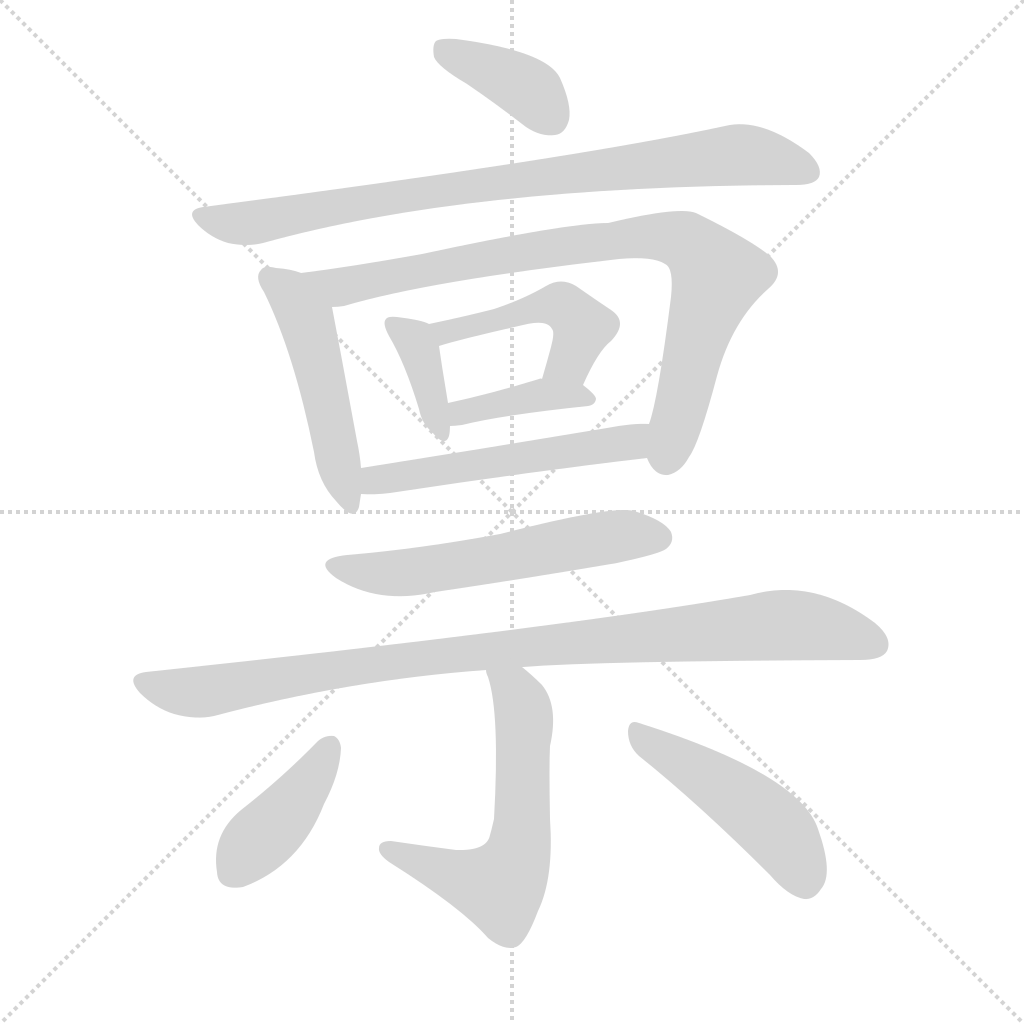
Bing
Kangxi stroke count: 13
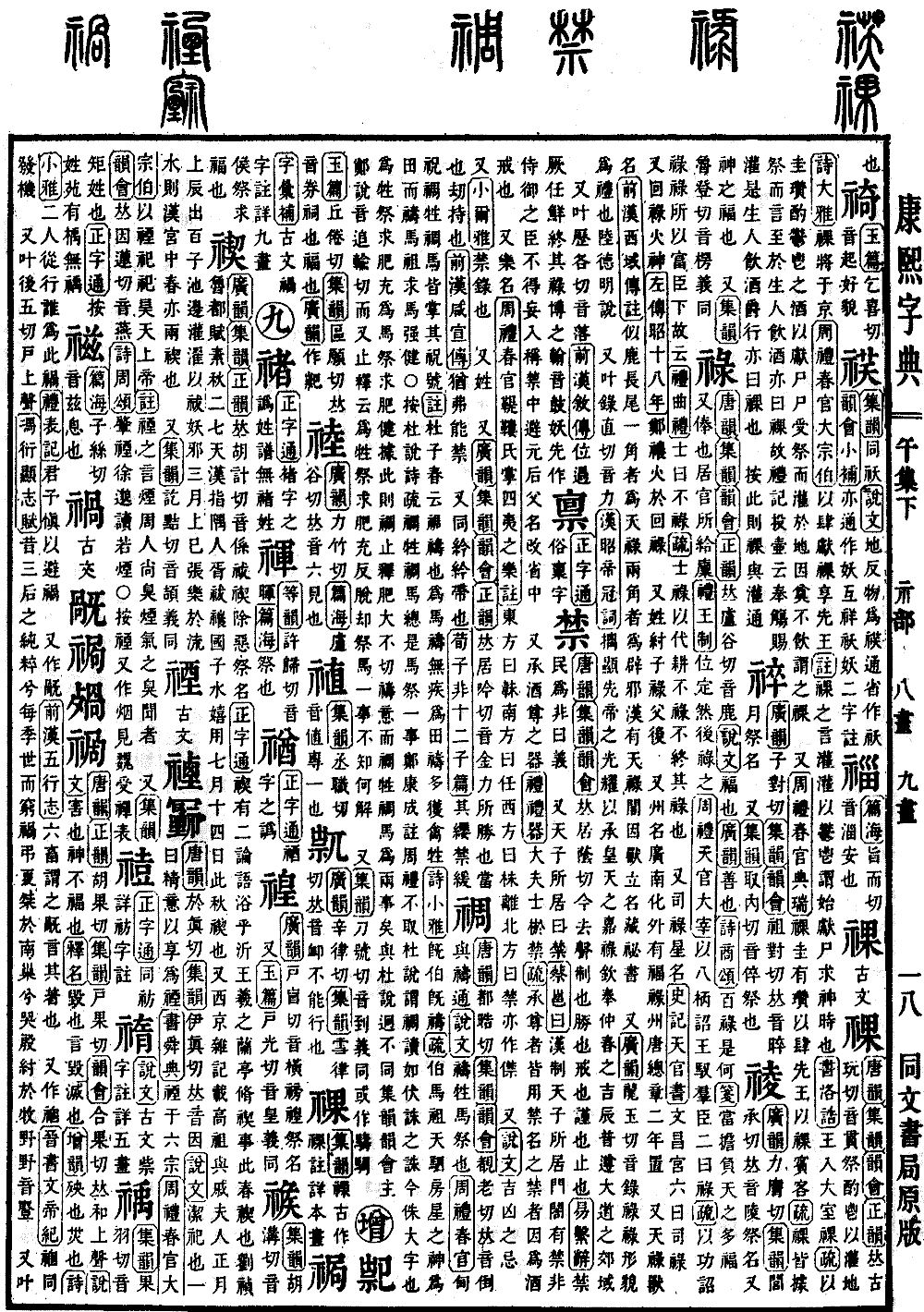
Page 844, Entry 09
Orthographic Guide (Zhengzitong): This is the common variant form of the character for to receive or grant (bǐng).
Tang Rhymes (Tangyun), Collection Rhymes (Jiyun), and Rhyme Meeting (Yunhui): Pronounced lǐn. It shares the same sound as the word for trembling (lǐn).
Explanation of Graphs and Analysis of Characters (Shuowen Jiezi): The meaning is to grant grain. The character structure is composed of the elements for following and grain.
Xu said: It refers to provisions issued by the authorities.
Broad Rhymes (Guangyun): The meaning is to give.
Expanded Rhymes (Zengyun): It carries the meanings of supplying, distributing, and receiving.
Book of Rites (Liji), Doctrine of the Mean (Zhongyong): "Already granted according to the nature of the service" (referring to grain rations being commensurate with the work performed).
Ouyang said: In ancient times, when people were given food, it was taken from the granary; therefore, it is called granted provisions or granted food.
Book of the Former Han (Qian Hanshu), Annals of Emperor Xiaowen: "Officials provided with the standard allowance for receiving gruel."
Shigu’s annotation: The character means to supply.
Also, Tang Rhymes (Tangyun), Collection Rhymes (Jiyun), and Rhyme Meeting (Yunhui): Pronounced bǐng (rising tone). It shares the same sound as guest (bīn) in the rising tone. Receiving orders is called bǐng.
Book of Documents (Shangshu), Charge to Yue (Shuoming): "The ministers have no orders to receive."
Commentary: The character means to receive. Mao said: Nowadays, common parlance uses this to mean reporting a matter to a superior, but this meaning did not exist in ancient times.
Also refers to the name of a river.
Commentary on the Water Classic (Shuijingzhu): There is a river in the northern territory of Changshe called the Bing River.
Also, Collection Rhymes (Jiyun): Pronounced bìn. It shares the same sound as guest (bīn) in the departing tone. The meaning is to receive.
Rhyme Meeting (Yunhui): Commonly written as this character, but this is incorrect.