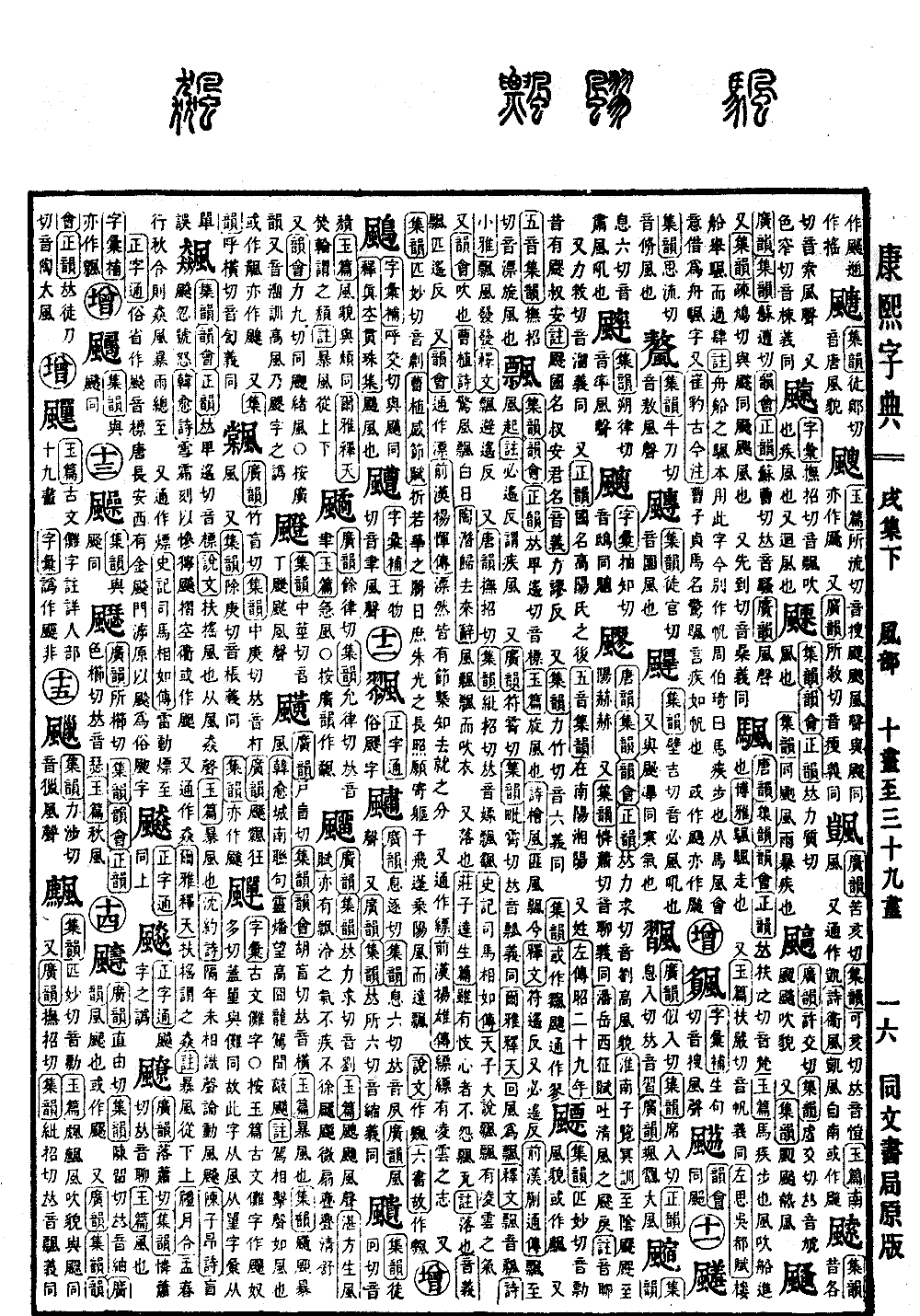
Xu Collection, Lower Volume
Radical: Wind (fēng)
Entry: Biao
Kangxi strokes: 21
Page 1414, Entry 34
Collected Rhymes (Jiyun), Rhyme Meetings (Yunhui), and Rectified Rhymes (Zhengyun) indicate the pronunciation is biao.
According to the Explaining Graphs and Analyzing Characters (Shuowen): A whirlwind. Formed by the radical for wind and the phonetic biao.
According to the Jade Chapters (Yupian): A violent wind.
In the poetry of Shen Yue: Separated by a year, we have yet to know each other; voices and discussions stir the wind and gusts.
In the poetry of Zi Ang: A blind gust suddenly howls in rage.
In the poetry of Han Yu: Snow and frost carve as if bitter; ferocious gusts fold through the empty road.
Sometimes written in a variant form (biao).
Also interchangeable with the variant form (biao).
According to the Er Ya, Explanation of Heaven (Er Ya, Shitain): A whirlwind is called biao. The commentary states: A violent wind rising from below to above.
According to the Book of Rites, Monthly Ordinances (Liji, Yueling): If in the first month of spring one practices the ordinances of autumn, then violent winds and heavy rains will arrive together.
Also interchangeable with the variant form (biao).
According to the Records of the Grand Historian, Biography of Sima Xiangru (Shiji, Sima Xiangru Zhuan): Thunder stirs and sparks arrive.
According to the Rectification of Characters (Zhengzitong): Commonly abbreviated as biao, pronounced biao. During the Tang Dynasty, there was a Golden Gust (Jinbiao) Gate in Chang'an. Originally, the character biao was considered a vulgar form.