Chou Collection, Lower Volume
Radical: Woman (nǚ)
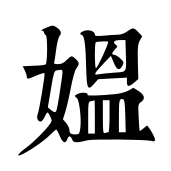
Ao
Kangxi Stroke Count: 13
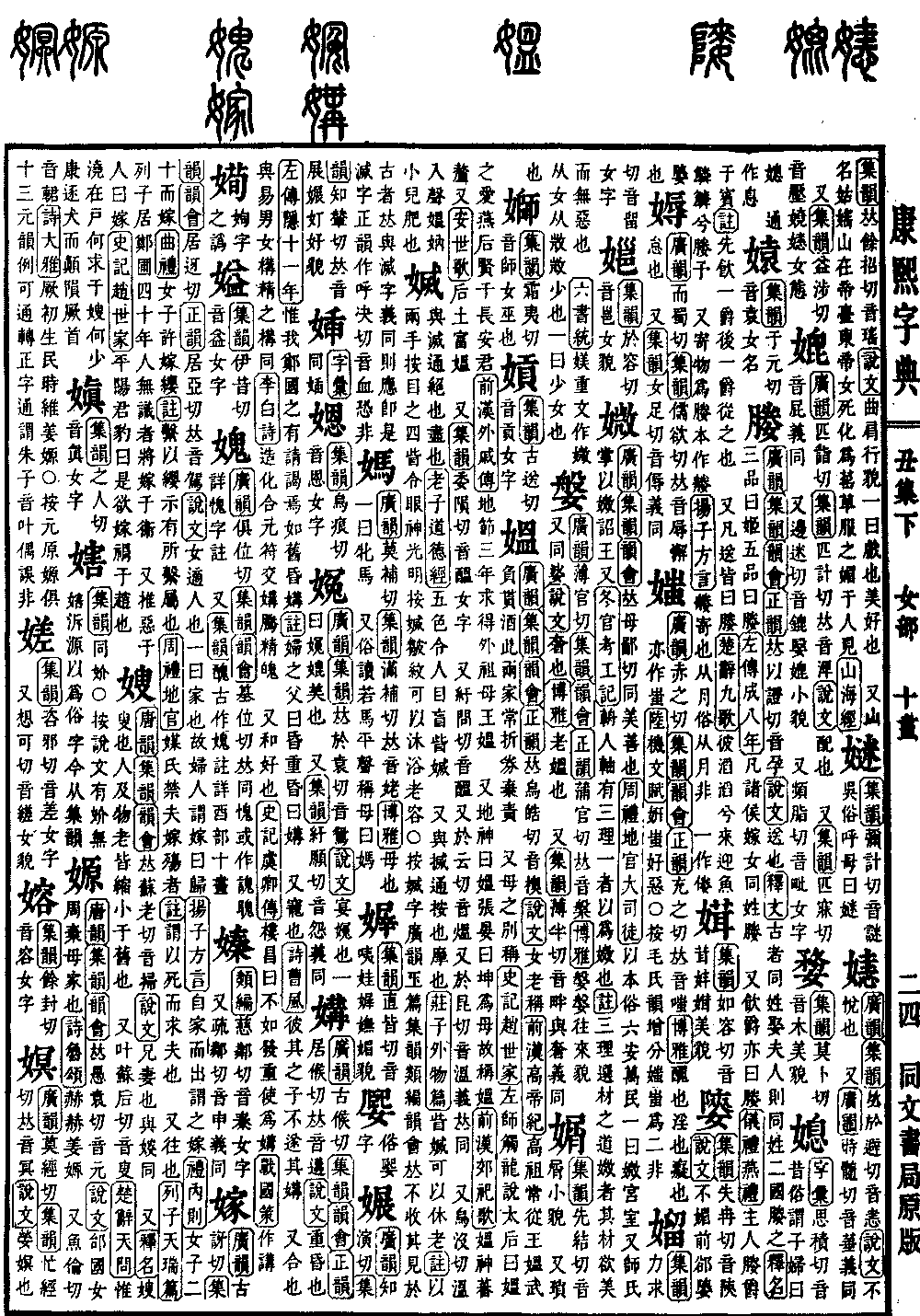
Page 268, Entry 19
According to Broad Rimes (Guangyun), Collected Rimes (Jiyun), Rime Collection (Yunhui), and Correct Rimes (Zhengyun), it is pronounced ao (rising tone).
According to Explanation of Simple and Compound Characters (Shuowen), it is a term of address for an elderly woman.
Book of Han (Hanshu), Annals of Emperor Gao: Emperor Gaozu often purchased wine on credit from Dame Wang and Dame Wu Fu, and these two women would often break the debt contracts and forgive the debts.
Also, an alternative term for mother.
Records of the Grand Historian (Shiji), Hereditary House of Zhao: The Left Minister Chu Long said to the Empress Dowager, You love the Empress of Yan more than you love the Lord of Chang'an.
Book of Han (Hanshu), Biographies of Imperial Relatives: In the third year of the Dijie reign period, the maternal grandmother, Dame Wang, was located.
Also, the deity of the earth is called ao. Zhang Yan stated: The Earth hexagram symbolizes a mother, therefore it is called ao.
Book of Han (Hanshu), Hymns for Suburban Sacrifices: The earth deity brings much fortune.
Songs of Peace for the Generations: The queen of the soil is a rich and nurturing mother.
According to Collected Rimes (Jiyun), it is also pronounced yun (falling tone). It is a woman's name.
Also pronounced yun (falling tone), also pronounced yun (even tone), and also pronounced wen (even tone). The meaning remains the same.
Also pronounced wo (entering tone). The term ao-na describes a young child who is plump.