You Collection, Upper Volume
Radical: Speech (yán)
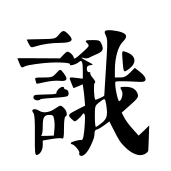
誐
Kangxi Stroke Count: 14
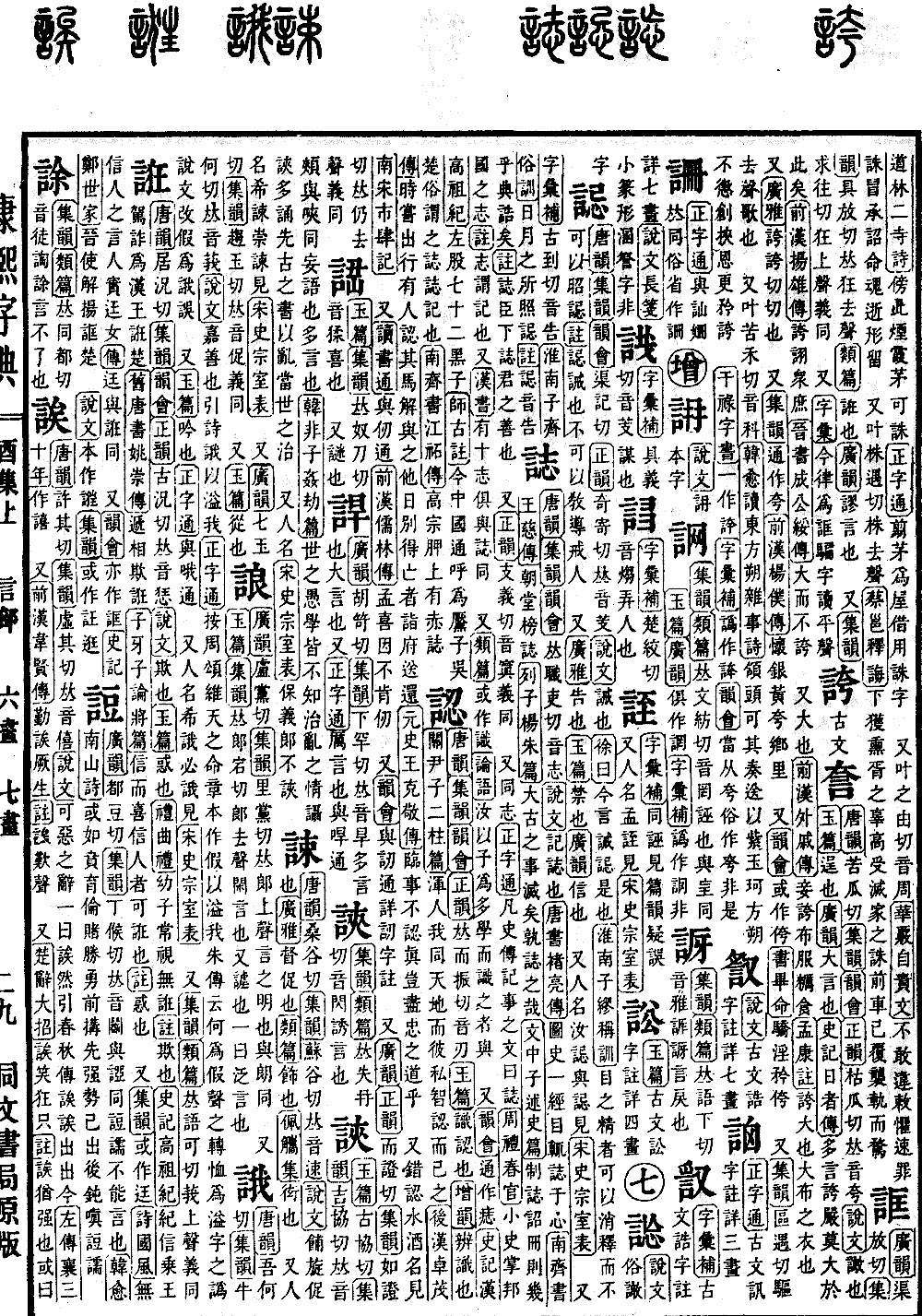
Page 1161, Entry 25
Pronounced é (rising tone)
According to the Explaining and Analyzing Characters (Shuowen Jiezi), it means to praise as good. It cites the Book of Odes (Shijing): Praise to fill us up.
The Rectification of Characters (Zhengzitong) notes: In the Zhou Odes (Zhou Song) chapter titled The Decree of Heaven (Wei tian zhi ming), the original text uses the character for praise (jiǎ) to fill us up. Zhu Xi states that the character for how (hé) is a phonetic shift of praise (jiǎ), and that the word for anxiety is an error for the word to overflow (yì). The Explaining and Analyzing Characters (Shuowen Jiezi) changed the character for praise (jiǎ) to this character, which is incorrect.
Also, according to the Jade Chapters (Yupian), it means to recite or moan.
The Rectification of Characters (Zhengzitong) notes: It is interchangeable with the character meaning to moan (é).
Also used in names. Xi-e and Bi-e appear in the History of Song (Songshi), Table of the Imperial Clan (Zongshibia).
Pronounced é (rising tone)
The meaning is the same as above.