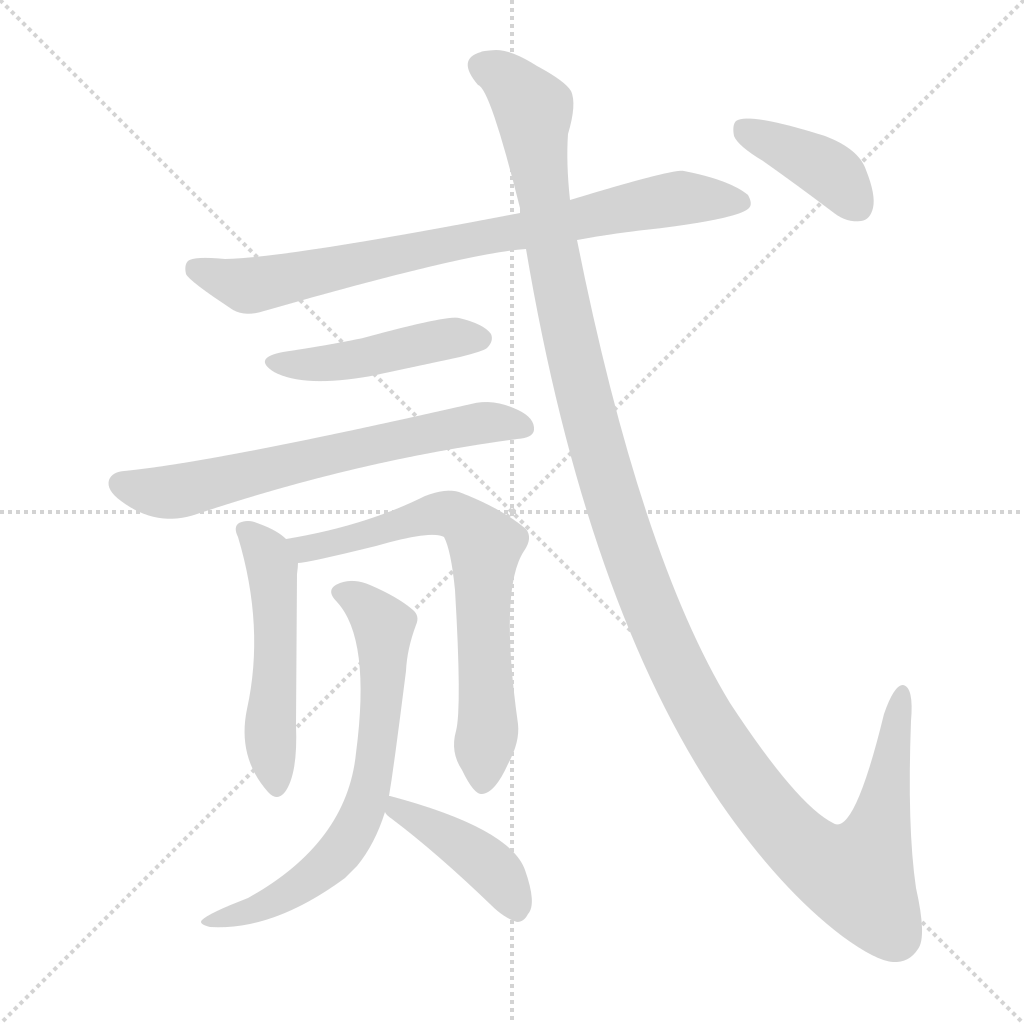
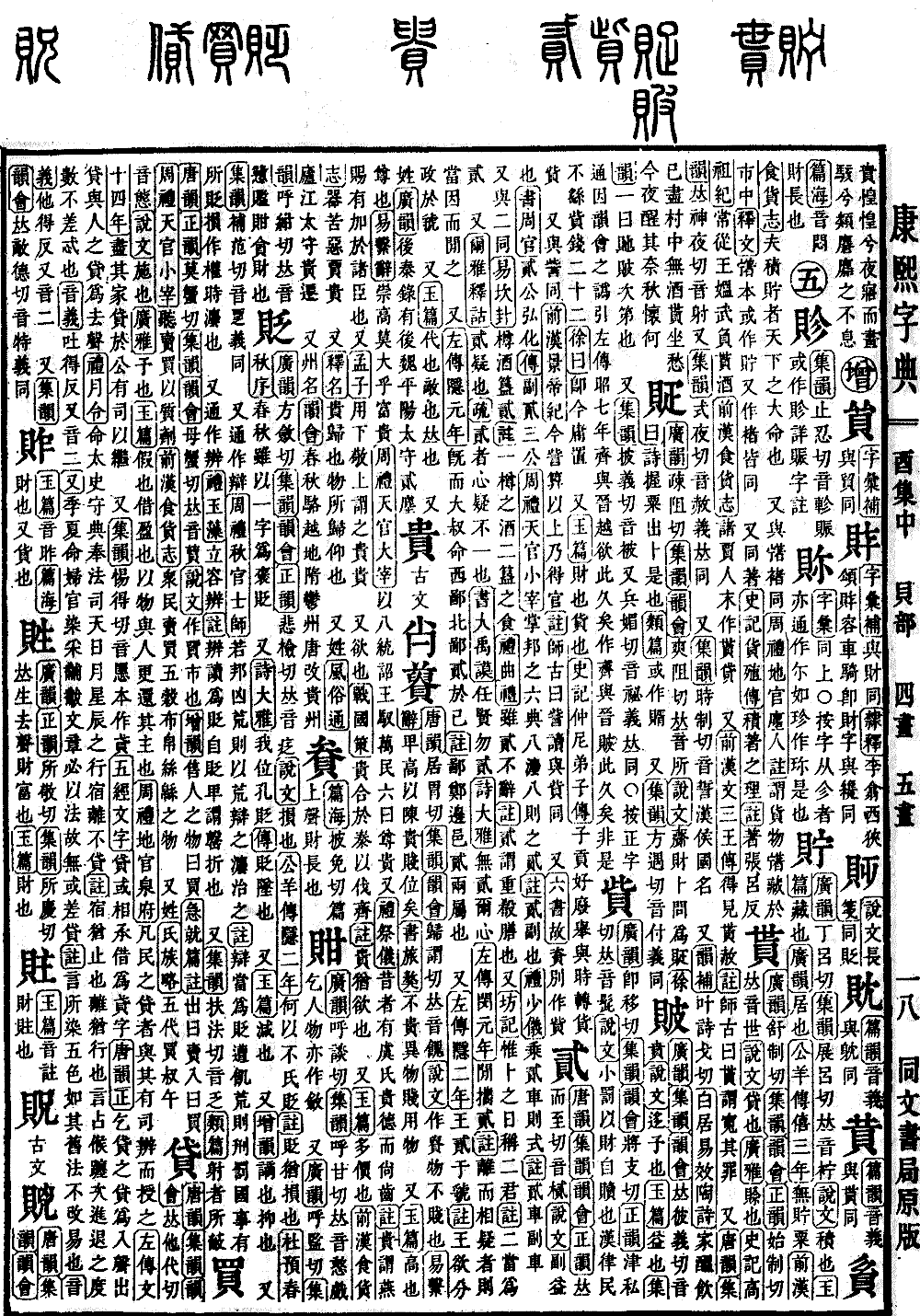
You Collection, Middle Volume
Radical: Cowrie (bèi)
Kangxi stroke count: 12
Page 1206, Entry 01
Pronounced er (falling tone).
In the Shuowen Jiezi (Shuowen), it means to supplement or assist.
Book of Documents (Shujing): The secondary ministers expand the transformation.
Commentary: The secondary ministers are those who assist the three dukes.
Rites of Zhou (Zhouli): He manages the duplicates of the six codes, eight laws, and eight regulations of the state.
Commentary: Duplicate refers to a copy or assistant.
Book of Rites (Liji): When riding in the secondary carriage, one bows forward at the crossbar.
Commentary: Secondary carriage refers to the spare carriage.
Also identical to the number two.
Book of Changes (Yijing): One jar of wine and two bamboo vessels of grain.
Commentary: One jar of wine and two vessels of food.
Book of Rites (Liji): Even if there are two portions, do not decline.
Commentary: Two refers to the doubling of meat dishes.
Book of Rites (Liji): On the day of divination, he refers to the two lords.
Commentary: The number two should be understood as secondary.
Also, in the Er Ya (Erya): Secondary means suspicion.
Sub-commentary: Secondary signifies a heart that is doubtful and not single-minded.
Book of Documents (Shujing): In appointing the worthy, have no divided heart.
Book of Odes (Shijing): Do not let your heart be divided.
Zuo Tradition (Zuozhuan): Alienating those who are divided.
Commentary: This refers to those who are estranged and suspicious of each other; one should take advantage of this to alienate them.
Zuo Tradition (Zuozhuan): Later, Dashu commanded the western and northern border regions to serve both him and the state.
Commentary: Border regions refers to the frontier towns of Zheng. Dual refers to belonging to two sides.
Zuo Tradition (Zuozhuan): The king divided his favor between the state of Guo.
Commentary: The king wished to divide his political authority with Guo.
According to the Yupian (Yupian), it also means to substitute, to be an equal, or to be a peer.
Also a surname.
According to the Guangyun (Guangyun), the Records of Later Qin (Houqin Lu) mentions the Northern Wei governor of Pingyang, Er Chen.