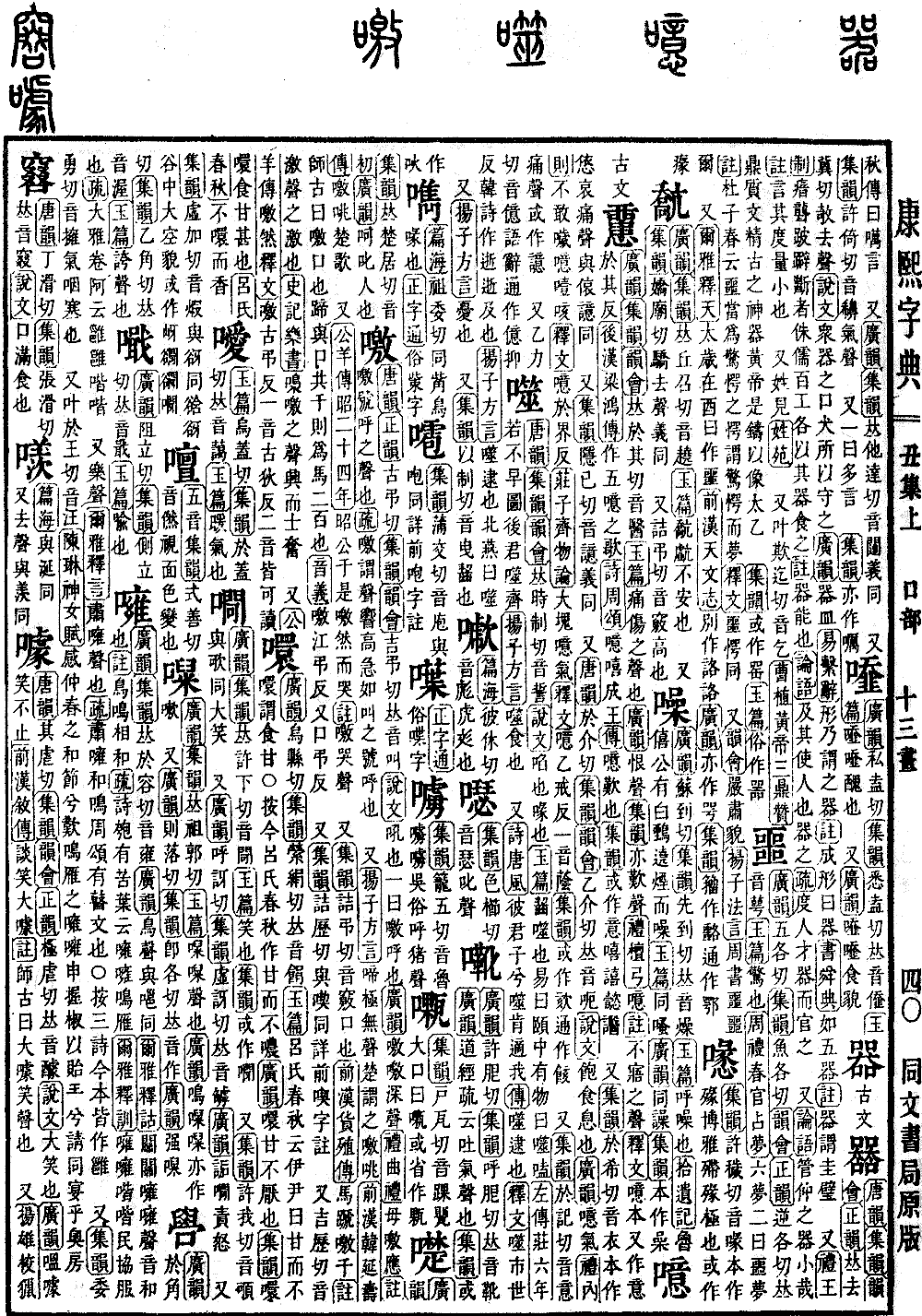
Chou Collection, Upper Volume
Radical: Mouth (kǒu)
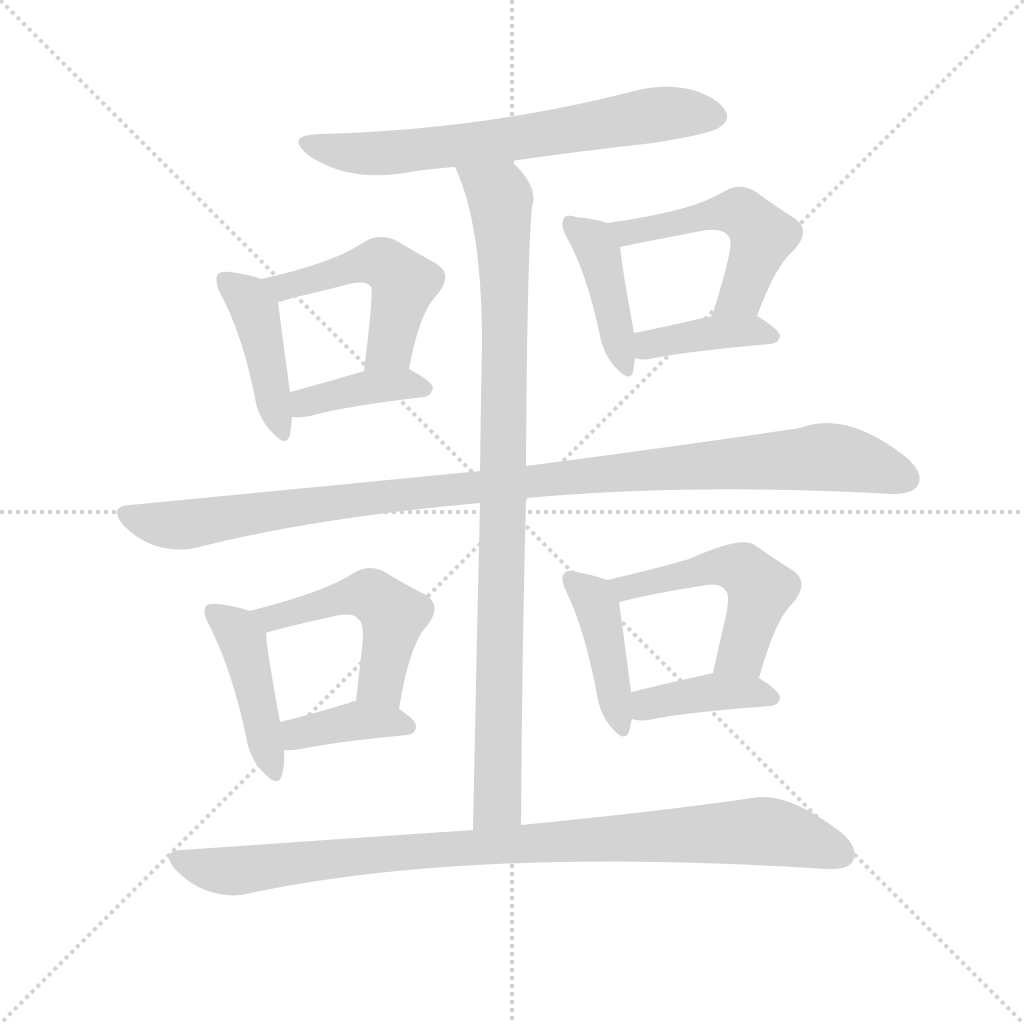
噩
Kangxi strokes: 16
Page 210, Entry 04
Pronounced è.
In the Comprehensive Dictionary (Guangyun), pronounced è.
In the Collected Rhymes (Jiyun), pronounced è.
In the Rhyme Anthology (Yunhui) and the Correct Rhymes (Zhengyun), pronounced è.
The Jade Chapters (Yupian) states: alarm.
Book of Rites (Zhouli), Spring Officials, Interpreting Dreams: Among the six types of dreams, the second is called a startled dream (è mèng).
Commentary: Du Zichun said: the character è should be the same as the character meaning to be startled or shocked, referring to a dream occurring from a state of shock.
Explication of Texts (Shiwen): The characters è and the variant meaning to be startled are the same.
Also, the Rhyme Anthology (Yunhui) states: a grave and serious appearance.
Model Sayings (Fayan) by Yang Xiong: The Book of Zhou (Zhou Shu) appears grave and solemn.
Also, Literary Expositor (Erya), Explaining Heaven: When the Grand Duke (Tai Sui) is in the position of the Rooster (you), the day is called zuo è.
History of the Former Han (Qianhan), Treatise on Astronomy: Also written in a variant form (è).
The Comprehensive Dictionary (Guangyun) states: also written in a variant form (è).
The Collected Rhymes (Jiyun) states: the seal script form is written as a variant. It is used interchangeably with the character for Ezhou (è).