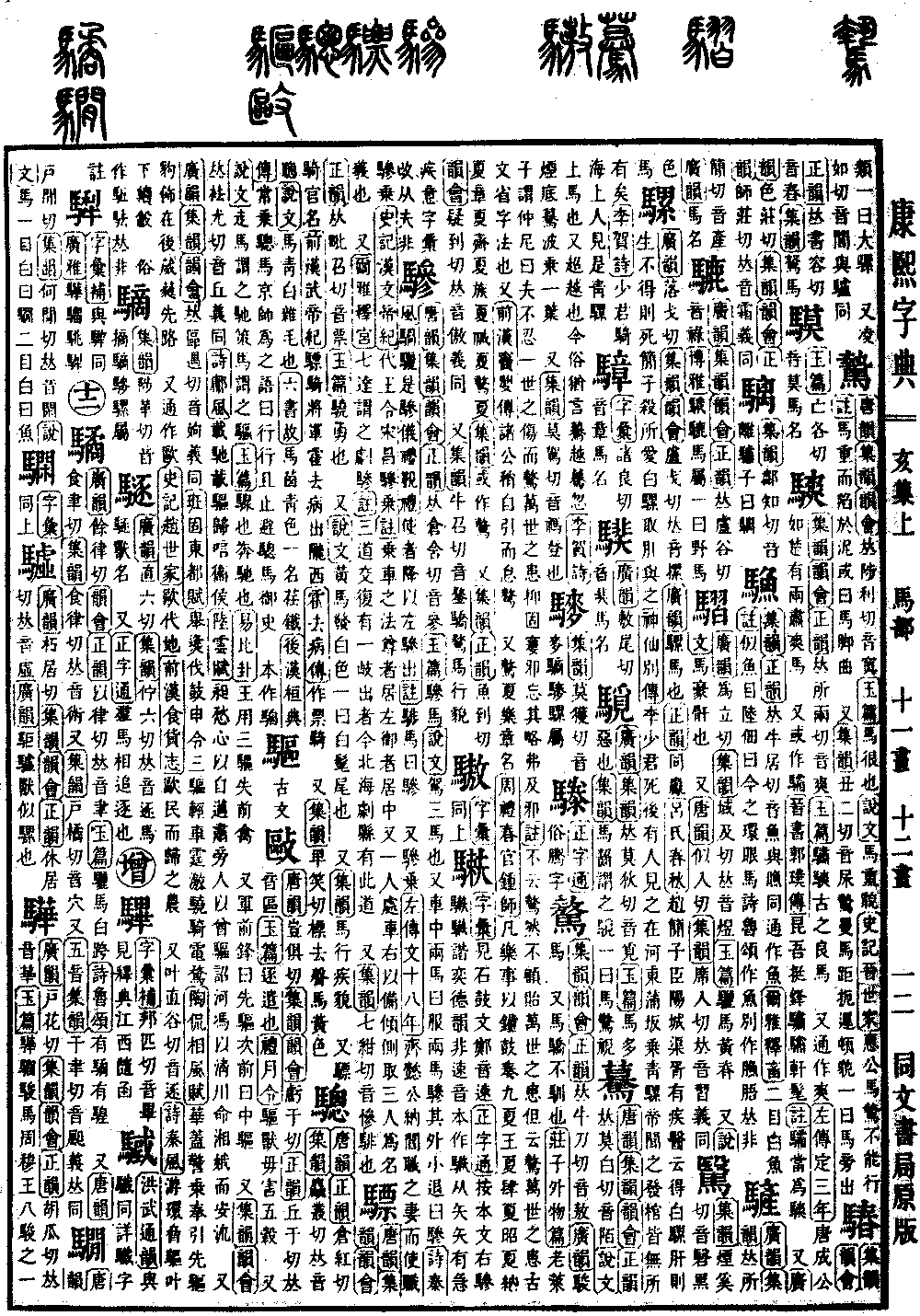
Hai Collection, Upper Volume
Radical: Horse (mǎ)
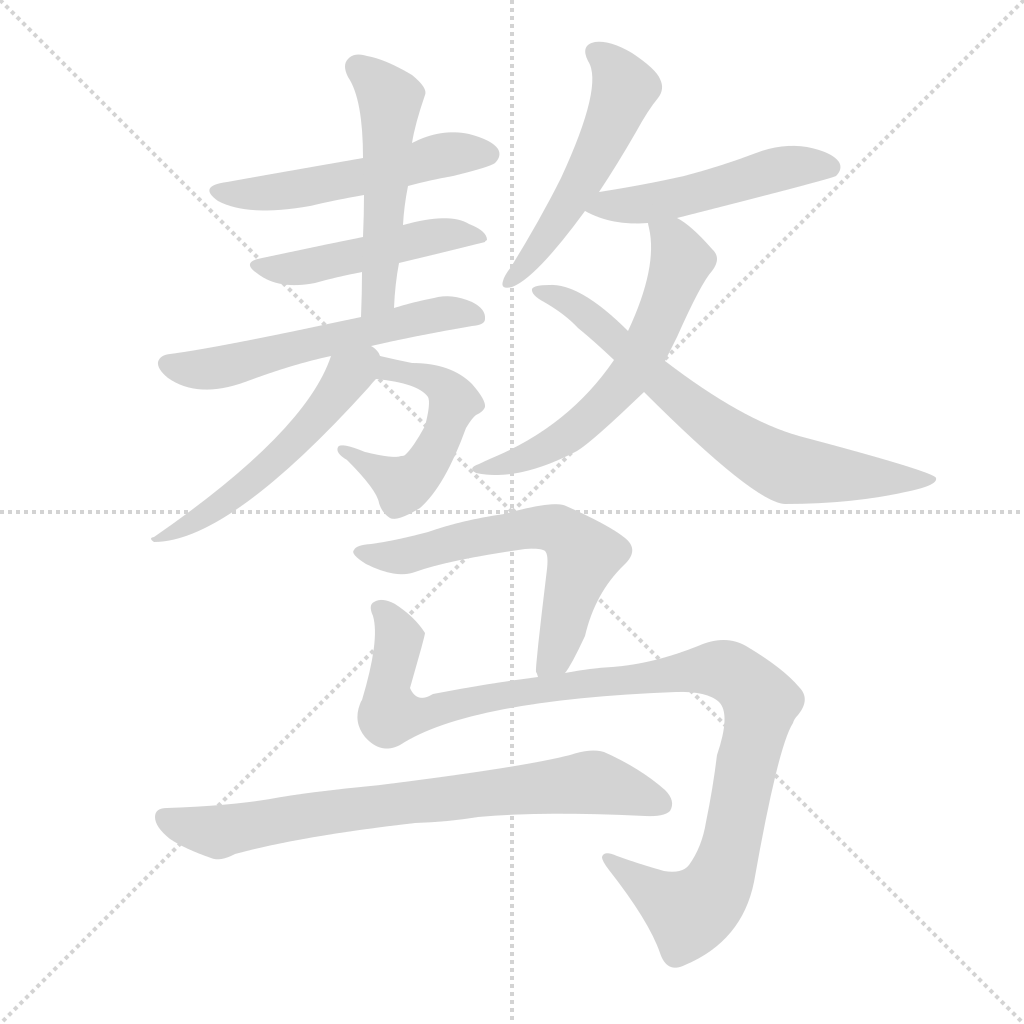
Entry: Ao
Kangxi stroke count: 21
Page 1444, Entry 01
According to the Sound Collection (Jiyun), the Rhyme Collection (Yunhui), and the Standard Rhymes (Zhengyun), it is pronounced ao. According to the Expanded Rhymes (Guangyun), it refers to a fine horse. It also refers to a horse that is proud and untamed.
In the Zhuangzi, Outer Things chapter, Lao Laizi says to Zhongni: If one cannot bear to see the suffering of a single generation, yet is reckless (ao) toward the suffering of ten thousand generations, is this due to innate poverty? Or is it a failure to grasp the strategies of the world? The commentary notes: The text does not say reckless and unheeding (ao ran bu gu) to invite the suffering of ten thousand generations, but simply says reckless (ao) toward the suffering of ten thousand generations, which is an example of the ancient grammatical method of omitting characters.
In the History of the Former Han (Qian Han Shu), Biography of Dou Ying, it states: The various lords gradually withdrew themselves and became negligent and arrogant (ao).
Also, Aoxia is the name of a musical movement. In the Rites of Zhou (Zhou Li), Spring Officials, Master of Bells, it states: For all musical affairs, use bells and drums to play the Nine Xia. These include Wangxia, Sixia, Zhaoxia, Naxia, Zhangxia, Qixia, Zuxia, Gaixia, and Aoxia. The Sound Collection (Jiyun) notes that it is sometimes written in a variant form.
According to the Sound Collection (Jiyun) and the Standard Rhymes (Zhengyun), and also according to the Rhyme Collection (Yunhui), it is pronounced ao. The meaning is the same.
According to the Sound Collection (Jiyun), it is also pronounced ao. It describes the gait of a proud and untamed horse.