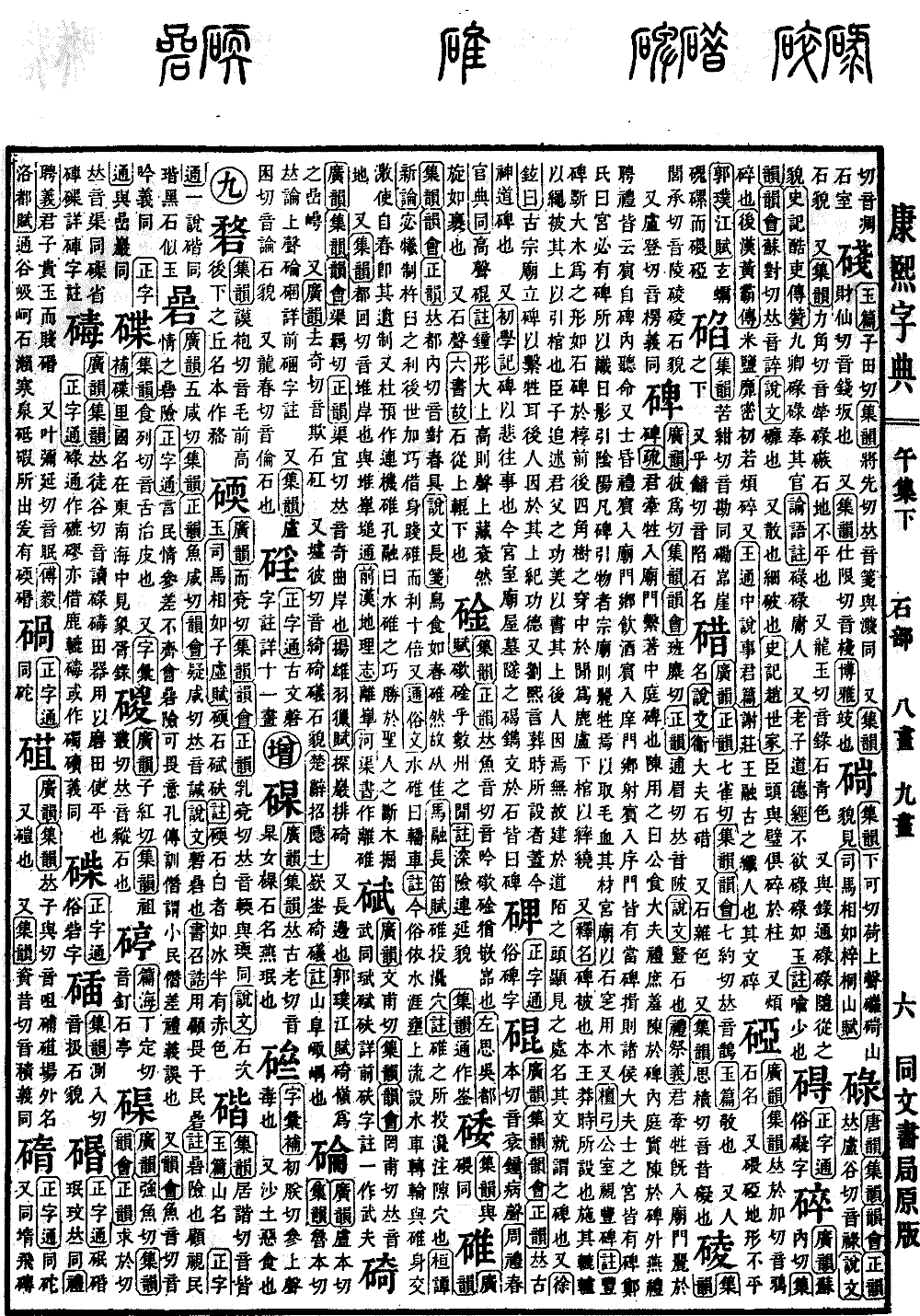
Wu Collection, Lower Volume
Radical: Stone (shí)
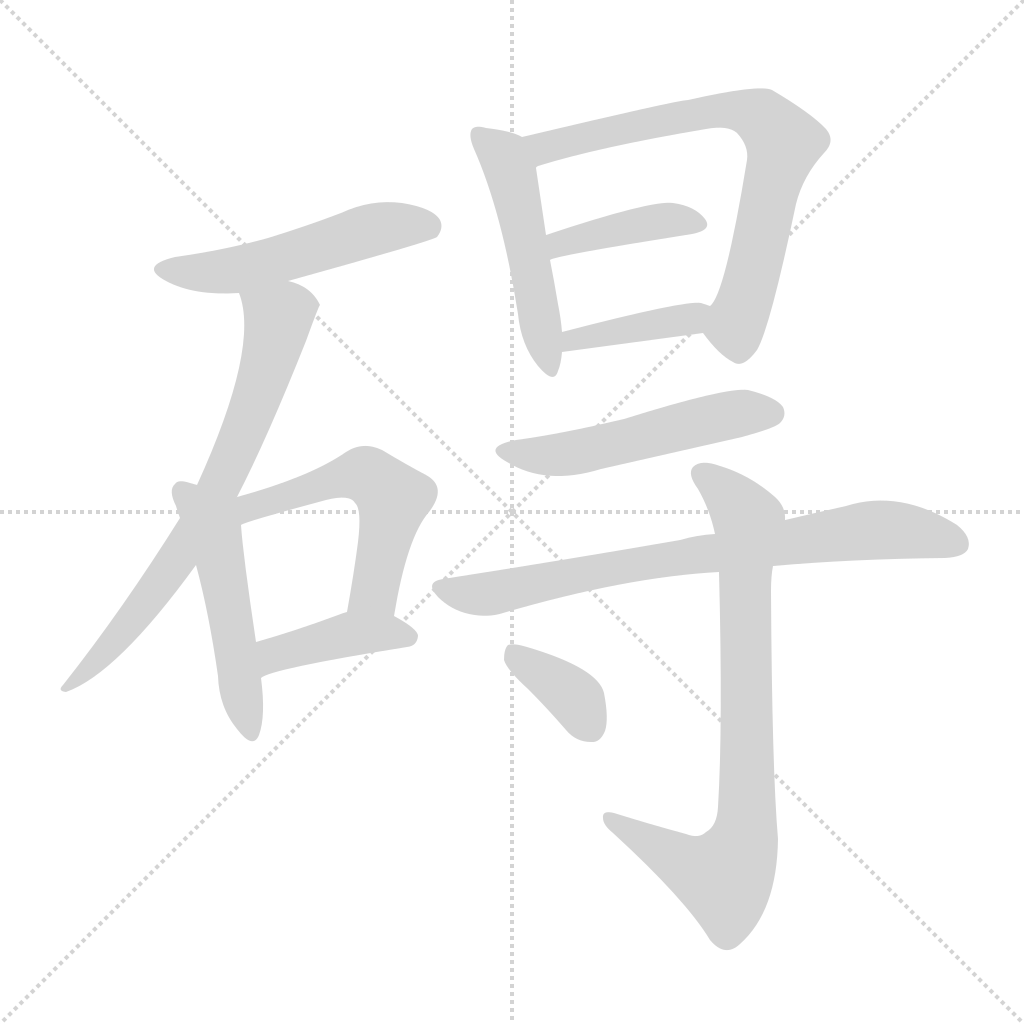
碍
Kangxi strokes: 19
Page 832, Entry 04
Zhengzitong (Zhengzitong): This is a common variant form of the character for obstruction (ài).
Obstruction (ài)
Tangyun (Tangyun): Pronounced ài (falling tone).
Jiyun (Jiyun), Yunhui (Yunhui): Pronounced ài (falling tone).
Pronounced exactly the same as (ài).
Sometimes also written in a variant form (ài).
Used interchangeably with (hé).
In the History of the Southern Dynasties (Nan shi), when quoting Buddhist scriptures, it is written in a variant form.
Shuowen (Shuowen): Means to stop or prevent. It also carries meanings of resisting, hindering, obstructing, or blocking.
Yangzi Fayan (Yangzi Fayan): The sages govern the world by using ritual and music to regulate and constrain.
Jiyun (Jiyun): Pronounced yí (rising tone).
Obstruction (ài): Refers to a type of blue stone.
Also rhyming with the sound yì (falling tone).
Su Zhe Yue Xia Shi (Su Zhe, Poems Below the Mountain): The mountains and forests have room for everything, yet my exhaustion and weariness become my own obstruction. Knowing well how deep the worldly entanglements go, only in old age do I retreat from the bustling markets.
Hui, pronounced qiú (rising tone).