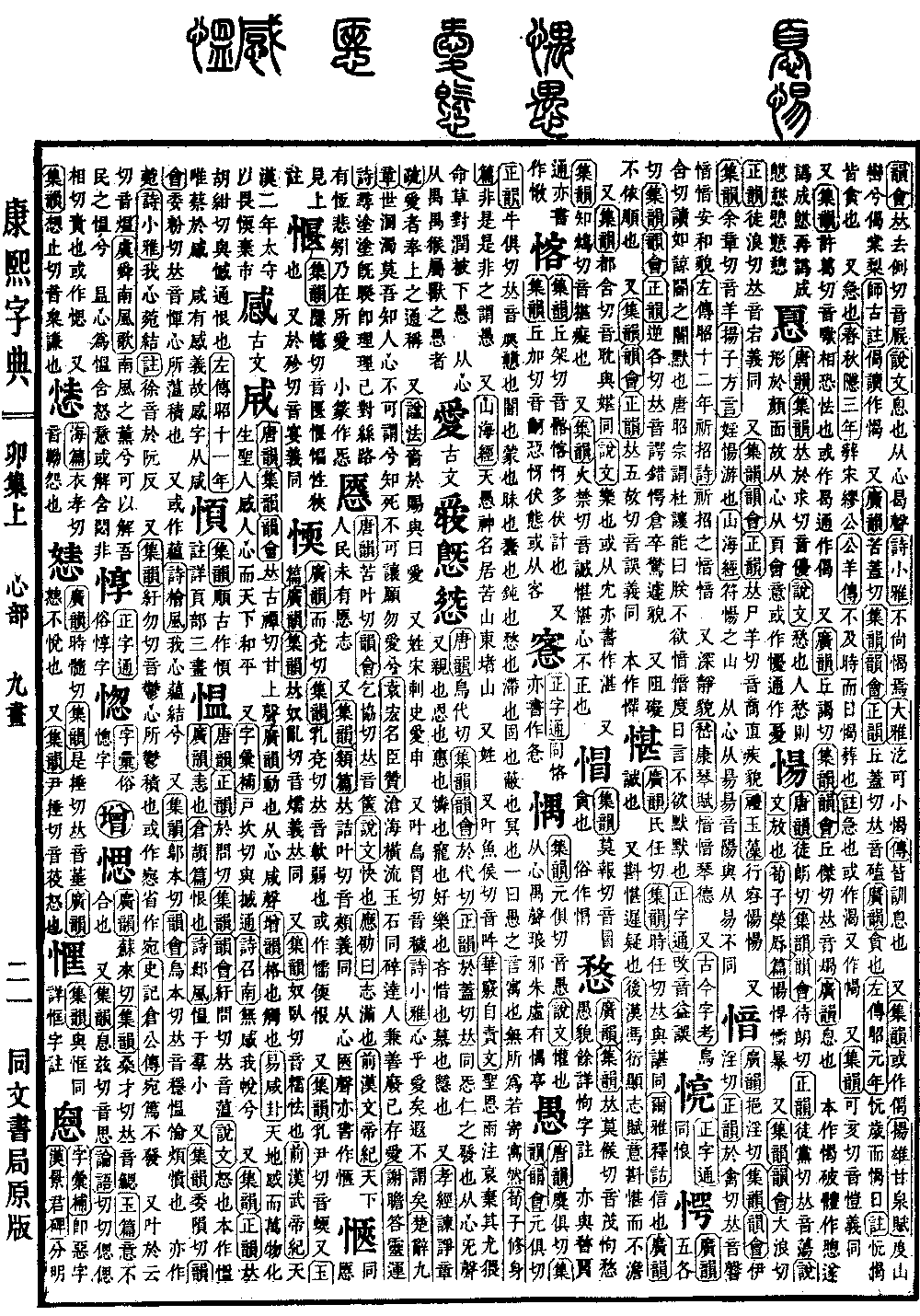
Mao Collection, Upper Volume
Radical: Heart (xīn)
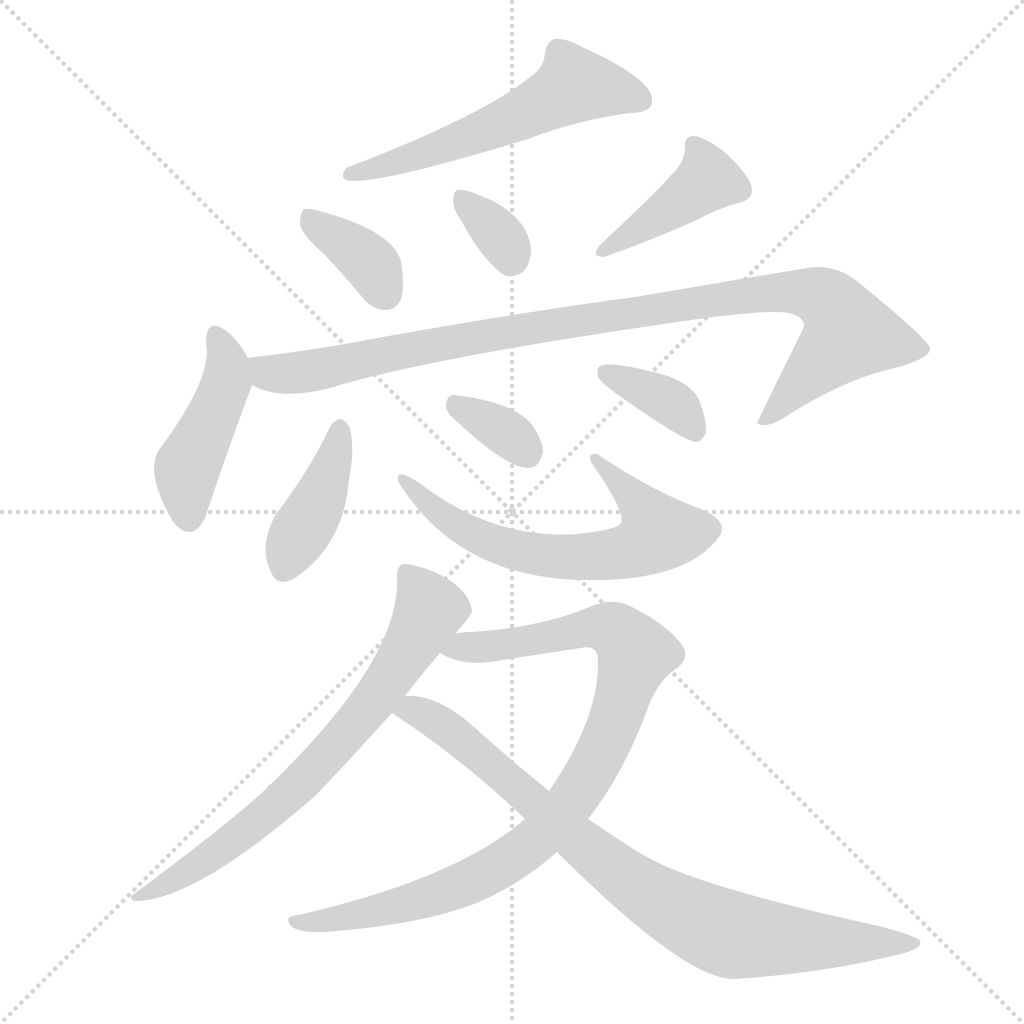
愛
Kangxi stroke count: 13
Page 395, Entry 13
Ancient form. Pronounced ai. The manifestation of benevolence. Formed from the heart radical and a phonetic component. Also refers to intimacy, grace, favor, pity, indulgence, fondness, stinginess, longing, and concealment.
According to the Classic of Filial Piety (Xiaojing) commentary on the Jianzheng chapter, love is a general term for serving one's superiors.
According to the posthumous title laws, being stingy with bestowing gifts is called love.
Also a surname. There was a Song dynasty governor named Ai Shen.
Also pronounced wei. In the Book of Odes (Shijing), it is written: My heart is troubled, why not speak of it? In the Songs of Chu (Chuci), it is written: The world is muddy and turbid, none understand me; the human heart cannot be spoken of. Knowing that death cannot be avoided, I hope not to be stingy. In Yuan Hong's Eulogy for Famous Officials, it is written: The ocean overflows, jade and stone shatter together. The enlightened person practices universal good, forgetting the self to preserve love. In Xie Zhan's Poem in Reply to Lingyun, it is written: Seeking the path, the paths have already diverged; approaching the principle, the principles are already opposed. The silk road holds eternal sorrow, and how much more so in the place where one loves.
Small seal script is written as shown.