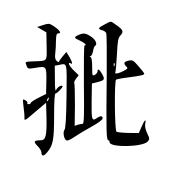
Tang Rhymes (Tangyun), pronounced zhi (falling-rising tone); Collected Rhymes (Jiyun), pronounced zu (falling-rising tone); the pronunciations are similar. Explained in Explanation of Script and Analysis of Characters (Shuowen Jiezi) as to grab or seize. The character structure is derived from the Hand radical, with the phonetic component indicating the sound. Explained in Broad Rhymes (Guangyun) as to strike someone with a fist.
Also, Tang Rhymes (Tangyun), pronounced jiang (falling-rising tone); Collected Rhymes (Jiyun) and Rhyme Compendium (Yunhui), pronounced jiang (falling-rising tone); Correct Rhymes (Zhengyun), pronounced jie (falling-rising tone); the pronunciation is zi. The meaning is the same. In the Western Metropolis Rhapsody (Xijing Fu) by Zhang Heng, it appears as "zi-lan-suan". The commentary explains this as the appearance of wrestling with a wild beast.
Also, Collected Rhymes (Jiyun), pronounced zi (falling-rising tone). This also means holding a halberd and fighting.
Also, pronounced zhi (falling-rising tone), which is the same as the character zhi.
Also, pronounced ci. This also means to grab or seize.
Also, Tang Rhymes (Tangyun), Collected Rhymes (Jiyun), and Rhyme Compendium (Yunhui), pronounced ji (falling-rising tone). The meaning is the same.
Also, Collected Rhymes (Jiyun) and Correct Rhymes (Zhengyun), pronounced ci (rising tone). This means to grab and twist or break.