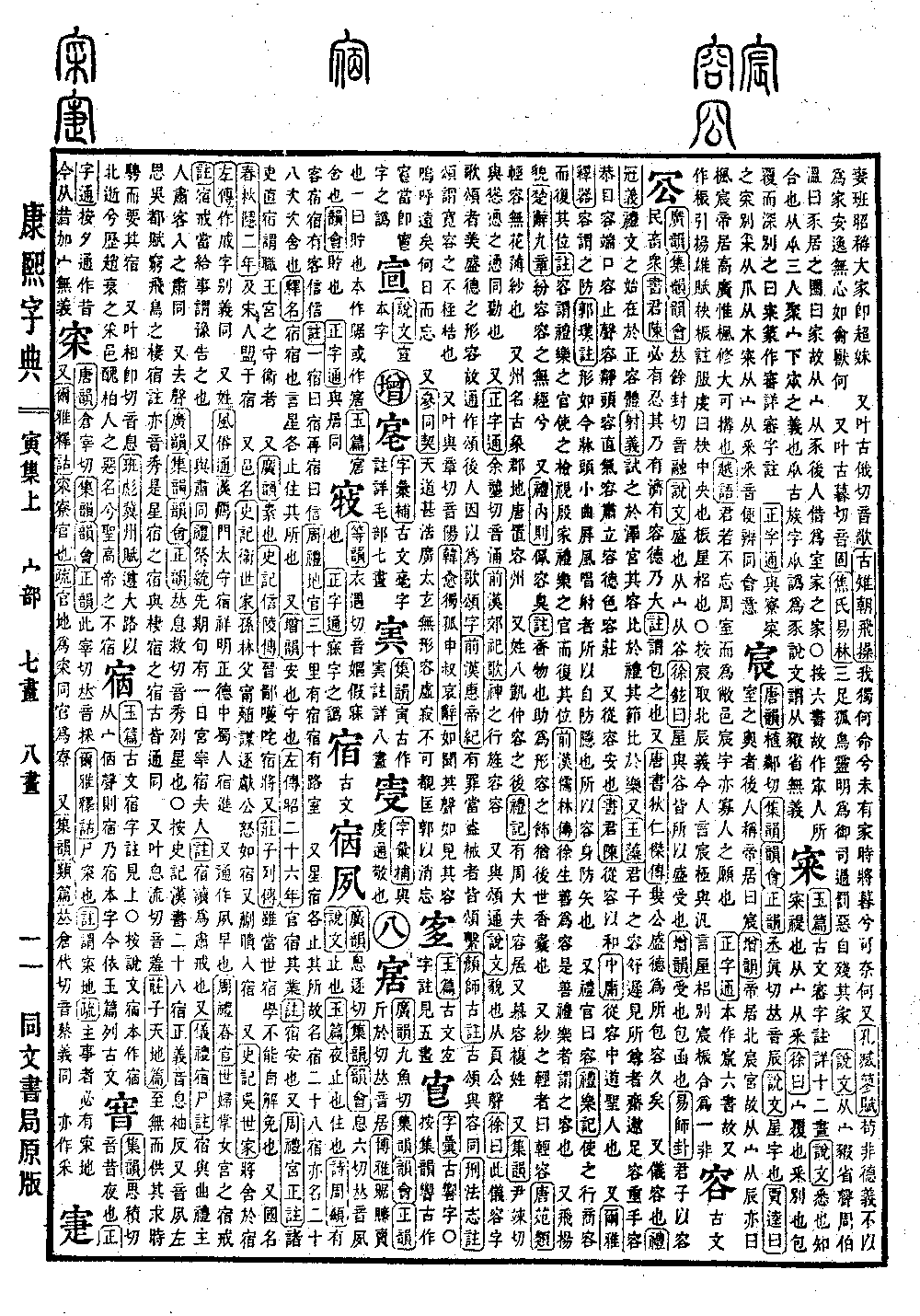
Yin Collection, Upper Volume
Radical: Roof (mián)
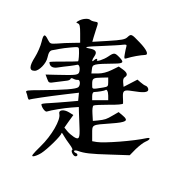
Zan
Kangxi strokes: 11
Page 287, Entry 19
Tang Rhymes (Tangyun), Collected Rhymes (Jiyun), Dictionary of Rhymes (Yunhui), and Corrected Rhymes (Zhengyun) state the pronunciation is zan (rising tone).
Explaining Graphs and Analyzing Characters (Shuowen) defines this as to reside quickly.
Book of Odes (Shijing), Odes of Zheng: Do not detest me, do not be quick to discard old ties.
Zhu Xi Commentary (Zhu zhuan): Zan means quick; gu means old ties. It implies do not detest me and do not leave; old ties should not be severed hastily.
Broad Rhymes (Guangyun): Means urgent.
Also in the entering tone. Five Sounds Collected Rhymes (Wuyin Jiyun) states the pronunciation is jie (entering tone). The meaning is the same.
Corrected Characters Guide (Zhengzitong): Corrected Rhymes entry 21, the 감 rhyme, defines zan as fast. In the 10th rhyme, the 엽 rhyme, it defines zan as urgent. Urgent and fast are similar in meaning, yet they are separated into two pronunciations. The Dictionary of Rhymes (Yunhui) includes the character zan in the 감 rhyme but does not record it in the 엽 rhyme.
Explaining Graphs and Analyzing Characters (Shuowen) notes: Zan means to reside quickly. It is formed from the radical roof and the phonetic element jie. Sun Mian suggests the pronunciation zan (rising tone), but the pronunciation and the phonetic source are contradictory; the sound and meaning are both unsettled. This is one of the questionable cases in the Six Writings (Liushu).
Dictionary of Collections (Zihui) includes both the zan and jie pronunciations, following the Corrected Rhymes (Zhengyun).