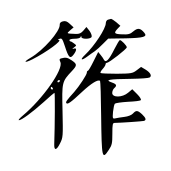
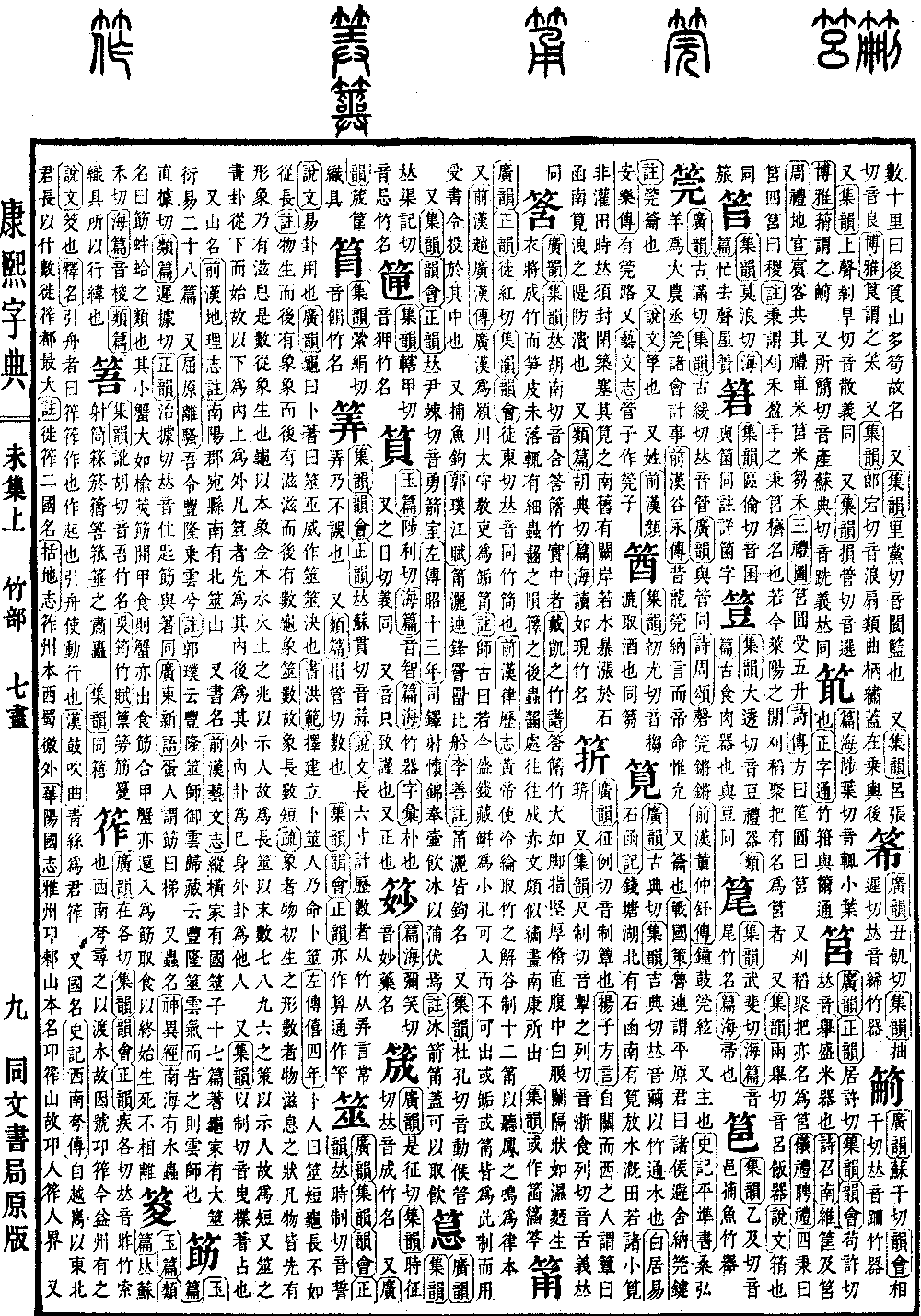
Wei Collection, Upper Volume
Radical: Bamboo (zhú)
Kangxi Strokes: 13
Page 885, Entry 27
Broad Rhymes (Guangyun): Pronounced zuó
Collected Rhymes (Jiyun), Rhyme Compendium (Yunhui), Correct Rhymes (Zhengyun): Pronounced zuó
A bamboo rope. The people of the southwest use it to cross water, and therefore refer to it as Qiongzuo. It is currently found in Yizhou.
Explaining Graphs and Analyzing Characters (Shuowen): A bamboo tether.
Explanation of Names (Shi Ming): That which pulls a boat is called a zuo. Zuo means to initiate. To initiate means to rise; it pulls the boat to make it move and travel.
Han Dynasty Drum and Pipe Music (Han Guchui Qu): Blue silk is used as your tether.
Also the name of a state.
Records of the Grand Historian (Shiji), Account of the Southwest: From Yuesui to the northeast, there are dozens of tribal leaders; the states of Xi and Zuo are the largest.
Commentary: Xi and Zuo are the names of two states.
Comprehensive Geography (Kuodishi): Zuo Prefecture was originally outside the borders of Western Shu.
Chronicles of Huayang (Huayang Guozhi): The Qionglai Mountains in Yazhou were originally named Qiongzuo Mountain, marking the border between the Qiong people and the Zuo people.
Also, Collected Rhymes (Jiyun) and Correct Rhymes (Zhengyun): Pronounced zé
To press; to constrain.
Rites of Zhou (Zhouli), Spring Officials: An extravagant sound is constrained.
Commentary: This refers to the center being bound. If the mouth of a bell is wide, the sound is constrained and forced out quickly.
Sea of Characters (Pianhai): Also written in a variant form (zé).