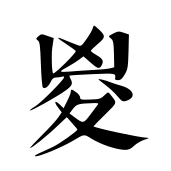
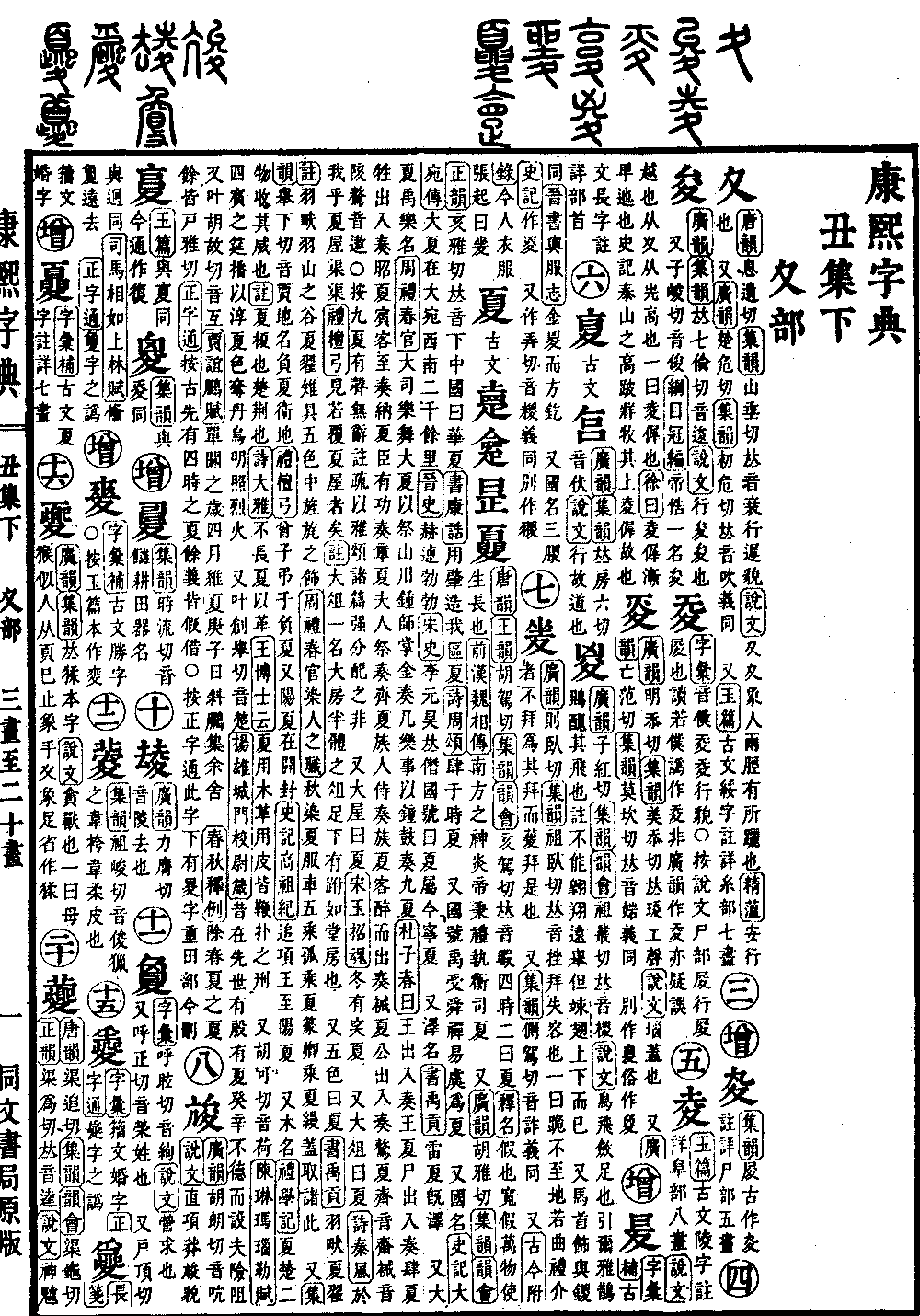
Guangyun notes the pronunciation as hong (rising tone). Jiyun and Yunhui note the pronunciation as cong (rising tone), which is the same as the character zong. Shuowen Jiezi defines it as drawing the feet together. Birds like magpies and shrikes draw their feet in when taking flight. In the Erya, the character zong is written as zong. The commentary explains that such birds cannot soar or fly far, but only flutter their wings up and down.
It also refers to an ornament on a horse's head. It is the same as the character zan. The Book of Jin (Jinshu), Records of Carriages and Clothing, states: Ornaments made of gold are used, paired with a square bit.
It is also the name of a state. This refers to the state of Sanzong. In the Records of the Grand Historian (Shiji), it is written as zong.
It is also pronounced as nong (falling tone), with a sound identical to zong. The meaning remains the same. It can also be written as zong.
Textual research: The Shuowen entry for birds drawing their feet together when flying, citing the Erya entry for magpies and shrikes, notes that they cannot soar or fly far, but only flutter their wings up and down. Following the original text of the Shuowen and Erya, the entries have been revised: Shuowen defines it as drawing in the feet. Magpies and shrikes draw in their feet when flying. The character is written as zong in the Erya. The commentary has been changed to interpretation. Far-flying has been changed to flying.