Chou Collection, Lower Volume
Radical: Woman (nǚ)
Page 257, Entry 16
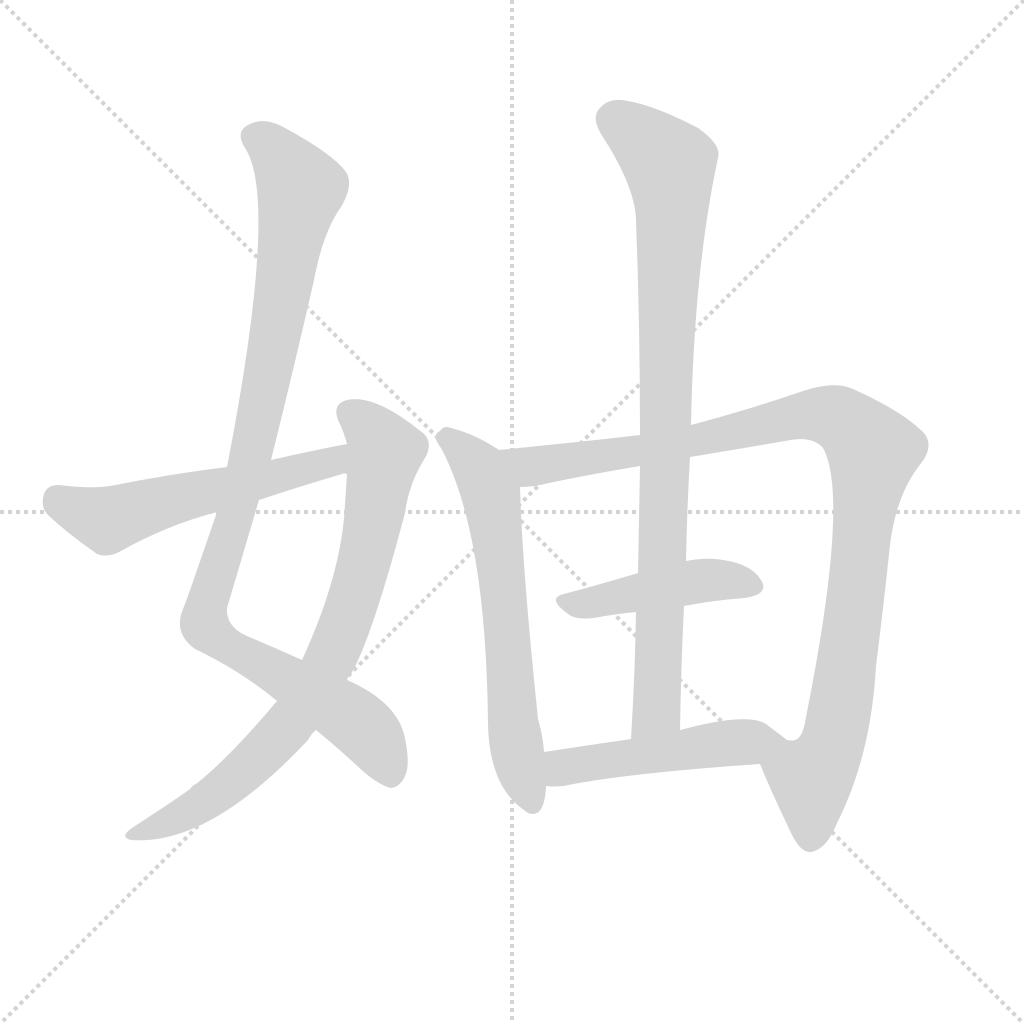
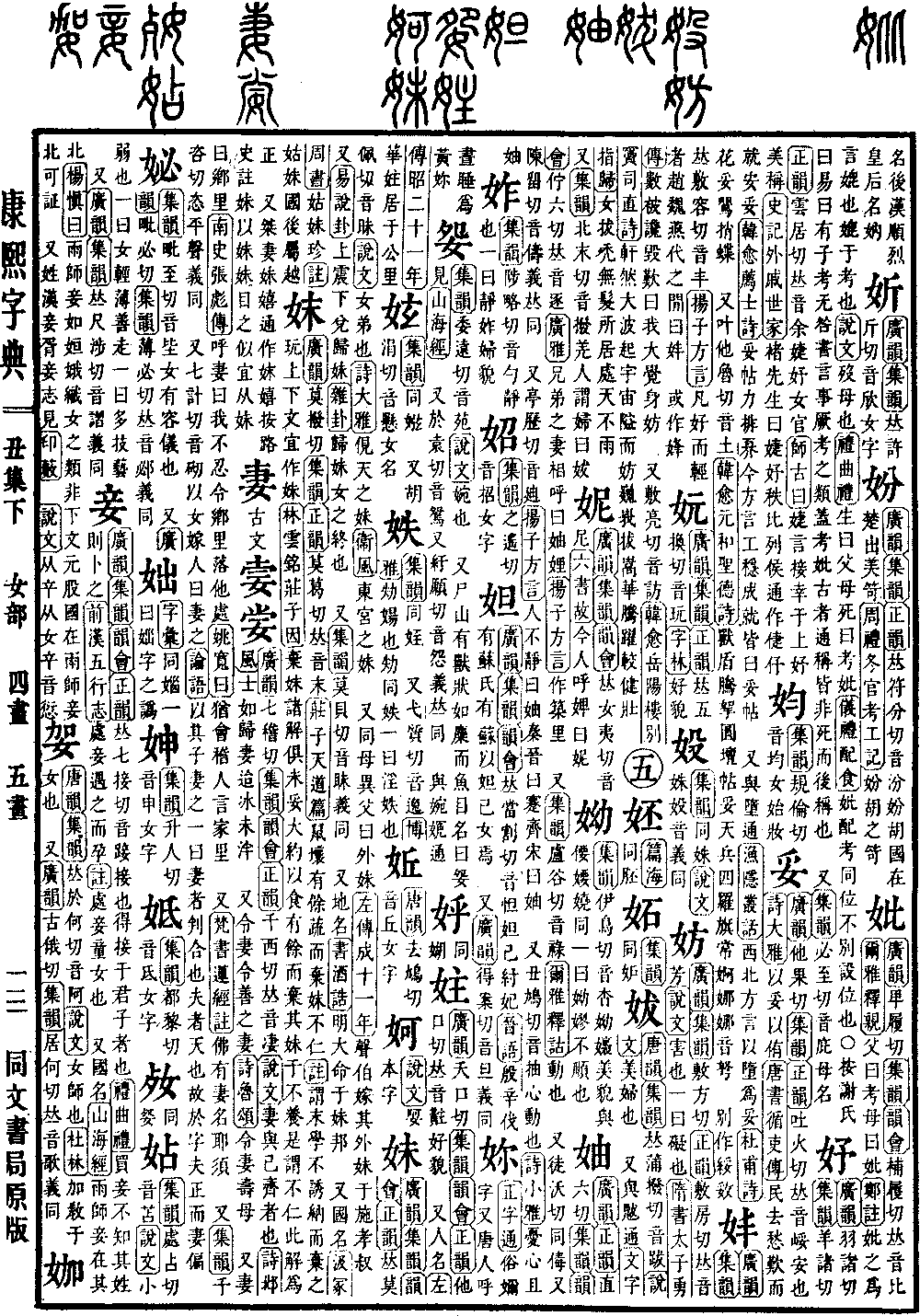
Pronounced zhu. According to the Extensive Dictionary of Sounds (Guangyun) and the Orthodox Rhymes (Zhengyun), it is pronounced zhu. According to the Collected Rhymes (Jiyun) and the Compendium of Rhymes (Yunhui), it is pronounced zhu. According to the Expanded Museum of Antiquities (Guangya), brothers' wives refer to one another as zhuli. According to the Dialect Dictionary by Yangzi (Fangyan), it is written as zhuli.
Also, according to the Collected Rhymes (Jiyun), it is pronounced lu. According to the Er Ya (Erya), a dictionary of ancient terms, it means to move.
Also, pronounced tu. It has the same meaning.
Also, pronounced chou. It has the same meaning.
Also, pronounced di. According to the Dialect Dictionary by Yangzi (Fangyan), when a person is restless it is called zhou; in the regions of Qin and Jin it is called jian, and in the regions of Qi and Song it is called zhou.
Also, pronounced chou. It means the heart is agitated. According to the Book of Odes (Shijing), in the Minor Odes of the Kingdom (Xiaoya) section, it says: The anxious heart is agitated.