Wu Collection, Upper Volume
Radical: Tile (wǎ)
Zhoù
Kangxi Stroke Count: 14
Page 750, Entry 19
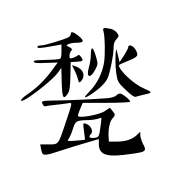
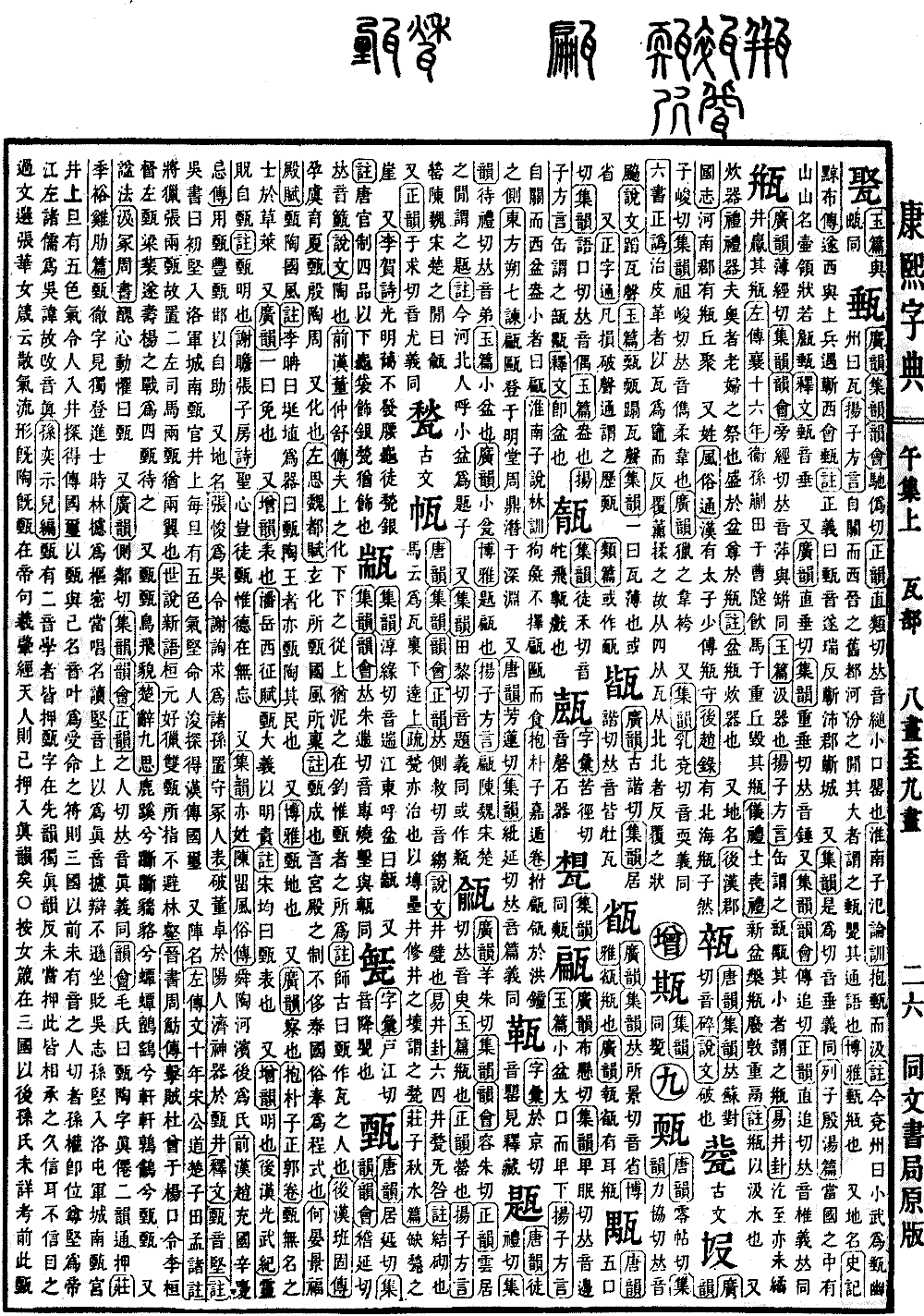
Ancient literature records: Tang Rhymes (Tangyun), Collection of Rhymes (Jiyun), Rhyme Meetings (Yunhui), and Standard Rhymes (Zhengyun) all state it is pronounced zhou (falling tone). Analytical Dictionary of Characters (Shuowen Jiezi) defines it as the brickwork lining of a well wall. The Book of Changes (Yijing), in the sixth line of the Well hexagram, states: The well is lined, no blame. The commentary notes this refers to constructing the walls of a well. Ma Rong states: Using tiles to build upward from the bottom. The sub-commentary explains: Zhou also carries the meaning of repair or regulation. To stack bricks to build a well wall or to repair damage to a wall is called zhou. The Zhuangzi, in the Autumn Floods chapter, mentions the edge of a broken well wall. Furthermore, Li He writes in a poem: The brilliance is dimmed and does not manifest, the tortoise girdle hangs uselessly against the silver-inlaid well. The commentary notes: According to the Tang dynasty bureaucratic system, officials below the fourth rank wore tortoise-shaped girdle pendants decorated with silver. Here, zhou carries the meaning of decoration.