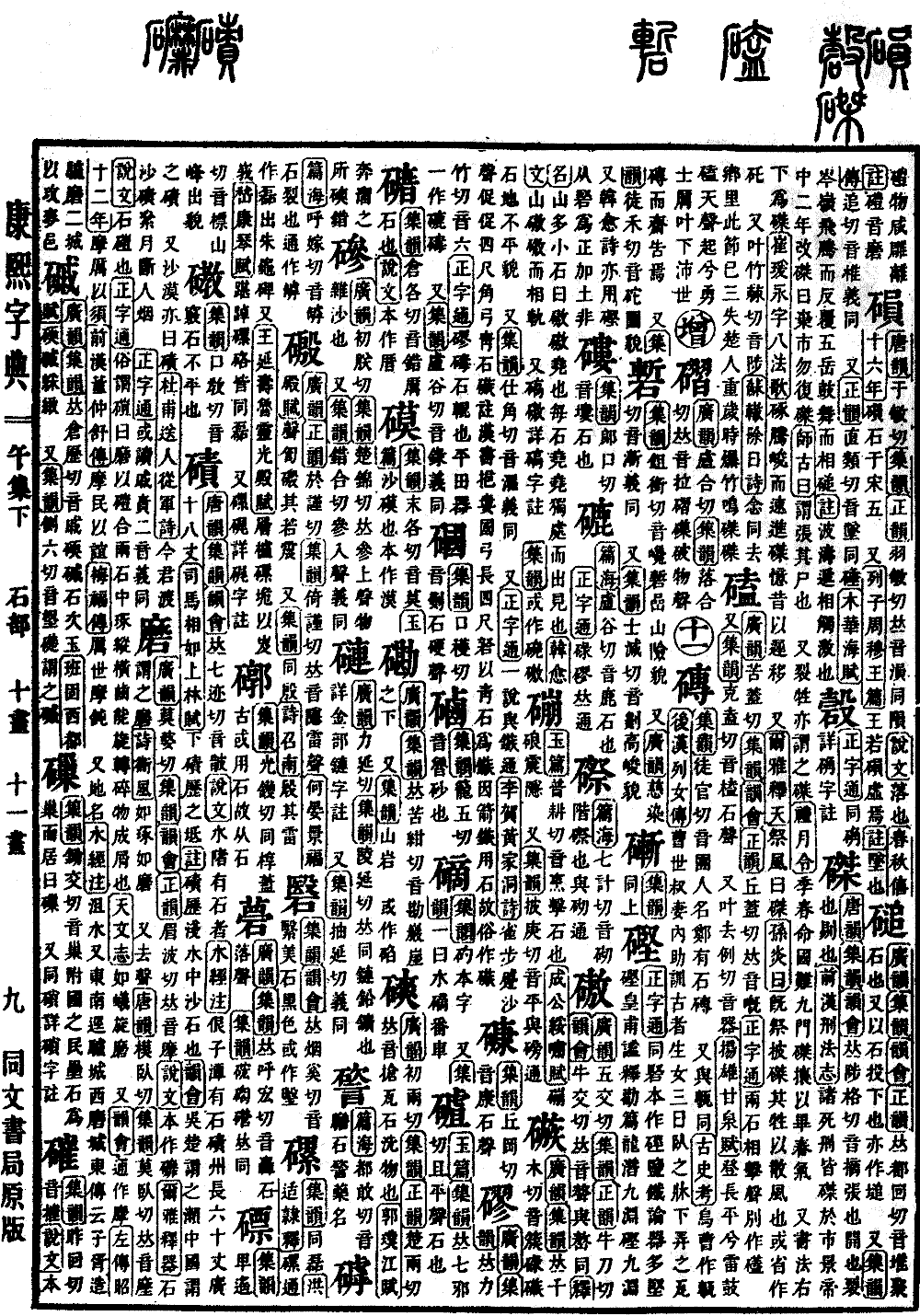
Wu Collection, Lower Volume
Radical: Stone (shí)
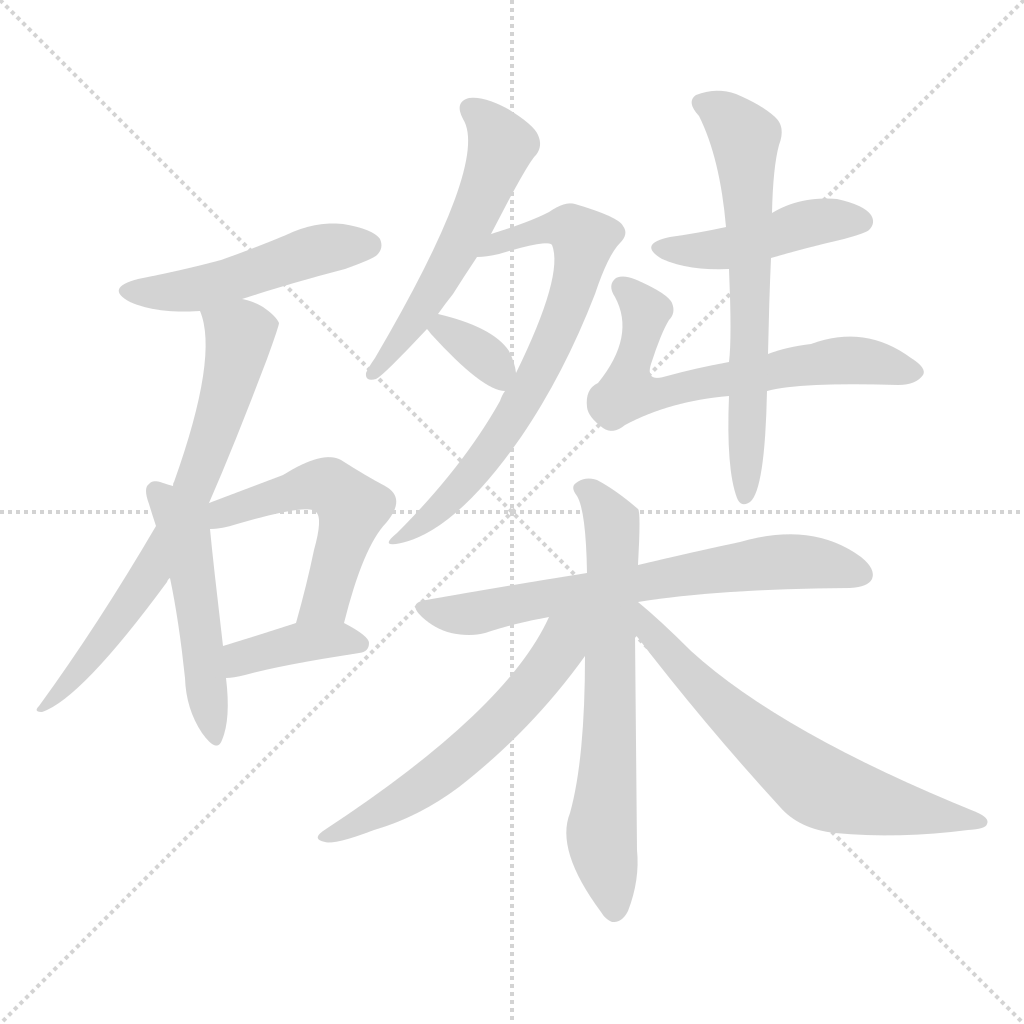
Character: Zhe
Kangxi Strokes: 15
Page 835, Entry 04
Pronounced zhai. Meaning: to spread out, to open, to split, to remove. History of the Former Han (Hanshu), Treatise on Law and Punishments, states that various forms of capital punishment were carried out in the marketplace, including the dismemberment known as zhe. In the second year of the Zhongyuan era of Emperor Jing, the zhe punishment was replaced by abandonment in the marketplace and was no longer used. Yan Shigu states that this refers to exposing a corpse by spreading it out.
Additionally, dividing sacrificial animals is also called zhe. The Book of Rites (Liji), Monthly Ordinances, records that in the final month of spring, the order is given to hold a ceremony to expel pestilence, where sacrificial animal bodies are divided at the nine city gates to ward off disasters and conclude the baleful spirits of spring.
In calligraphy, the lower-right stroke is called zhe. Cui Yuan, Song of the Eight Principles of the Character Yong, writes: the pecking stroke must be swift and steep, while the zhe stroke must move slowly as if reflecting on the past.
Furthermore, Erya, Explanation of Heaven, records that the sacrifice to the wind deity is called zhe. Sun Yan says this means that after the sacrifice, the animal is divided to disperse the wind. Sometimes also written in a variant form (zhé).
Also pronounced zhi. Su Zhe, New Year's Eve Poem, writes: Thinking of how we left home together, this festival has already passed three times. The people of the Chu region value the timing of the seasons, and the sound of firecrackers crackles and pops.