Yin Collection, Upper Volume
Radical: Roof (mián)
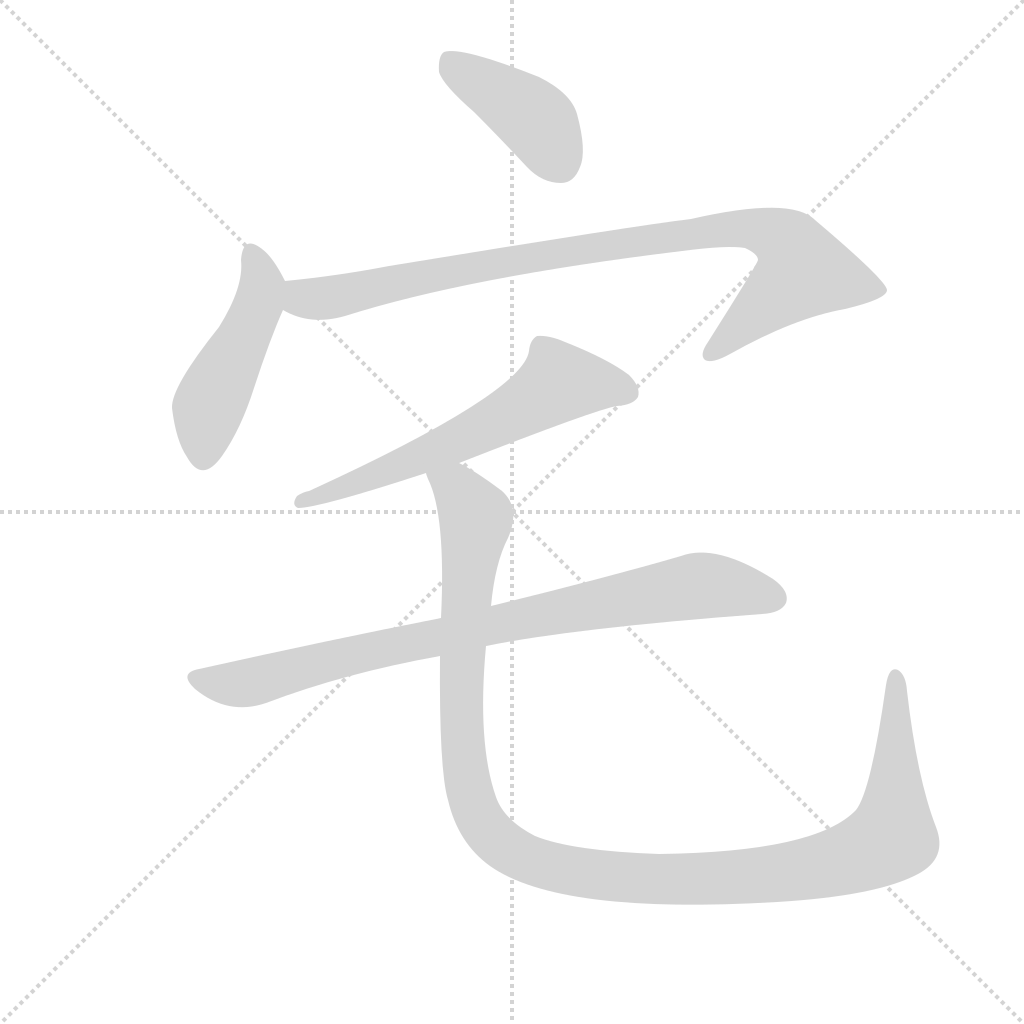
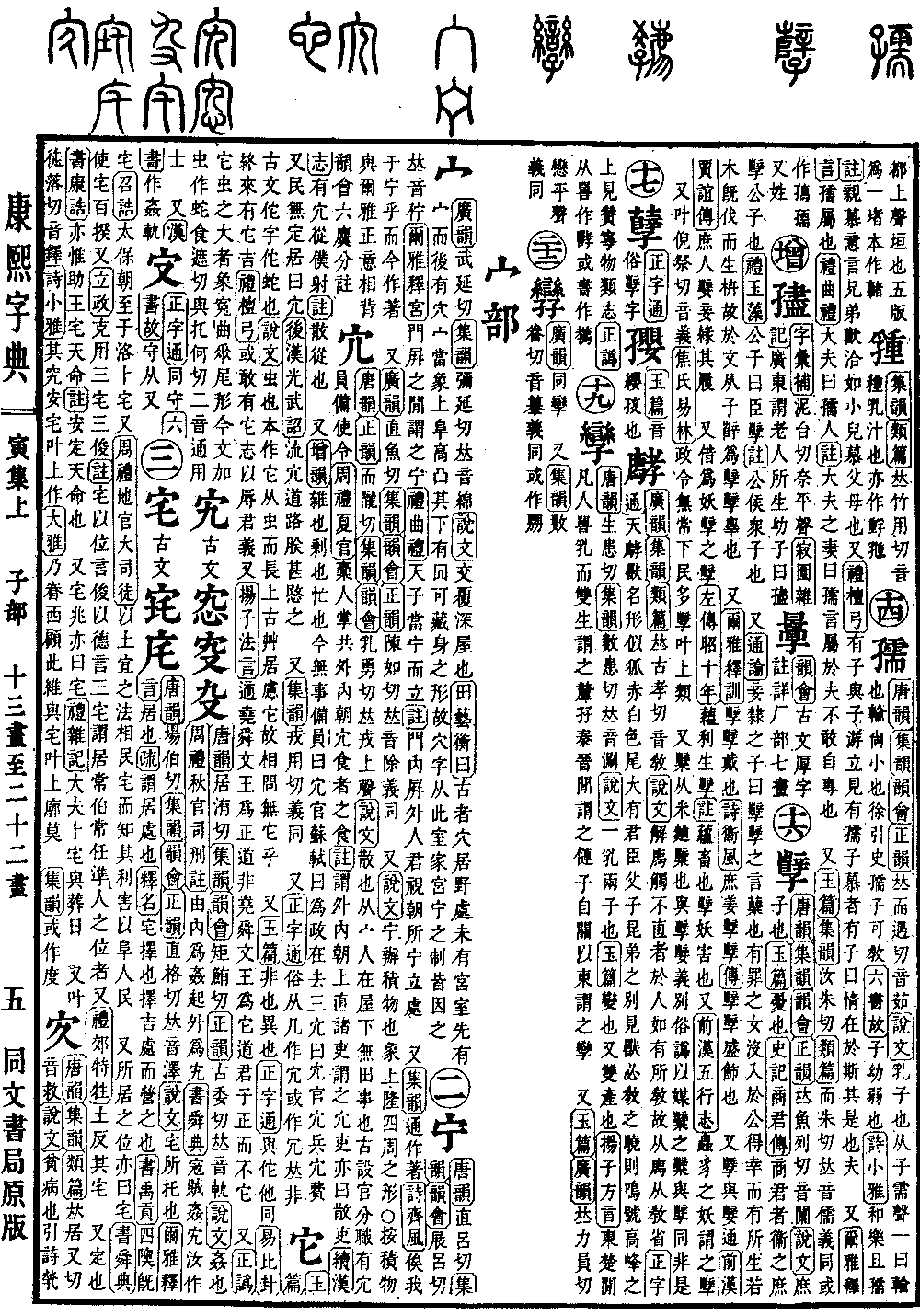
宅; Kangxi stroke count: 6; Page 281, Entry 20
Ancient form. According to Tang Rhymes (Tangyun), pronounced ze. According to Collected Rhymes (Jiyun), Rhymes Compilation (Yunhui), and Orthodox Rhymes (Zhengyun), pronounced zhe. According to Explaining Graphs (Shuowen), a residence is that upon which one relies. According to Approaching Elegance (Erya), commentary on words, it means to reside. The commentary states: it refers to a place of living. According to Explanation of Names (Shiming), a residence is a selection, meaning to select an auspicious location and build there. According to Book of Documents (Shujing), Tribute of Yu (Yugong), the four corners are now inhabited. In the Announcement of the Duke of Shao (Zhaogao), the Grand Guardian arrived at Luo in the morning to divine the site for a residence. Also, according to Rites of Zhou (Zhouli), Earth Office, Grand Minister of Instruction, distinguish the names and objects of the twelve types of land to assess the dwellings of the people and understand their advantages and disadvantages. Furthermore, the position one occupies is also called a residence. According to Book of Documents, Canon of Shun (Shundian), appoint men to occupy the hundred offices. Also in Establishing Government (Lizheng), able to use the three residences and three worthies. The commentary notes: residence refers to position, while worthies refers to virtue. The three residences refer to those occupying the positions of the senior ministers, regular officials, and inspectors. Also, according to Record of Various Matters (Zaji), the earth returns to its residence. It also means to settle. According to Book of Documents, Announcement to Kang (Kanggao), also assist the king in settling the heavenly mandate. The commentary notes: to stabilize the heavenly mandate. Furthermore, a grave site is also called a residence. According to Record of Various Matters (Zaji), the high official divines the grave site and the day of burial. Also, rhymes with duo. According to Book of Odes (Shijing), Lesser Odes, it seeks a peaceful residence. It rhymes with the preceding word, zuo. In the Greater Odes, it looks toward the west, this is the place to reside. It rhymes with the preceding words, kuo and mo. According to Collected Rhymes (Jiyun), sometimes written as du. Textual Research: In Rites of Zhou, Earth Office, Grand Minister of Instruction, the original text reads: distinguish the names and objects of the twelve types of land to assess the dwellings of the people and understand their advantages and disadvantages. This has been corrected to follow the original text.