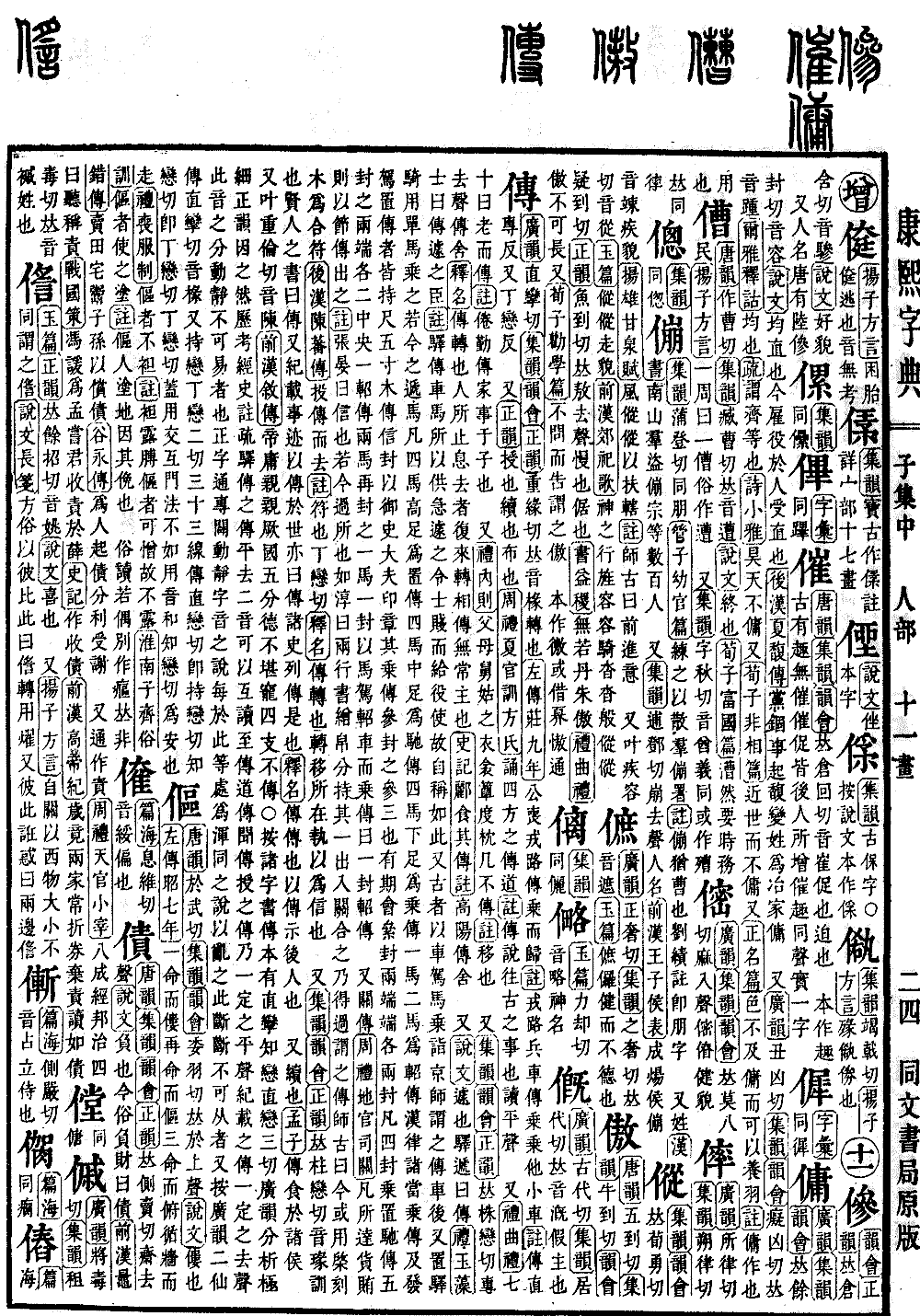
Zi Collection, Middle Volume. Radical: Person (rén). Zhài. Kangxi Stroke Count: 13. Page 114, Number 26. Tang Rhymes (Tangyun), Collected Rhymes (Jiyun), Rhyme Association (Yunhui), and Correct Rhymes (Zhengyun): Pronounced with the initial zhāi in the departing tone. Explained in the Analytical Dictionary of Characters (Shuowen) as the meaning of owing or being in debt. In modern vernacular, owing money or assets is called zhài. History of the Former Han (Qianhan), Biography of Chao Cuo (Chao Cuo Zhuan): Selling off fields and houses and selling children and grandchildren into servitude to repay debts. Biography of Gu Yong (Gu Yong Zhuan): Lending money on behalf of others to share in the interest and receiving rewards. Also interchangeable with the character zé. Rites of Zhou (Zhouli), Heavenly Offices, Junior Administrator (Xiaozai): Among the eight methods for governing the state, the fourth is to adjudicate disputes over loans. Strategies of the Warring States (Zhanguoce): Feng Xuan went to the region of Xue on behalf of Lord Mengchang to collect debt payments. Records of the Grand Historian (Shiji) writes this as collecting debts. History of the Former Han (Qianhan), Annals of Emperor Gao (Gaodi Ji): At the end of the year, the two parties would often break the debt tallies and waive the debts. Pronounced as zhài.