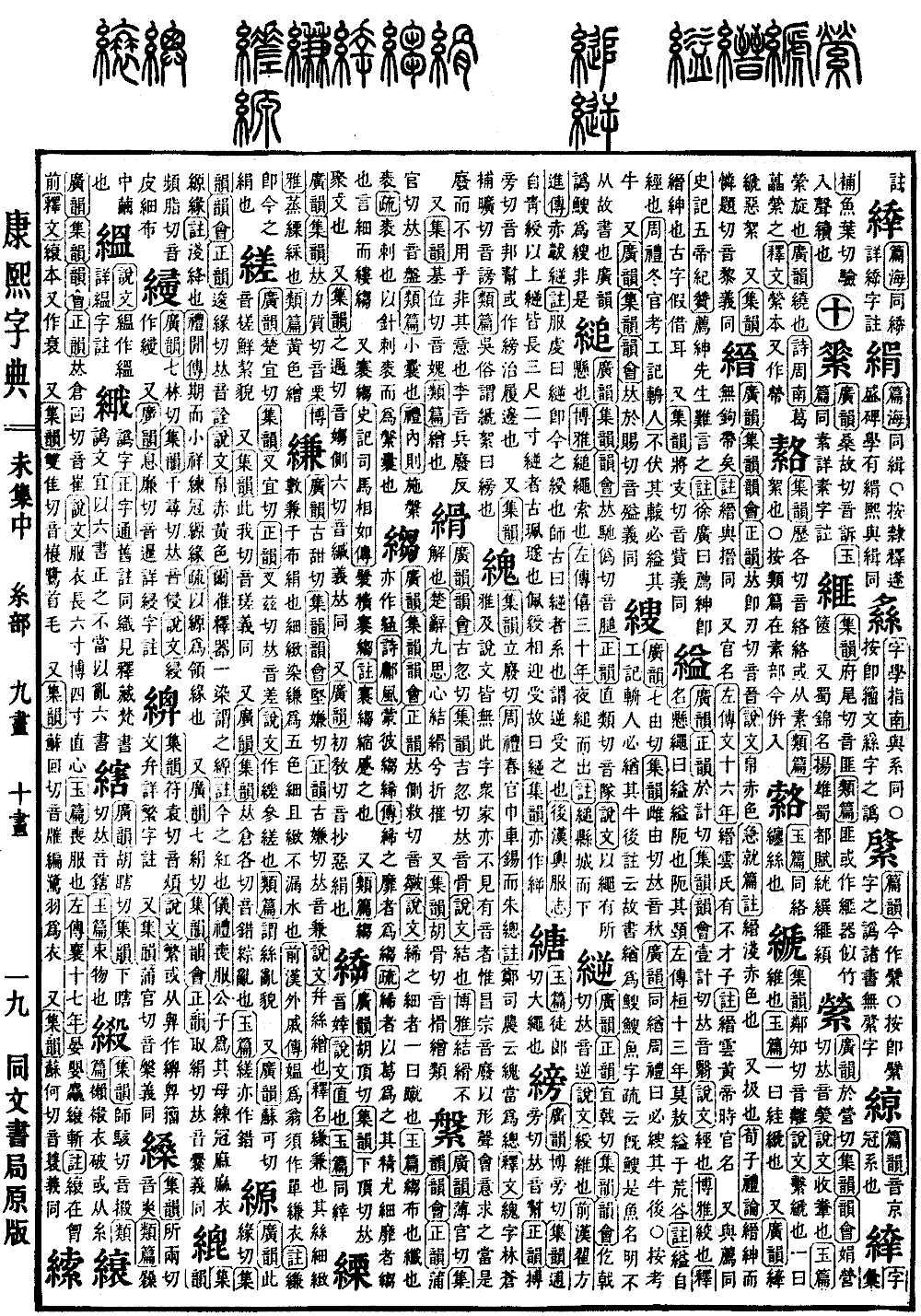
Wei Collection, Middle Volume
Radical: Silk (mì)
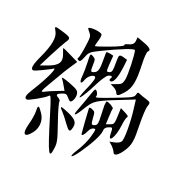
Character: Zhou
Kangxi stroke count: 16
Page 933, Entry 23
Pronounced zhou (falling tone).
According to the Explaining Graphs and Analyzing Characters (Shuowen Jiezi), it refers to fine ramie cloth. Another definition is to wrinkle or shrink.
According to the Jade Chapters (Yupian), it refers to cloth, or fiber. It is also written in a variant form.
In the Book of Odes (Shijing), in the section Odes of Yong: To cover oneself with that fine ramie cloth. The commentary states: The finest type of ramie is called zhou. The sub-commentary adds: Ramie is made from kudzu. That which is especially fine and delicate is called zhou, referring to the fine and wrinkled texture of the threads.
Also refers to lifting or gathering fabric. In the Records of the Grand Historian (Shiji), Biography of Sima Xiangru: Pleated, gathered, and wrinkled. The commentary notes: To gather and wrinkle means to contract or crimp.
According to the Classified Chapters (Leipian), it refers to gathered patterns or folds.
According to the Collected Rhymes (Jiyun), it is also pronounced zu (falling tone) and zu (falling tone), with the same meaning.
Also, according to the Broad Rhymes (Guangyun), it is pronounced chao (falling tone), meaning inferior silk.