Wei Collection, Lower Volume
Radical: Meat (ròu)
Kangxi Strokes: 15
Page 989, Entry 05
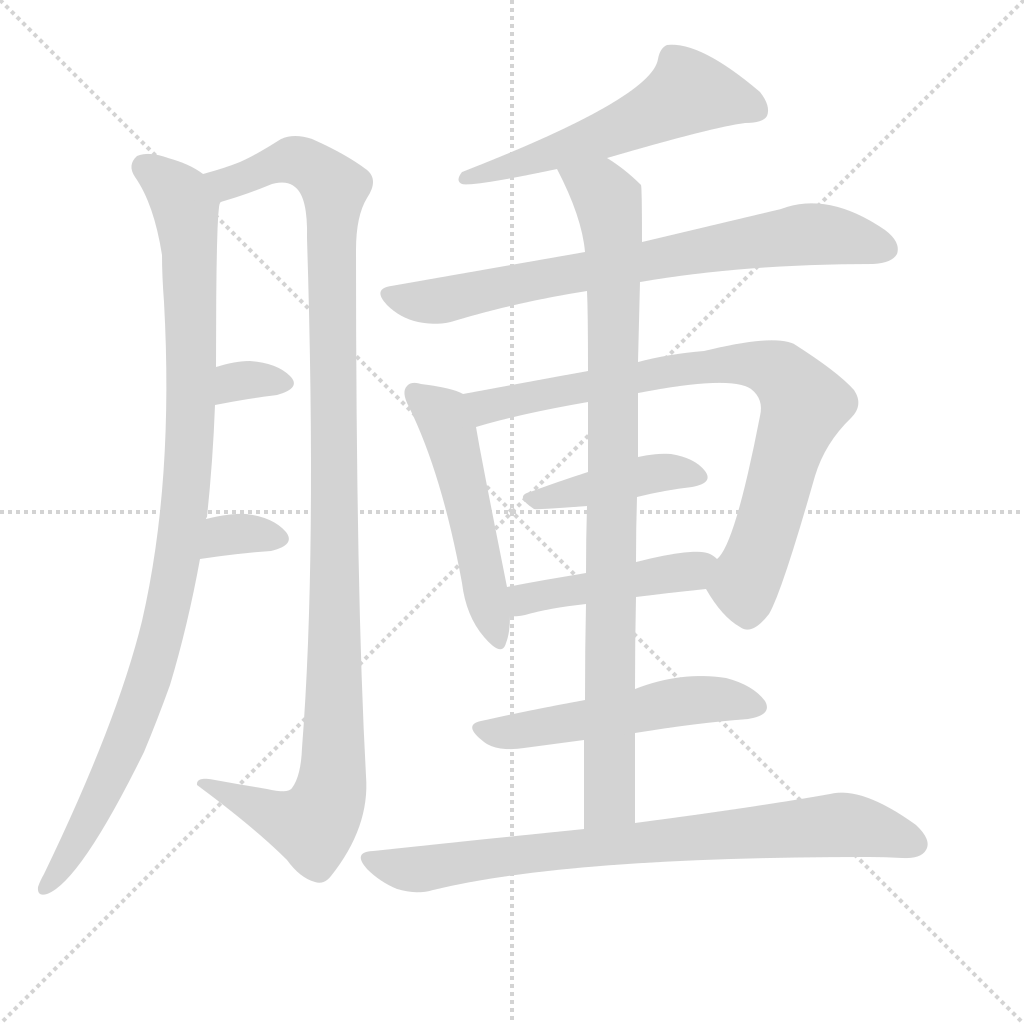
Pronounced zhong (rising tone)
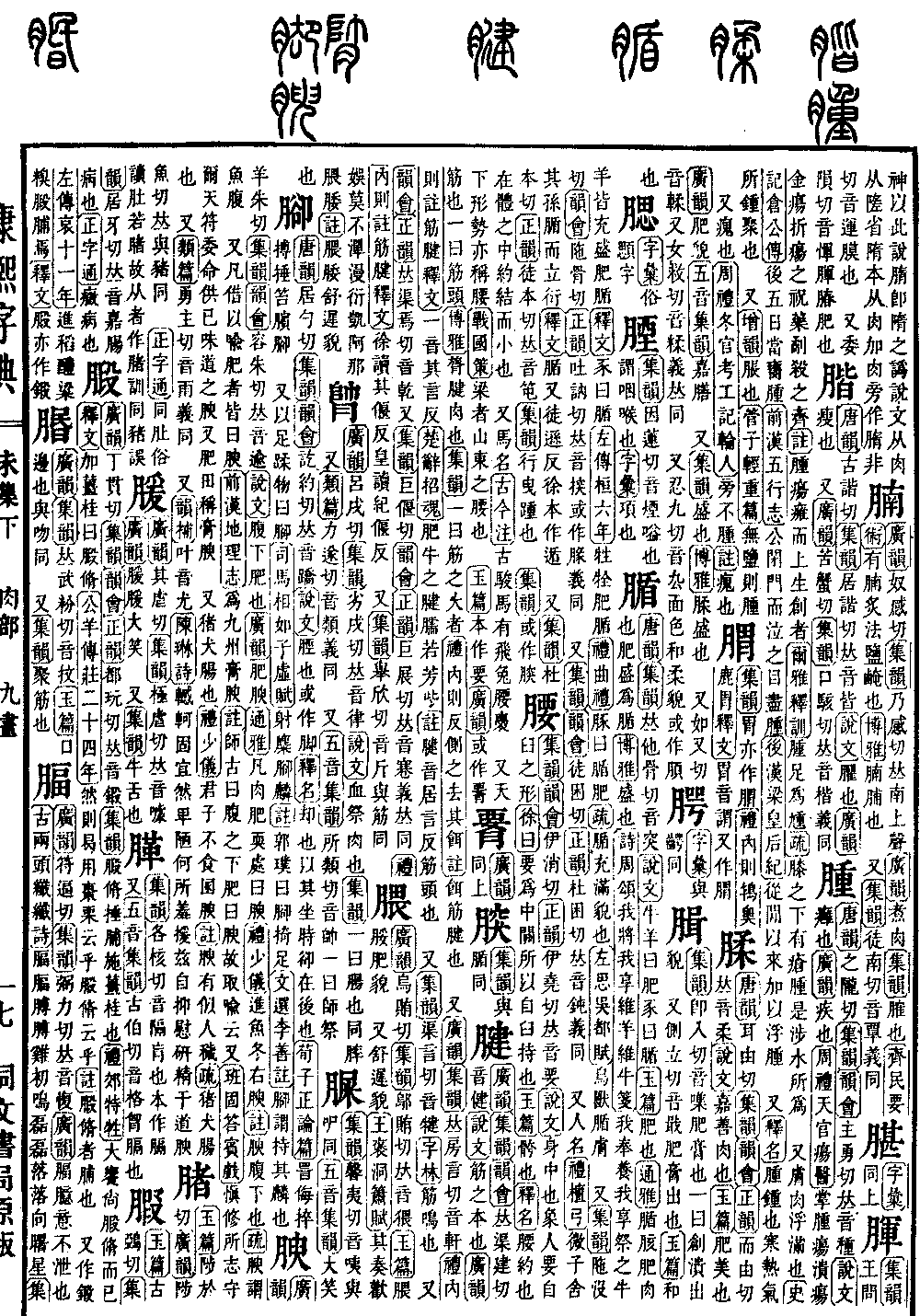
Shuowen Jiezi (Shuowen): A carbuncle.
Guangyun (Guangyun): A disease.
Book of Rites (Zhouli), Offices of Heaven, Medical Officers: Responsible for administering poultices to swelling ulcers, festering ulcers, metallic wounds, and bone fractures, as well as scraping away pus and blood and applying agents to eliminate necrotic tissue.
Commentary: Swelling ulcers are sores like carbuncles that have swollen but have not yet ruptured.
Erya (Erya), Explanations of Teachings: Swelling of the feet is referred to as zhong.
Sub-commentary: Sores and swelling below the knee are caused by wading through water. It also refers to the swelling and distension of skin and muscle.
Records of the Grand Historian (Shiji), Biography of Physician Cang Gong: Five days later, swelling should occur.
History of the Former Han (Qian Hanshu), Treatise on the Five Elements: He closed the door and wept, and his eyes became swollen from crying.
Book of the Later Han (Hou Hanshu), Annals of Empress Liang: Since living in seclusion, the edema has worsened.
Shiming (Shiming): Zhong means to gather or collect. It is formed when cold and heat evil energies aggregate and cluster.
Zengyun (Zengyun): Meaning distension.
Guanzi (Guanzi), Light and Heavy: Without salt, one will suffer from edema.
Also refers to burls or knots on trees.
Book of Rites (Zhouli), Winter Offices, Record of Tradesmen, Wheelwrights: The sides of the wheel rim should not have swollen burls.
Commentary: This refers to the knots or growths on trees.