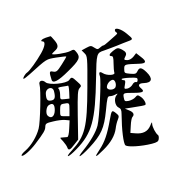
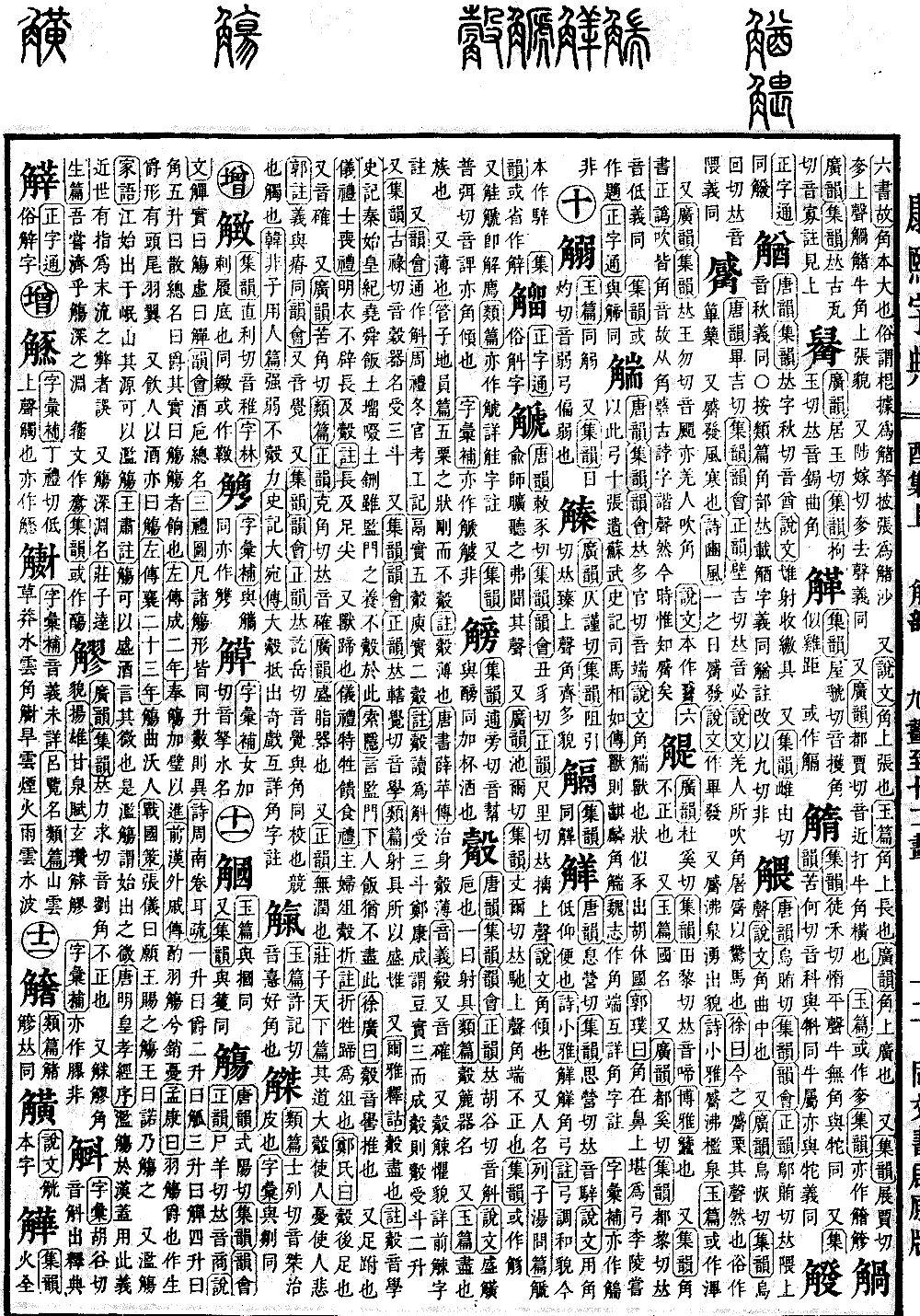
Pronounced chè shǐ (entering tone) in Tang Yun, chǒu zhì (entering tone) in Jiyun and Yunhui, and chǐ lǐ (falling tone) in Zhengyun, with the same rising tone as "chī". Explained in Shuowen Jiezi as "horn tilted".
Also used in personal names. According to Liezi, "Questions of Tang", Gui Yu and Shi Kuang went to listen but could not hear its sound.
Also pronounced chí ěr (falling tone) in Guangyun and zhàng ěr (falling tone) in Jiyun, with the same rising tone as "chí". It means the end of the horn is not straight. Sometimes written as in Jiyun. Additionally, "jiě zhì" is "xiè zhì". Also written as in Leipian. For detailed explanation, see the annotation for the character "jiě".
Also pronounced pǔ mǐ (falling tone) in Jiyun, with the same sound as "shēn". It also means "horn tilted". Also written as in Zihui Bu, but this is incorrect.