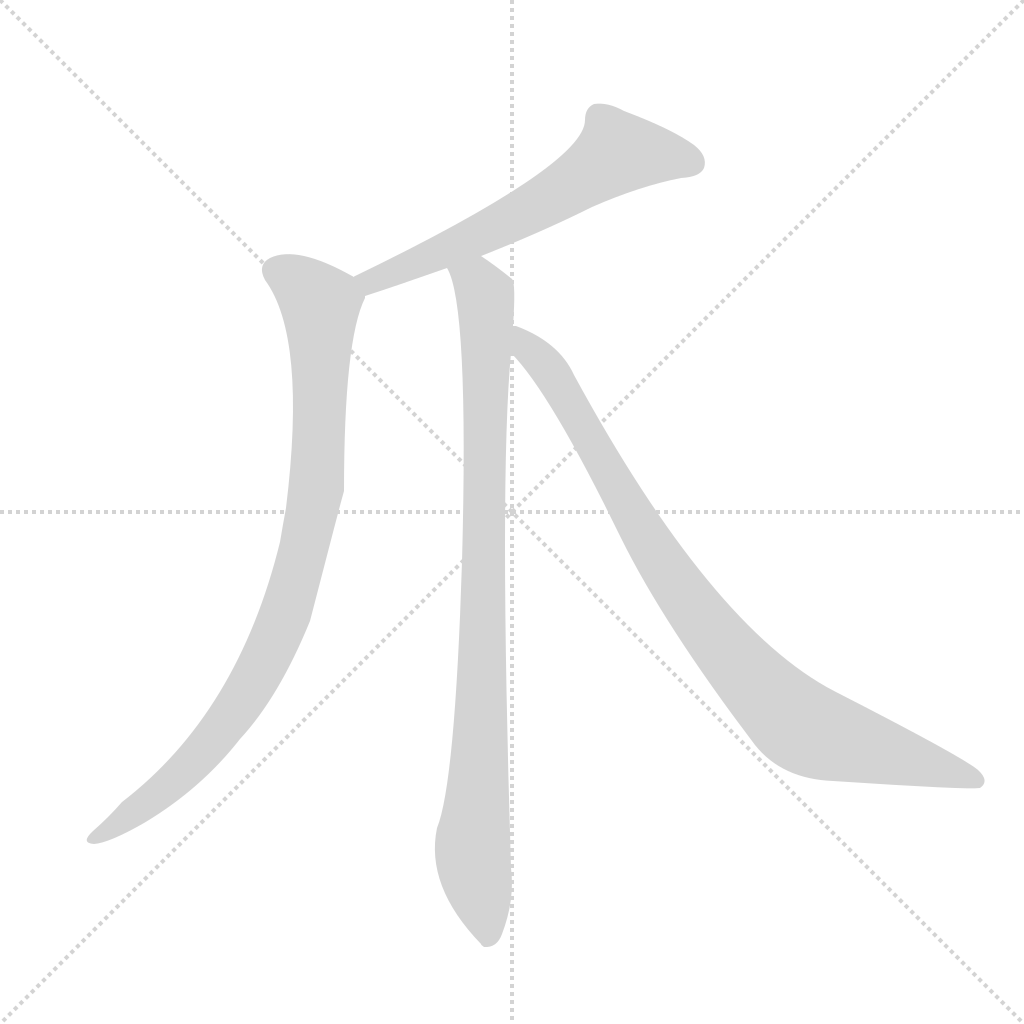
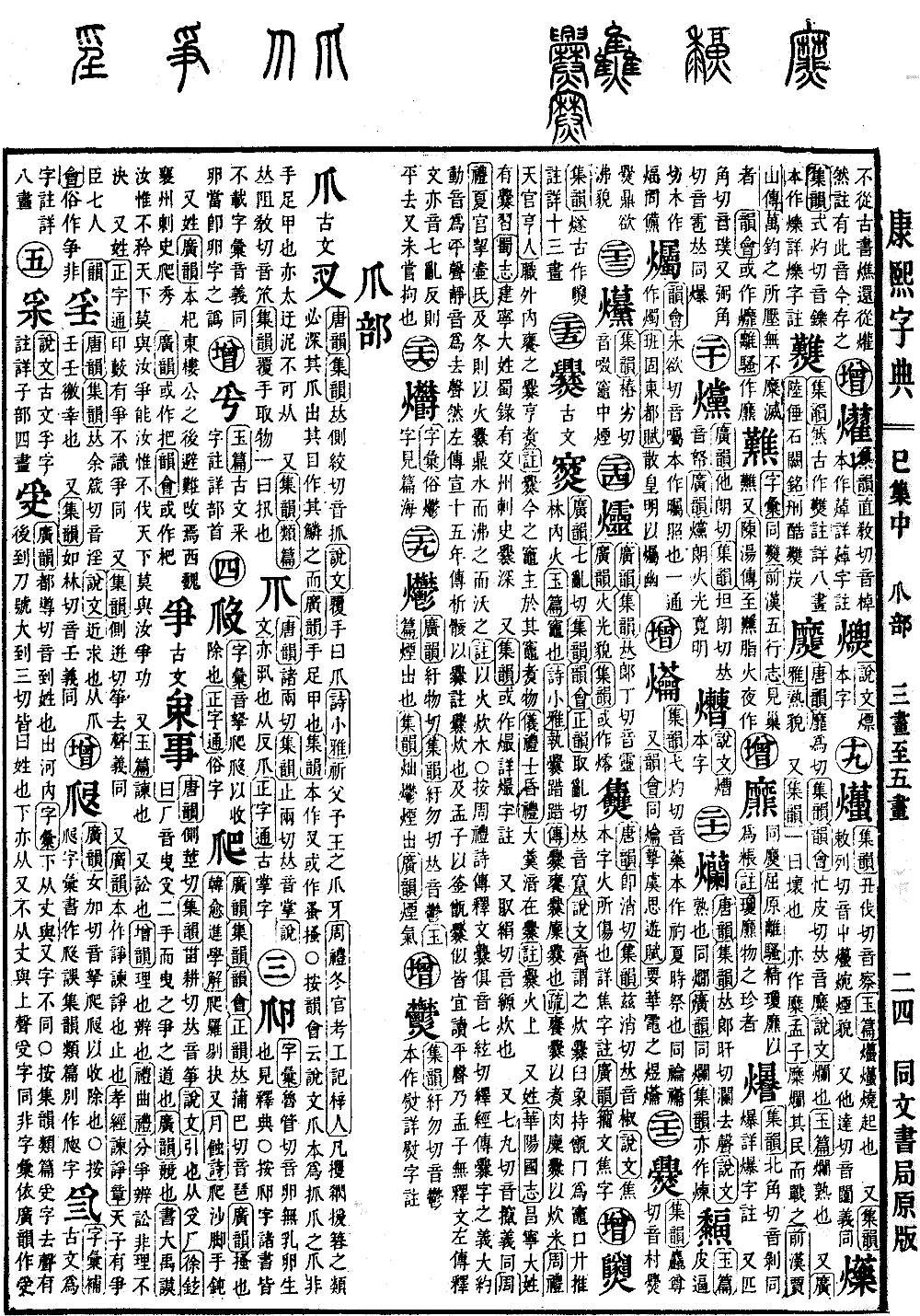
Si Collection, Middle Volume. Radical: Claw (zhǎo); Kangxi stroke count: 4; Page 688, Entry 26.
Ancient texts record: According to Tang Rhymes (Tangyun) and Collected Rhymes (Jiyun), the pronunciation is zhao. Explained in Explaining Graphs and Analyzing Characters (Shuowen Jiezi) as: Having the back of the hand facing down and the palm facing up is called a claw. In the Book of Odes (Shijing), Lesser Odes (Xiaoya), it is written: The minister of war is the claw and tooth of the king. The Rites of Zhou (Zhouli), Winter Officials, Record of Artificers (Kaogongji) records: For all animal figures that capture, strike, grab, or bite, one must emphasize the depth and sharpness of their claws, reveal their eyes, and sculpt their scales and whiskers. Explained in Broad Rhymes (Guangyun) as: The nails of fingers and toes. Collected Rhymes (Jiyun) notes that it was originally written as this, or alternatively written as zao or sao. According to the Rhyme Compendium (Yunhui): The original meaning of the character in Explaining Graphs and Analyzing Characters (Shuowen Jiezi) refers to the act of grabbing, and does not exclusively refer to the nails of hands and feet. This interpretation is too rigid and should not be followed. Additionally, according to Collected Rhymes (Jiyun) and Categorized Lexicon (Leipian), the pronunciation is zhao. Explained in Collected Rhymes (Jiyun) as: To grasp objects with the back of the hand facing down. Another source suggests it has the same meaning as the character shen (to scoop or pull).