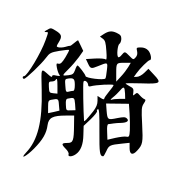
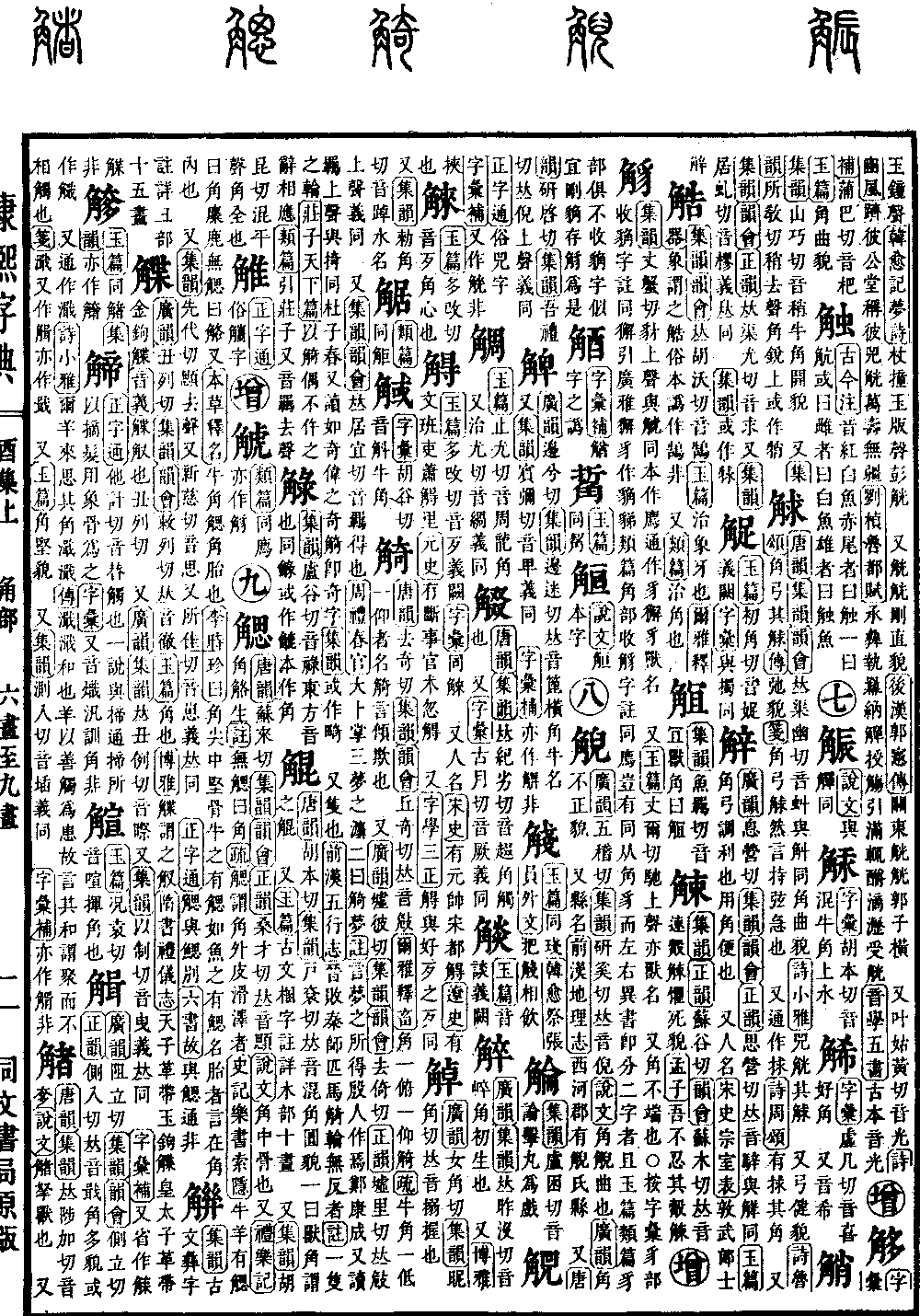
You Collection, Upper Volume
Radical: Horn (jiǎo)
Kangxi Strokes: 16
Page 1143, Entry 43
Tang Rhyme (Tangyun) and Collected Rhymes (Jiyun) state it is pronounced zha. It shares the same pronunciation as zha.
Explaining Characters and Phrases (Shuowen Jiezi) defines it as a type of beast.
Six Writings Origins (Liushu Gu) indicates the base of the horn is thick. Common parlance refers to squatting as zhana and opening wide as zhasha.
Explaining Characters and Phrases (Shuowen Jiezi) describes horns spreading upward.
Jade Chapter (Yupian) refers to horns growing upward.
Broad Rhyme (Guangyun) refers to the upper part of the horn being broad.
Collected Rhymes (Jiyun) states it is pronounced zha (rising tone). It describes the appearance of ox horns spreading upward.
It is also pronounced zha (departing tone). The meaning remains the same.
Broad Rhyme (Guangyun) states it is pronounced da. It refers to ox horns growing horizontally.
Jade Chapter (Yupian) sometimes writes it in a variant form. Collected Rhymes (Jiyun) also writes it in a variant form.