Shen Collection, Upper Volume
Radical: Grass (cǎo)
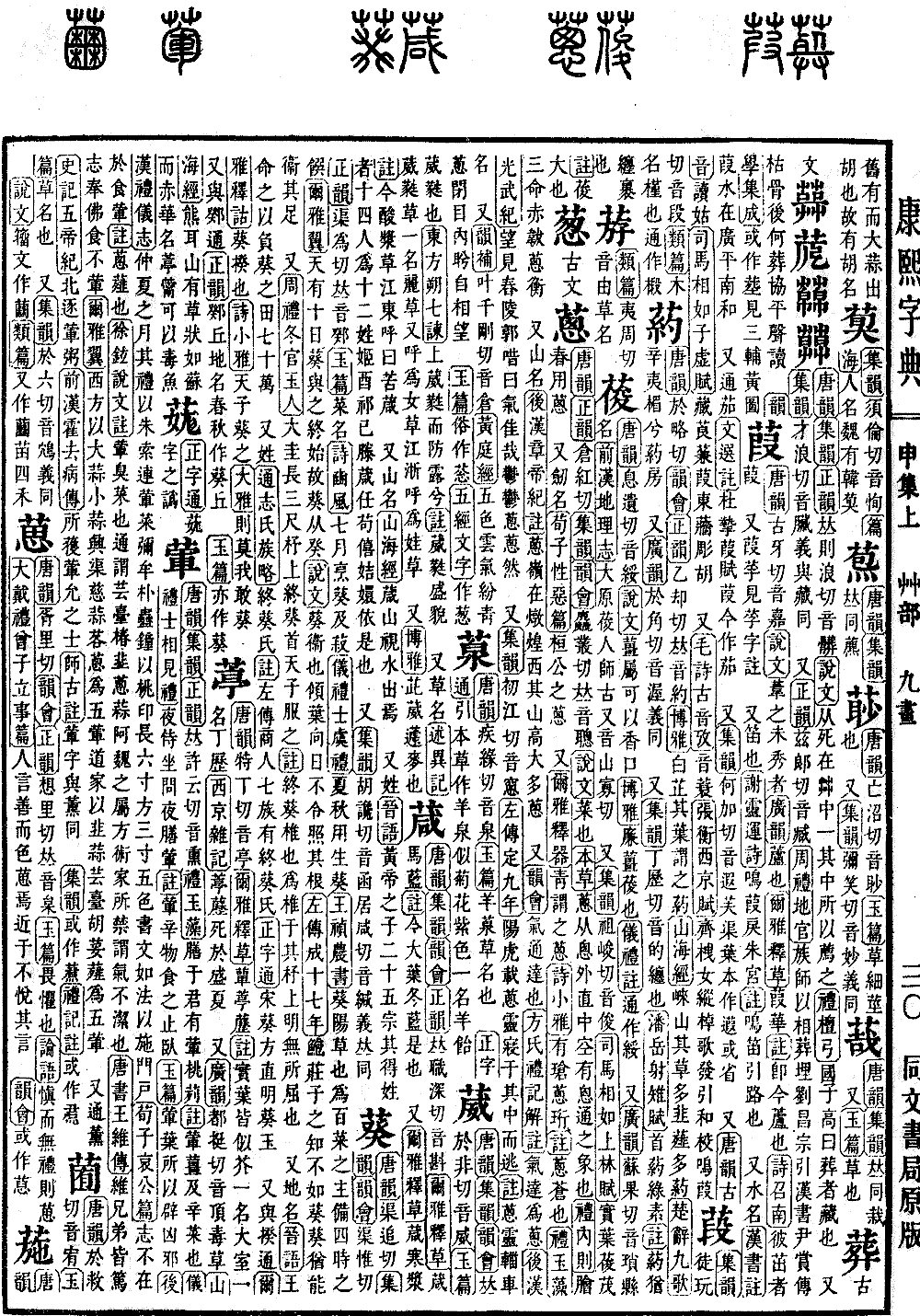
Zàng
Kangxi Stroke Count: 15
Page 1046, Entry 05
Ancient form.
According to the Tang Rhymes (Tangyun), Collected Rhymes (Jiyun), and Correct Rhymes (Zhengyun), the pronunciation is zàng.
According to the Explaining Graphs and Analyzing Characters (Shuowen), the character is composed of the concept of death contained within grass, with a horizontal line representing the covering, signifying how it is used to inter the deceased.
In the Book of Rites (Liji), the chapter "Tan Gong" records that Guozi Gao said: "To bury (zàng) is to conceal (cáng)."
Furthermore, according to the Collected Rhymes (Jiyun), the pronunciation is zàng. The meaning is the same as to conceal (cáng).
Furthermore, according to the Correct Rhymes (Zhengyun), the pronunciation is zàng.
In the Rites of Zhou (Zhouli), under the Office of Earth, the clan master assists in the interment and burial of the dead. Liu Changzong cites the Biography of Yin Shang in the Book of Han (Hanshu), asking how withered bones are to be buried later, which aligns with the phonetic reading.
According to the Rhyme Study Compilation (Yunxue Jicheng), it is sometimes written in the variant form zàng, as seen in the Maps and Records of the Three Prefectures (Sanfu Huangtu).