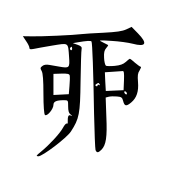
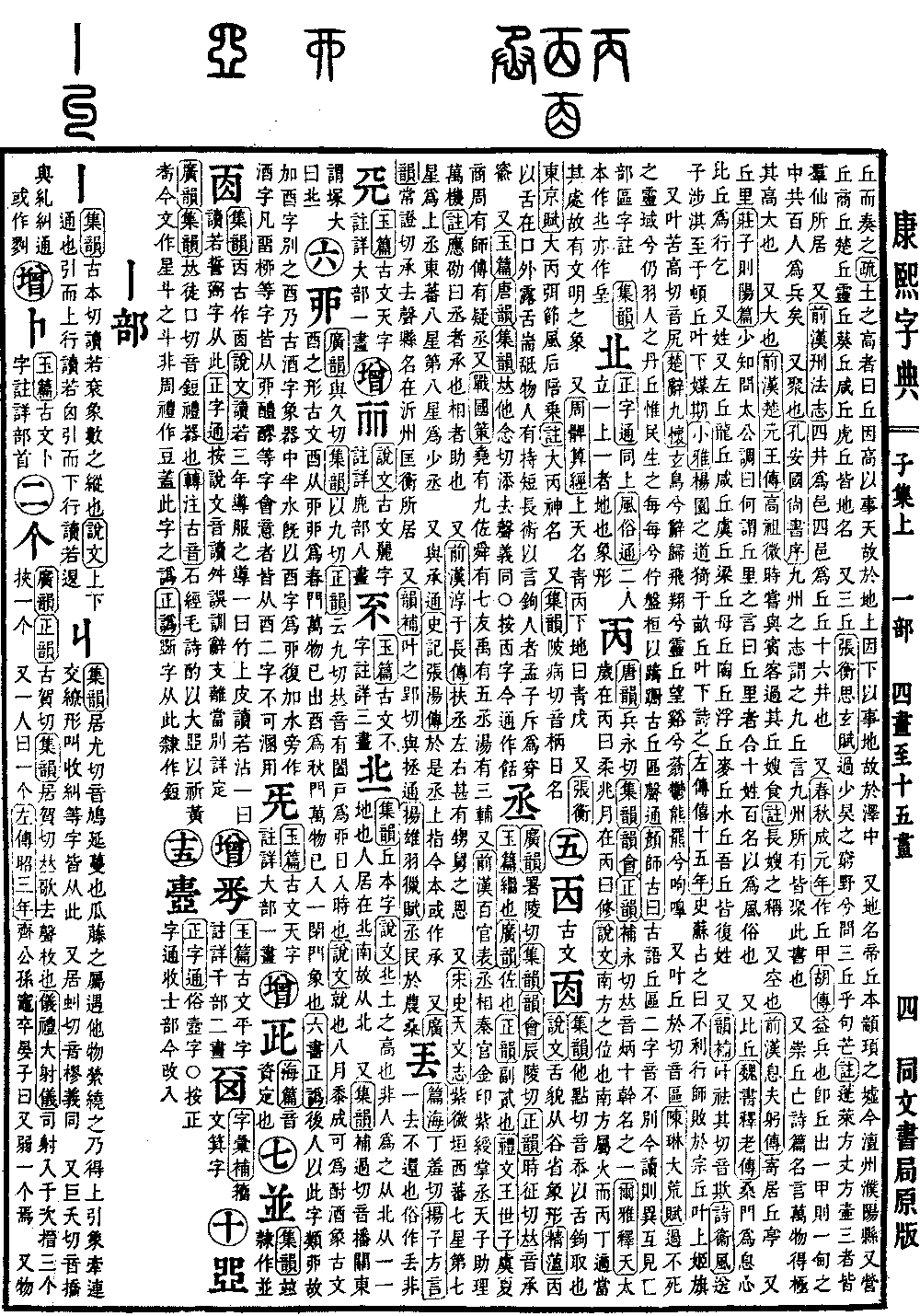
Zi Collection, Page Position: Upper. Radical: One (yī). Kangxi Stroke Count: 7. Page 78, Number 11. Broad Rhymes (Guangyun): yŭ and jiŭ, cut. Collected Rhymes (Jiyun): yĭ and jiŭ, cut. Correct Rhymes (Zhengyun): yún and jiŭ, cut. Pronounced the same as yǒu. To close the gate is called yǒu, referring to the time when the sun sets. Explaining Graphs and Analyzing Characters (Shuowen Jiezi) states it means to approach or complete. In the eighth month, the millet ripens and can be brewed into mellow wine. It is a pictograph of the ancient form of the character for the tenth earthly branch. The ancient script for the tenth earthly branch is derived from this character. This character represents the gate of spring, where all things have emerged. The character for the tenth earthly branch represents the gate of autumn, where all things have entered, and the horizontal stroke symbolizing one is the representation of closing the gate. According to Correction of Errors in the Six Classes of Characters (Liushu Zheng’e), later generations added the wine radical to distinguish it because it resembled this character. The character for the tenth earthly branch was originally the ancient character for wine, resembling a vessel half-filled with liquid. Since that character was used for the earthly branch, the water radical was added to create the specific character for wine. All characters such as liú (to stay) or liŭ (willow) are derived from this character, while associative compounds such as lĭ (sweet wine) or láo (unfiltered wine) are derived from the character for the tenth earthly branch. These two characters should not be used interchangeably.