Xu Collection, Middle Volume
Radical: Mound (fù)
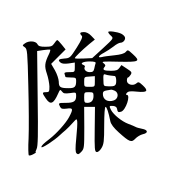
隒
Kangxi strokes: 18
Page 1358, entry 05
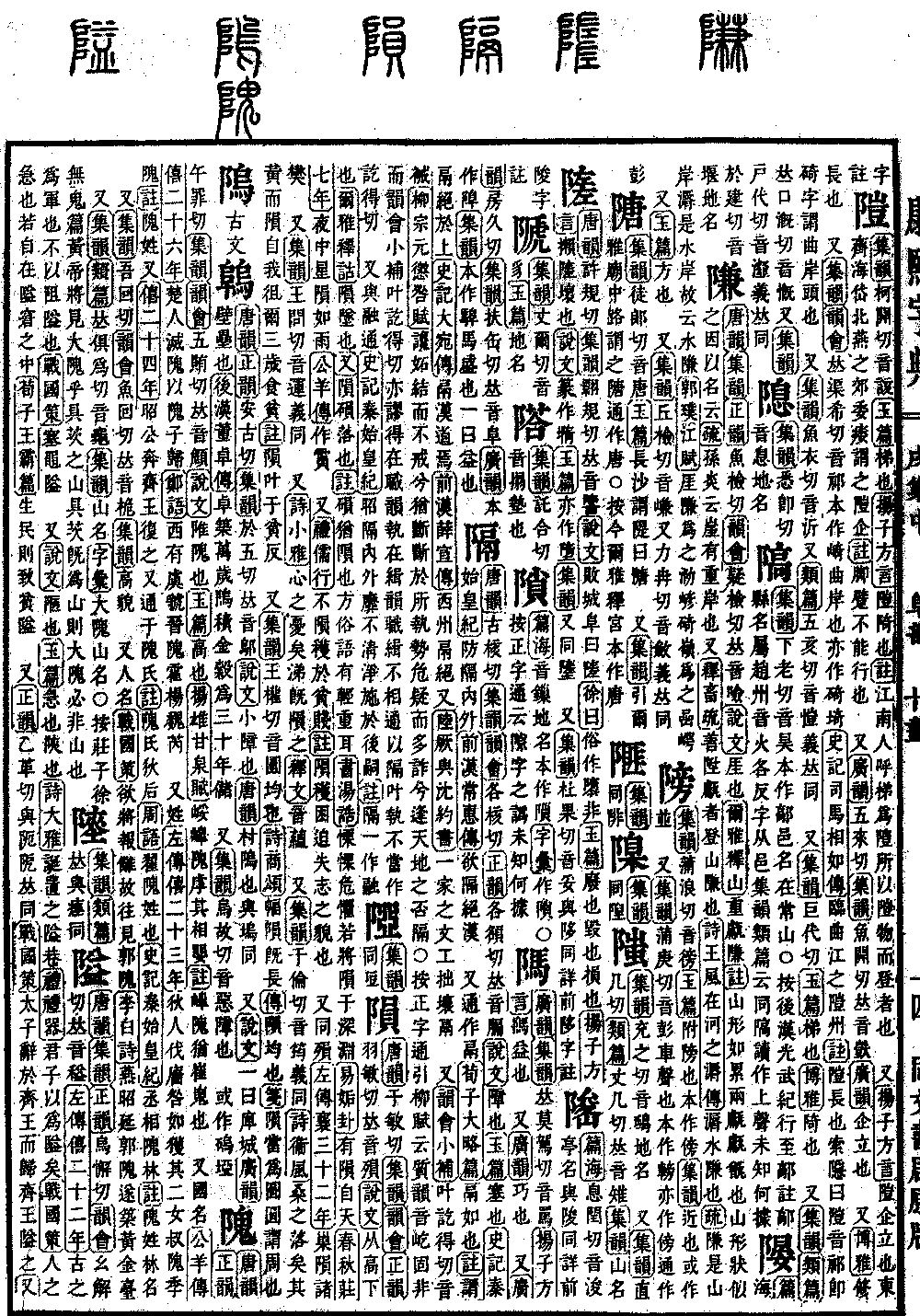
Pronounced yú jiǎn qiè in Tangyun, Jiyun, and Zhengyun; yí jiǎn qiè in Yunhui; sound is yǎn. Shuowen Jiezi (Shuowen Jiezi) says: A cliff. Erya, Explaining Mountains (Erya, Shishan) states: chong yǎn è. The commentary explains: A mountain shape resembling stacked liǎng yǎn (a type of tripod vessel). Yǎn refers to a zèng (steam cooker). The mountain's form is similar, hence it is named as such. The sub-commentary by Sun Yan says: A cliff with multiple banks. Also, in Erya, Explaining Animals (Erya, Shixu) sub-commentary: One who is skilled at climbing a yǎn ascends a mountain è. The commentary to "By the River Bank" in Book of Odes (Shijing), Odes of Wang (Wangfeng) says: chún means a water è. The sub-commentary explains: è is a mountain bank, chún is a water bank, hence it is called a water è. Guo Pu's "River Rhapsody" (Jiangfu) says: The steep banks become cracked and towering, the winding ridges become rugged and precipitous. Also, in Yupian: square. Also, in Jiyun: pronounced qiū jiǎn qiè, sound is qiáo. Also pronounced lì rǎn qiè, sound is liǎn. Meaning is the same.